Papageorgiou Spyridon N, Sifakakis Iosif, Doulis Ioannis, Eliades Theodore, Bourauel Christoph
Department of Orthodontics, School of Dentistry, University of Bonn, Bonn, Germany.
Department of Oral Technology, School of Dentistry, University of Bonn, Bonn, Germany.
Prog Orthod. 2016;17:5. doi: 10.1186/s40510-016-0118-0. Epub 2016 Jan 15.
The aim of this study was to compare the torque efficacy of square and rectangular wires in 0.018- and 0.022-in. conventionally ligated brackets.
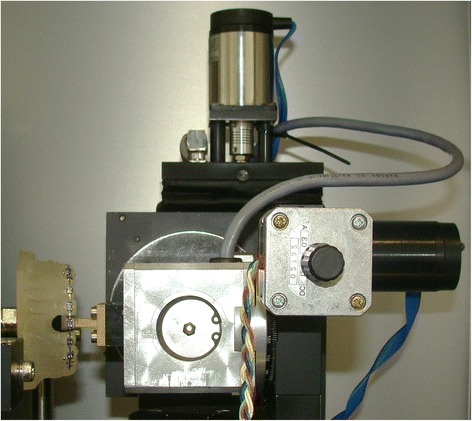
Brackets of the same prescription were evaluated in both slot dimensions. Identical acrylic resin models of the maxilla were bonded with the brackets and mounted on the Orthodontic Measurement and Simulation System. Ten 0.018 × 0.018 in., 0.018 × 0.022 in., and 0.018 × 0.025 in. stainless steel wires were evaluated in the 0.018-in. brackets and ten 0.019 × 0.019 in., 0.019 × 0.025 in., and 0.019 × 0.026 in. stainless steel wires were evaluated in the 0.022-in. brackets. A 15° buccal root torque was gradually applied to the right central incisor bracket, and the moments were recorded at this position. One-way ANOVA was applied for both bracket slot sizes along with post hoc analysis for the various archwire sizes.
The mean measured moments varied between 10.78 and 30.60 Nmm among the assessed wire-and-bracket combinations. Both square and rectangular archwires in the 0.018-in. bracket system exerted statistically significantly higher moments in comparison with their counterparts in the 0.022-in. bracket system. Rectangular archwires exerted statistically significantly higher moments than square archwires, both for the 0.018- and the 0.022-in. bracket system.
Rectangular archwires seem to be more efficient in torque exertion, especially in 0.018-in. brackets.
本研究的目的是比较0.018英寸和0.022英寸传统结扎托槽中方形和矩形弓丝的扭矩效能。
对两种槽沟尺寸的相同处方托槽进行评估。将相同的上颌丙烯酸树脂模型用托槽粘结,并安装在正畸测量与模拟系统上。在0.018英寸托槽中评估了十根0.018×0.018英寸、0.018×0.022英寸和0.018×0.025英寸的不锈钢弓丝,在0.022英寸托槽中评估了十根0.019×0.019英寸、0.019×0.025英寸和0.019×0.026英寸的不锈钢弓丝。向右中切牙托槽逐渐施加15°的颊向牙根扭矩,并在该位置记录力矩。对两种托槽槽沟尺寸均应用单因素方差分析,并对各种弓丝尺寸进行事后分析。
在所评估的弓丝与托槽组合中,平均测量力矩在10.78至30.60 Nmm之间变化。与0.022英寸托槽系统中的对应弓丝相比,0.018英寸托槽系统中的方形和矩形弓丝产生的力矩在统计学上均显著更高。对于0.018英寸和0.022英寸托槽系统,矩形弓丝产生的力矩在统计学上均显著高于方形弓丝。
矩形弓丝在施加扭矩方面似乎更有效,尤其是在0.018英寸托槽中。