Su Xiaowei W, Nandar Wint, Neely Elizabeth B, Simmons Zachary, Connor James R
Department of Neurosurgery, Penn State College of Medicine, Mailcode H110, 500 University Drive, Hershey, Pennsylvania, 17033, USA.
Department of Neurology, Penn State College of Medicine, Hershey, Pennsylvania, USA.
Muscle Nerve. 2016 Aug;54(2):284-91. doi: 10.1002/mus.25048. Epub 2016 May 19.
HMG-CoA reductase inhibitors (statins) and H63D HFE polymorphism may modify amyotrophic lateral sclerosis (ALS). We hypothesized that statins worsen phenotype in ALS mice, dependent on HFE genotype.
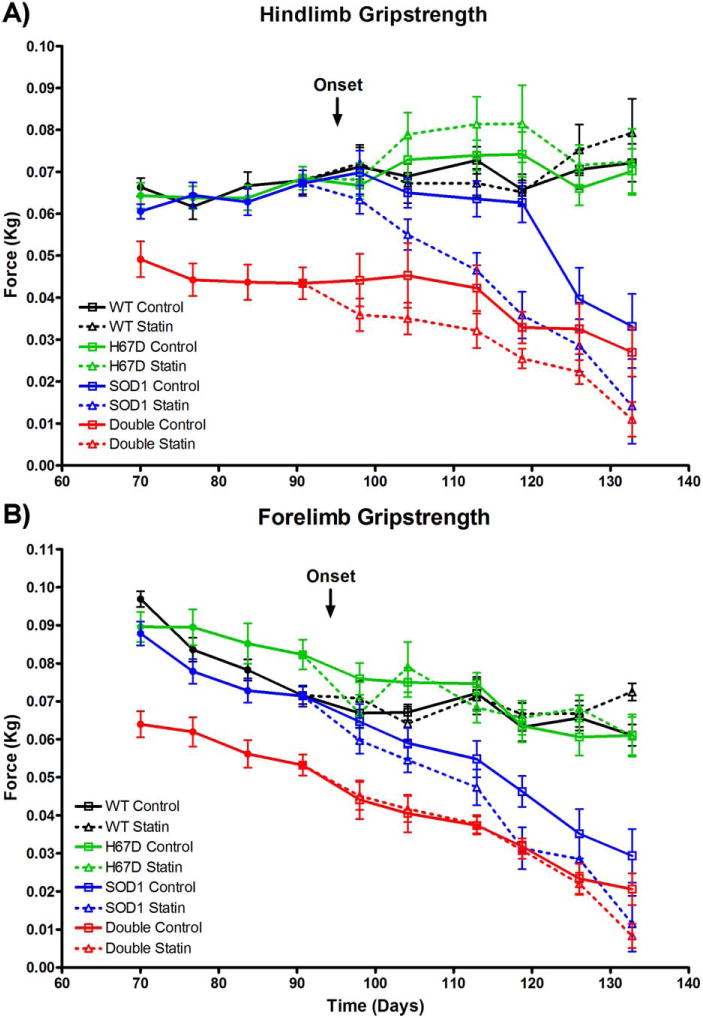
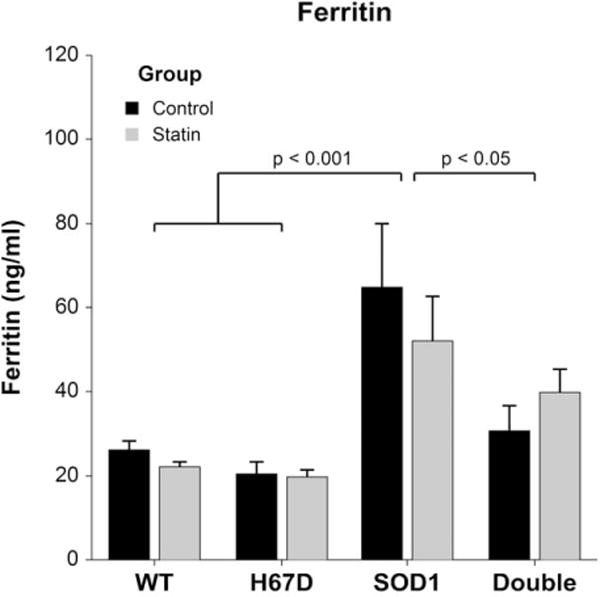
Mice harboring SOD1(G93A) heterozygous for H67D Hfe (homologous to human H63D HFE) were administered simvastatin and/or coenzyme Q10, and were allowed to reach end stage. Disease progression was measured by grip strength. A separate group of animals was administered simvastatin and euthanized at the symptomatic 120-day time-point. Mitochondria from gastrocnemius muscle and lumbar spine were analyzed.
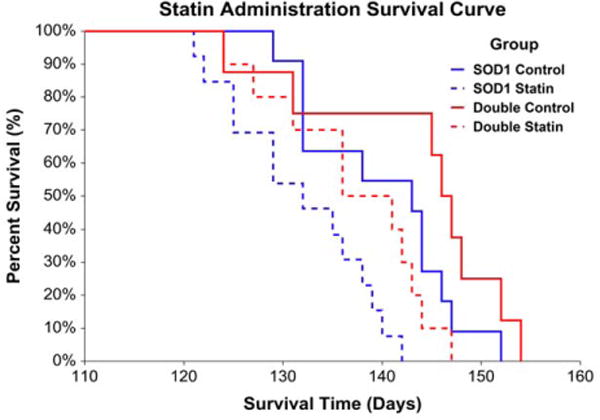
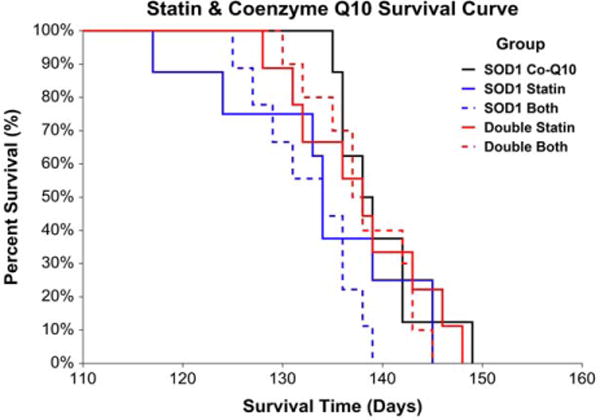
Simvastatin and H67D Hfe accelerated disease progression. Simvastatin decreased survival. Coenzyme Q10 did not rescue statin-induced effects. Statins did not alter mitochondrial protein levels.
Statins and Hfe genotype alter disease course in the ALS mouse model. Because the H63D HFE polymorphism is present in 30% of patients with ALS, studying disease progression in patients who receive statins, stratified for HFE genotype, may guide therapy. Muscle Nerve, 2016 Muscle Nerve 54: 284-291, 2016.
HMG-CoA还原酶抑制剂(他汀类药物)和H63D HFE基因多态性可能会改变肌萎缩侧索硬化症(ALS)。我们假设他汀类药物会使ALS小鼠的表型恶化,这取决于HFE基因型。
对携带与人类H63D HFE同源的H67D Hfe杂合的SOD1(G93A)小鼠给予辛伐他汀和/或辅酶Q10,并使其达到终末期。通过握力测量疾病进展。另一组动物给予辛伐他汀,并在有症状的120天时间点实施安乐死。对腓肠肌和腰椎的线粒体进行分析。
辛伐他汀和H67D Hfe加速了疾病进展。辛伐他汀降低了生存率。辅酶Q10未能挽救他汀类药物诱导的效应。他汀类药物未改变线粒体蛋白水平。
他汀类药物和Hfe基因型改变了ALS小鼠模型的病程。由于30%的ALS患者存在H63D HFE基因多态性,因此研究接受他汀类药物治疗的患者(根据HFE基因型分层)的疾病进展情况可能会为治疗提供指导。《肌肉与神经》,2016年 2016年《肌肉与神经》54卷:284 - 291页