Acharya Debarun, Ghosh Tapash C
Bioinformatics Centre, Bose Institute, P 1/12, C.I.T. Scheme VII M, Kolkata, 700054, West Bengal, India.
BMC Genomics. 2016 Jan 22;17:71. doi: 10.1186/s12864-016-2392-0.
Gene duplication is a genetic mutation that creates functionally redundant gene copies that are initially relieved from selective pressures and may adapt themselves to new functions with time. The levels of gene duplication may vary from small-scale duplication (SSD) to whole genome duplication (WGD). Studies with yeast revealed ample differences between these duplicates: Yeast WGD pairs were functionally more similar, less divergent in subcellular localization and contained a lesser proportion of essential genes. In this study, we explored the differences in evolutionary genomic properties of human SSD and WGD genes, with the identifiable human duplicates coming from the two rounds of whole genome duplication occurred early in vertebrate evolution.
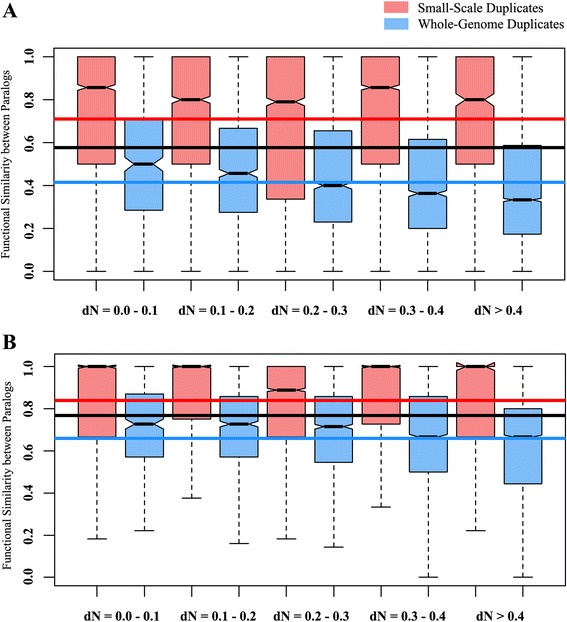
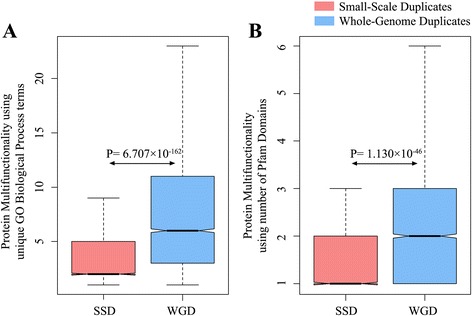
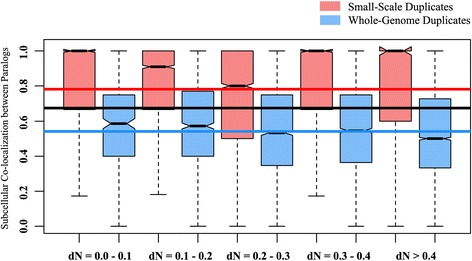
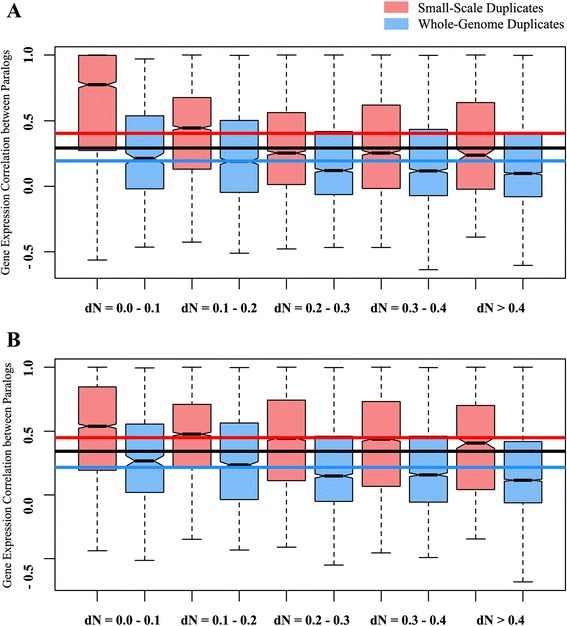
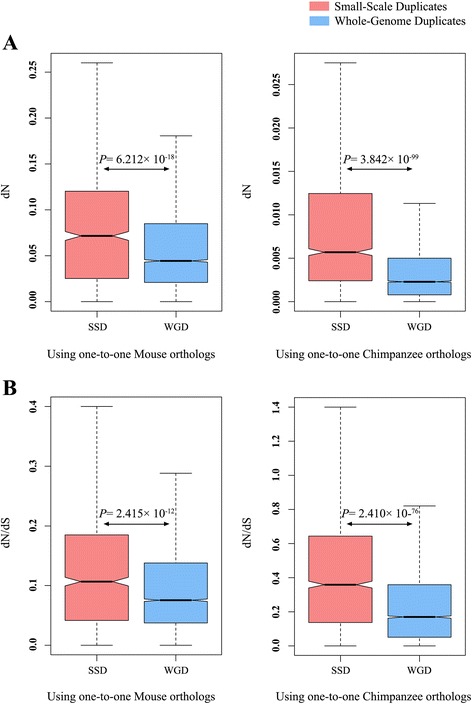
We observed that these two groups of duplicates were also dissimilar in terms of their evolutionary and genomic properties. But interestingly, this is not like the same observed in yeast. The human WGDs were found to be functionally less similar, diverge more in subcellular level and contain a higher proportion of essential genes than the SSDs, all of which are opposite from yeast. Additionally, we explored that human WGDs were more divergent in their gene expression profile, have higher multifunctionality and are more often associated with disease, and are evolutionarily more conserved than human SSDs.
Our study suggests that human WGD duplicates are more divergent and entails the adaptation of WGDs to novel and important functions that consequently lead to their evolutionary conservation in the course of evolution.
基因复制是一种基因突变,它会产生功能冗余的基因拷贝,这些拷贝最初会从选择压力中解脱出来,并可能随着时间的推移适应新的功能。基因复制的水平可能从小规模复制(SSD)到全基因组复制(WGD)不等。对酵母的研究揭示了这些复制基因之间存在大量差异:酵母的WGD基因对在功能上更相似,亚细胞定位的差异较小,且包含的必需基因比例较低。在本研究中,我们探讨了人类SSD和WGD基因在进化基因组特性上的差异,其中可识别的人类复制基因来自脊椎动物进化早期发生的两轮全基因组复制。
我们观察到这两组复制基因在进化和基因组特性方面也存在差异。但有趣的是,这与在酵母中观察到的情况不同。我们发现,与SSD基因相比,人类WGD基因在功能上的相似性更低,在亚细胞水平上的差异更大,且包含的必需基因比例更高,所有这些都与酵母相反。此外,我们还发现人类WGD基因在基因表达谱上的差异更大,具有更高的多功能性,更常与疾病相关,并且在进化上比人类SSD基因更保守。
我们的研究表明,人类WGD复制基因的差异更大,这意味着WGD基因适应了新的重要功能,从而在进化过程中得以在进化上保守下来。