Glenn Anthony E, Davis C Britton, Gao Minglu, Gold Scott E, Mitchell Trevor R, Proctor Robert H, Stewart Jane E, Snook Maurice E
USDA, ARS, Richard B. Russell Research Center, Toxicology & Mycotoxin Research Unit, Athens, Georgia, United States of America.
University of Georgia, Department of Plant Pathology, Athens, Georgia, United States of America.
PLoS One. 2016 Jan 25;11(1):e0147486. doi: 10.1371/journal.pone.0147486. eCollection 2016.
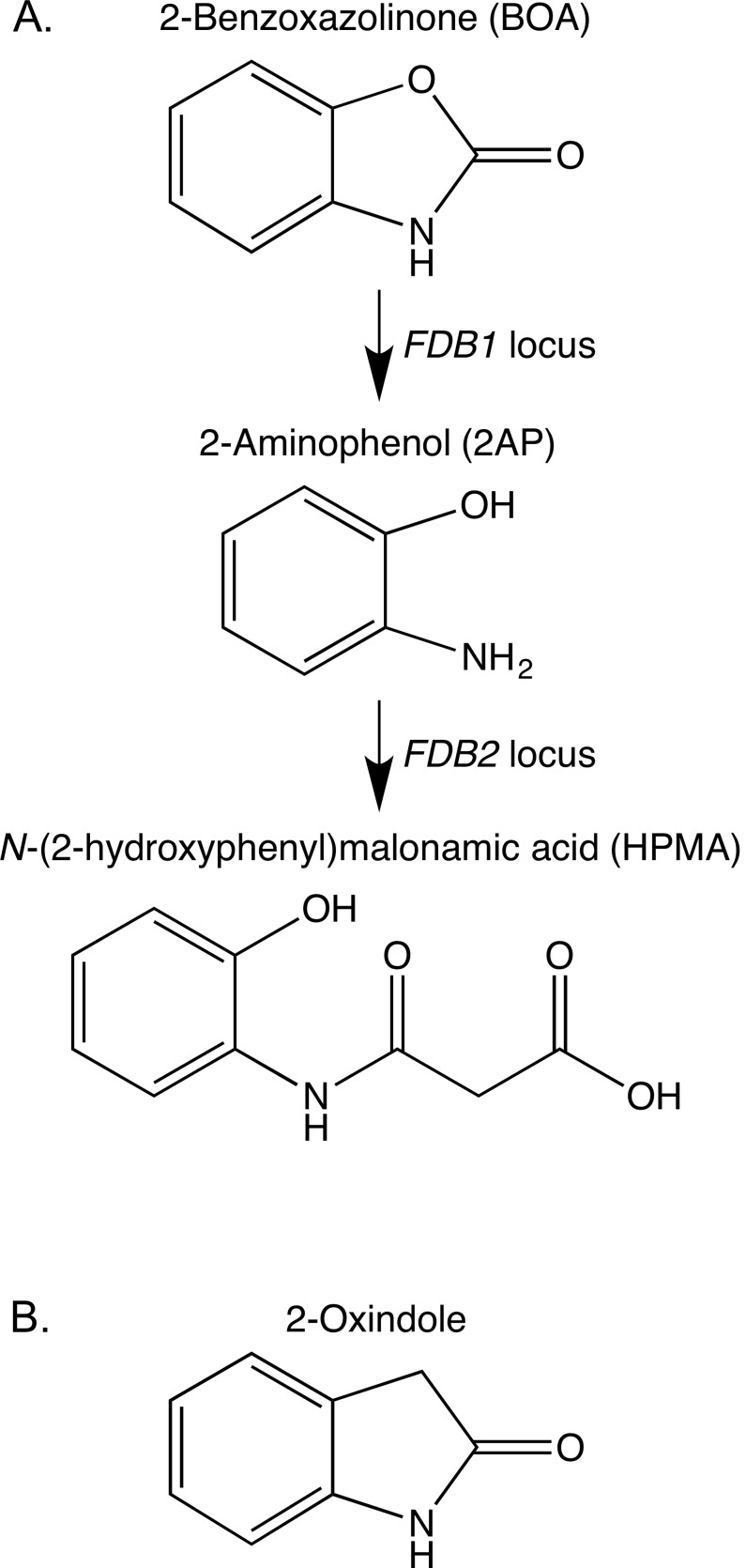
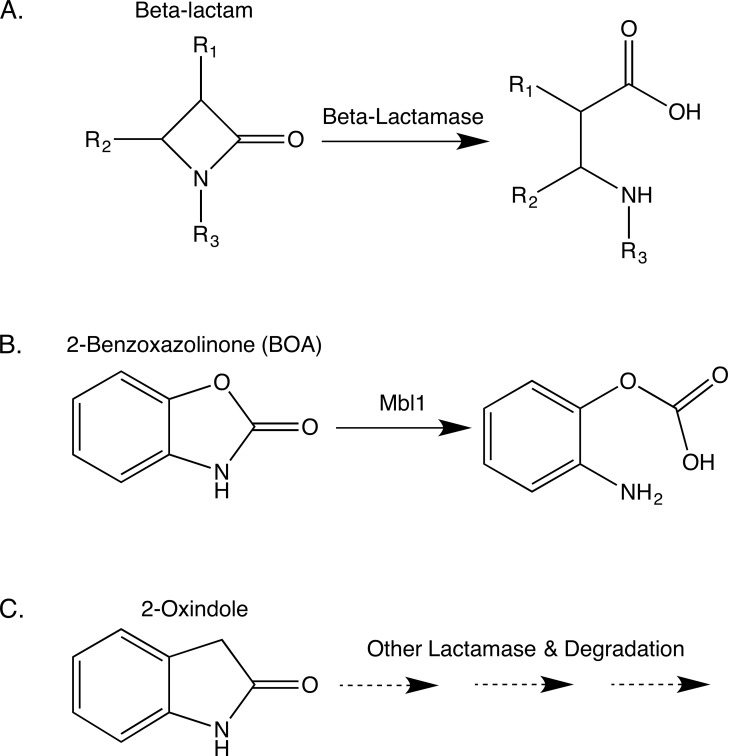
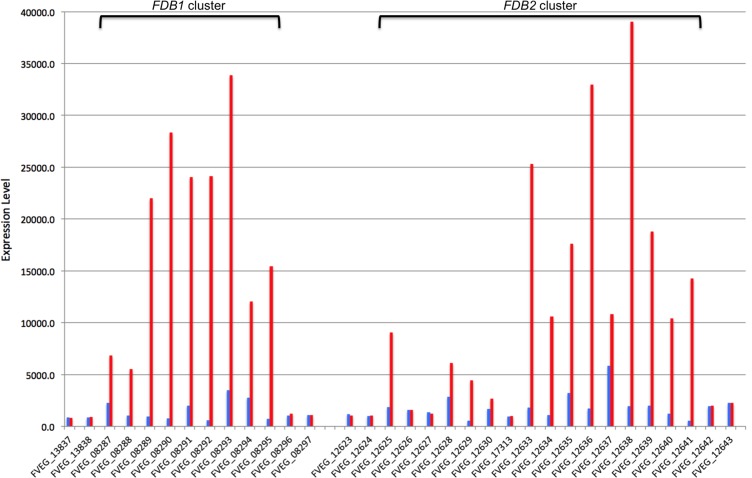
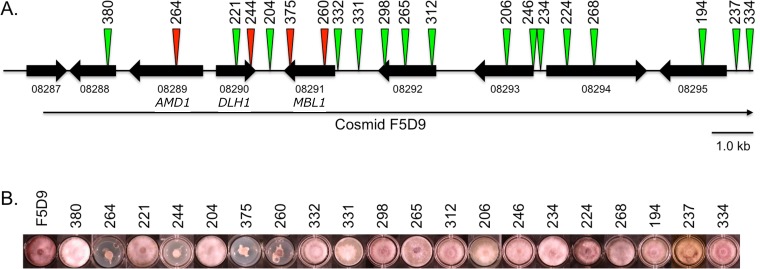
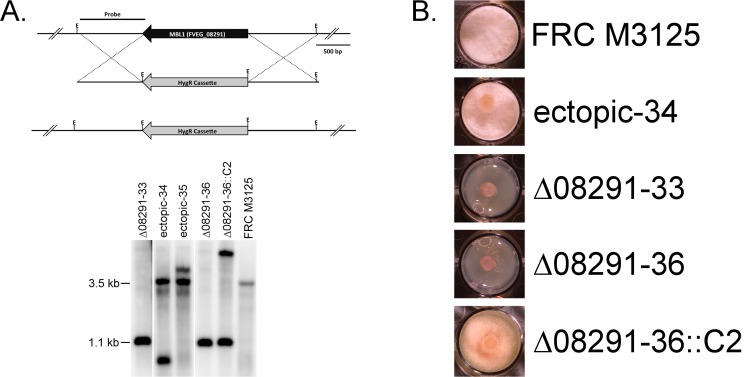
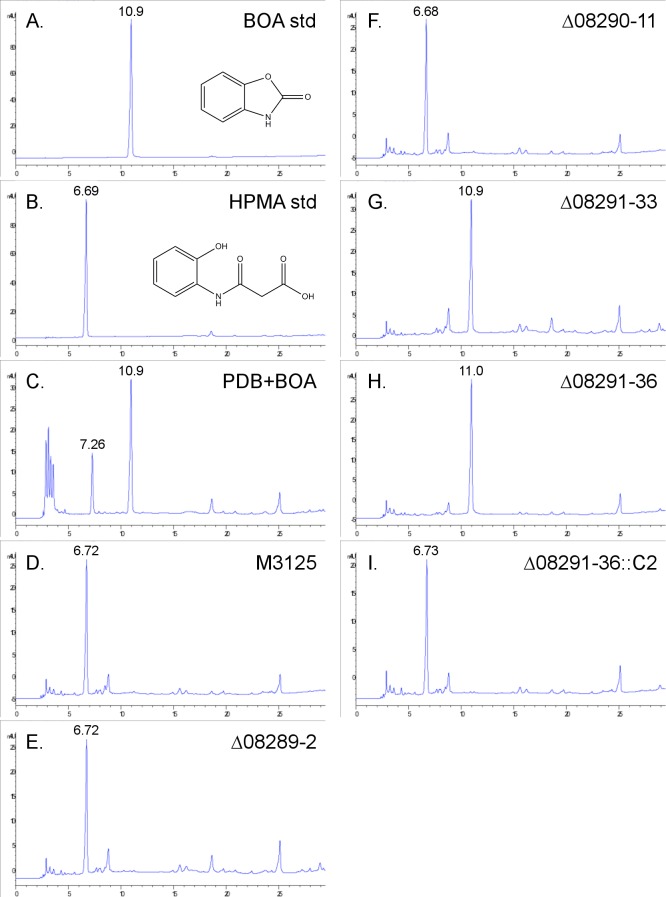
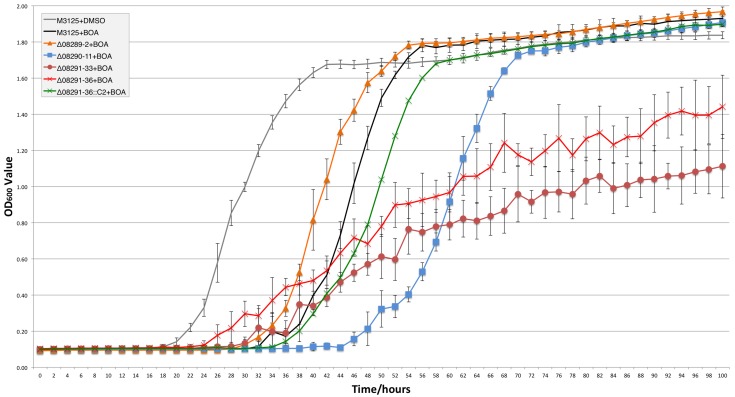
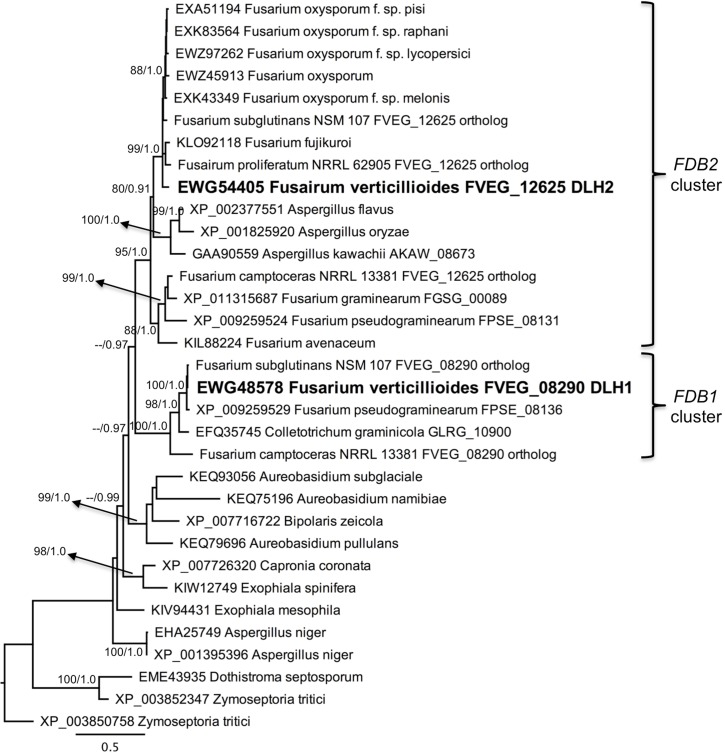
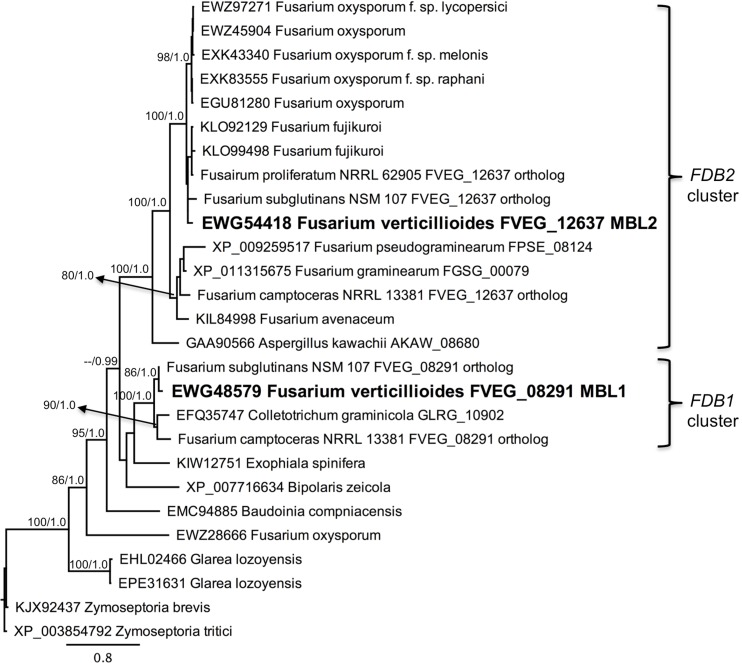
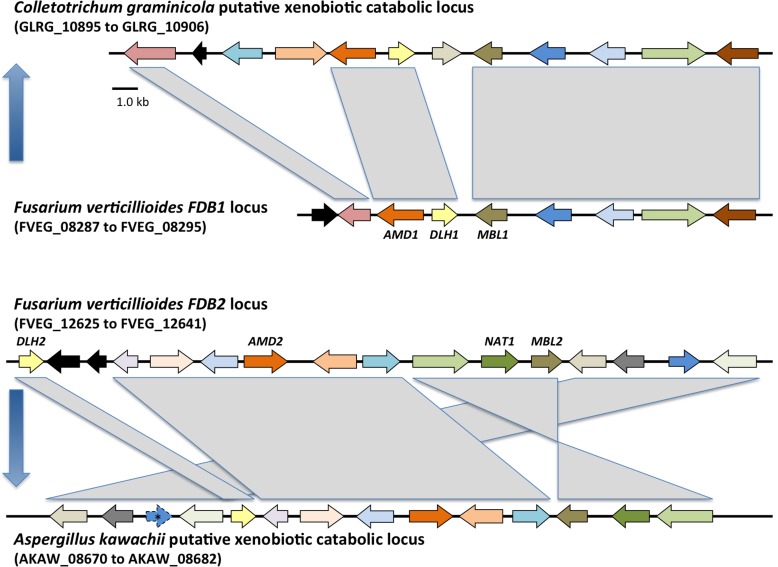
Microbes encounter a broad spectrum of antimicrobial compounds in their environments and often possess metabolic strategies to detoxify such xenobiotics. We have previously shown that Fusarium verticillioides, a fungal pathogen of maize known for its production of fumonisin mycotoxins, possesses two unlinked loci, FDB1 and FDB2, necessary for detoxification of antimicrobial compounds produced by maize, including the γ-lactam 2-benzoxazolinone (BOA). In support of these earlier studies, microarray analysis of F. verticillioides exposed to BOA identified the induction of multiple genes at FDB1 and FDB2, indicating the loci consist of gene clusters. One of the FDB1 cluster genes encoded a protein having domain homology to the metallo-β-lactamase (MBL) superfamily. Deletion of this gene (MBL1) rendered F. verticillioides incapable of metabolizing BOA and thus unable to grow on BOA-amended media. Deletion of other FDB1 cluster genes, in particular AMD1 and DLH1, did not affect BOA degradation. Phylogenetic analyses and topology testing of the FDB1 and FDB2 cluster genes suggested two horizontal transfer events among fungi, one being transfer of FDB1 from Fusarium to Colletotrichum, and the second being transfer of the FDB2 cluster from Fusarium to Aspergillus. Together, the results suggest that plant-derived xenobiotics have exerted evolutionary pressure on these fungi, leading to horizontal transfer of genes that enhance fitness or virulence.
微生物在其生存环境中会遇到各种各样的抗菌化合物,并且通常拥有代谢策略来解毒这些外源性物质。我们之前已经表明,轮枝镰孢菌是一种玉米真菌病原体,以产生伏马菌素霉菌毒素而闻名,它拥有两个不连锁的基因座FDB1和FDB2,这两个基因座对于玉米产生的抗菌化合物的解毒是必需的,包括γ-内酰胺2-苯并恶唑啉酮(BOA)。为支持这些早期研究,对暴露于BOA的轮枝镰孢菌进行的微阵列分析确定了FDB1和FDB2处多个基因的诱导,表明这些基因座由基因簇组成。FDB1簇中的一个基因编码一种与金属β-内酰胺酶(MBL)超家族具有结构域同源性的蛋白质。缺失该基因(MBL1)使轮枝镰孢菌无法代谢BOA,因此无法在添加了BOA的培养基上生长。缺失其他FDB1簇基因,特别是AMD1和DLH1,并不影响BOA的降解。对FDB1和FDB2簇基因的系统发育分析和拓扑测试表明,真菌之间发生了两次水平转移事件,一次是FDB1从镰刀菌转移到炭疽菌,另一次是FDB2簇从镰刀菌转移到曲霉菌。总之,这些结果表明植物衍生的外源性物质对这些真菌施加了进化压力,导致增强适应性或毒力的基因发生水平转移。