
童年期虐待对青少年罪犯再犯的影响:一项匹配对照研究。
Impact of Childhood Maltreatment on Recidivism in Youth Offenders: A Matched-Control Study.
作者信息
Li Dongdong, Chu Chi Meng, Goh Joseph Teck Ling, Ng Irene Y H, Zeng Gerald
机构信息
Ministry of Social and Family Development.
National University of Singapore.
出版信息
Crim Justice Behav. 2015 Oct;42(10):990-1007. doi: 10.1177/0093854815598598.
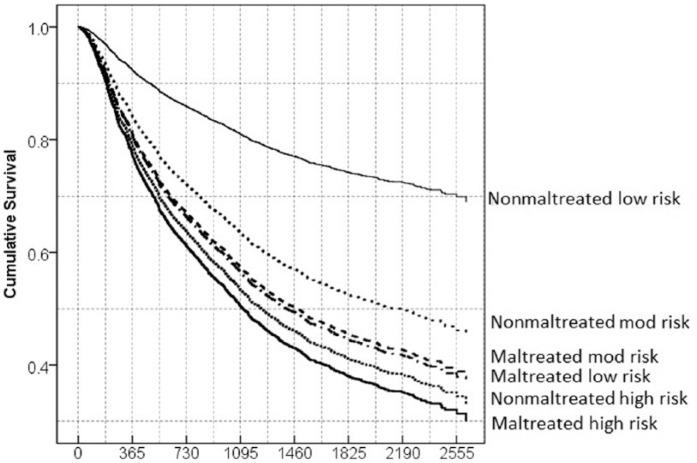
The purpose of the study is to examine the impact of childhood maltreatment on youth offender recidivism in Singapore. The study used case file coding on a sample of 3,744 youth offenders, among whom about 6% had a childhood maltreatment history. The results showed that the Youth Level of Service/Case Management Inventory 2.0 (YLS/CMI 2.0) ratings significantly predicted recidivism for nonmaltreated youth offenders, but not for maltreated youth offenders. Using propensity score matching, the result from a Cox regression analysis showed that maltreated youth offenders were 1.38 times as likely as their nonmaltreated counterparts to reoffend with a follow-up period of up to 7.4 years. The results implied that the YLS/CMI 2.0 measures were insufficient for assessing the risk for recidivism for the maltreated youth offenders, and that other information is needed to help assessors use the professional override when making the overall risk ratings.
该研究的目的是考察童年期受虐经历对新加坡青少年罪犯再犯的影响。该研究对3744名青少年罪犯的样本进行了案例档案编码,其中约6%有童年期受虐史。结果显示,青少年服务/案件管理量表2.0(YLS/CMI 2.0)评分能显著预测未受虐青少年罪犯的再犯情况,但对受虐青少年罪犯则不然。使用倾向得分匹配法,Cox回归分析结果表明,在长达7.4年的随访期内,受虐青少年罪犯再次犯罪的可能性是未受虐青少年罪犯的1.38倍。结果表明,YLS/CMI 2.0量表不足以评估受虐青少年罪犯的再犯风险,在进行总体风险评级时,还需要其他信息来帮助评估人员进行专业权衡。
 Zotero 插件