Miller Kai J, Schalk Gerwin, Hermes Dora, Ojemann Jeffrey G, Rao Rajesh P N
Departments of Neurosurgery, Stanford University, Stanford, California, United States of America.
NASA-Johnson Space Center, Houston, Texas, United States of America.
PLoS Comput Biol. 2016 Jan 28;12(1):e1004660. doi: 10.1371/journal.pcbi.1004660. eCollection 2016 Jan.
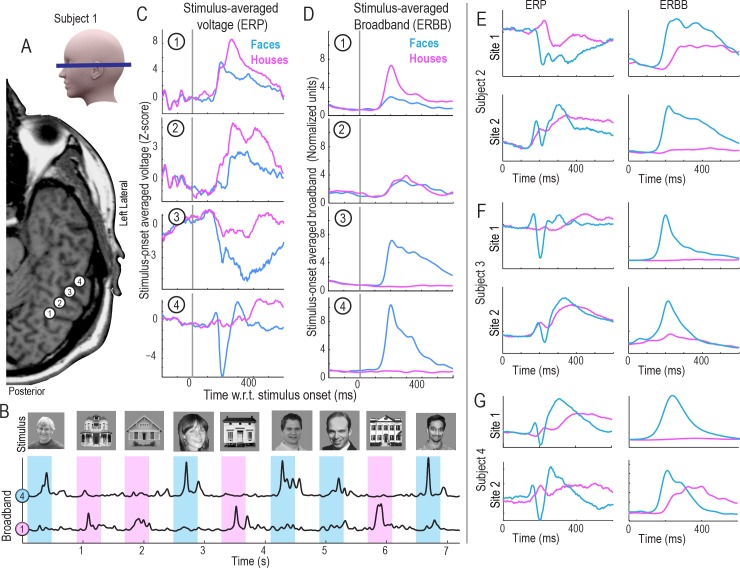
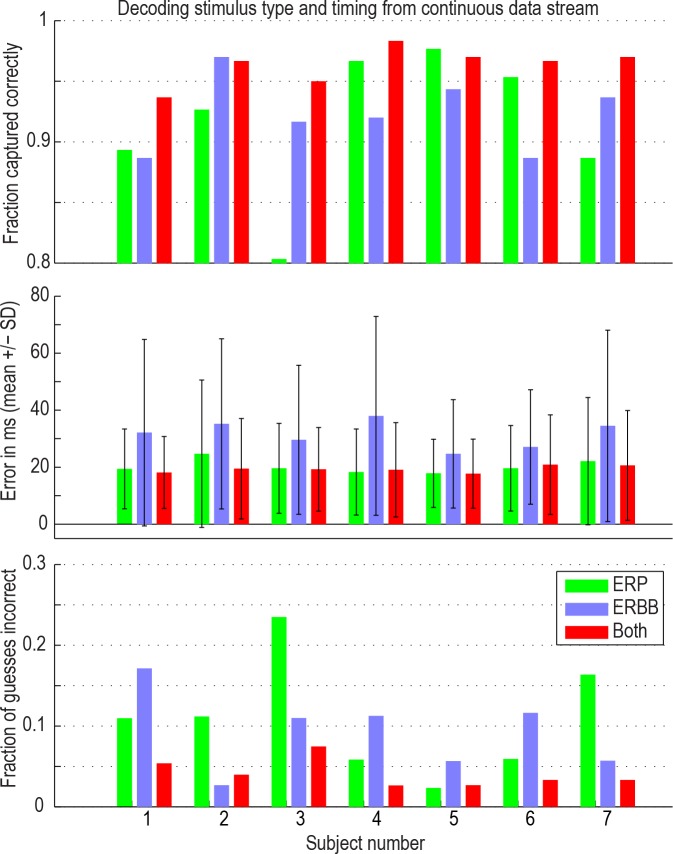
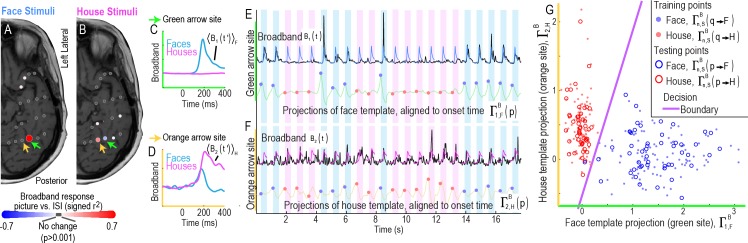
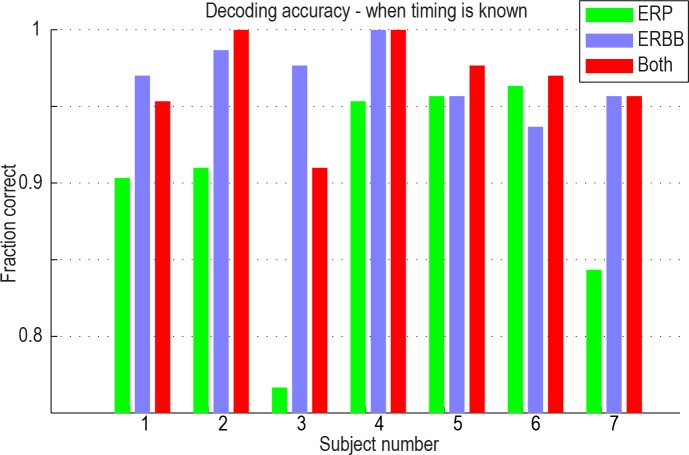
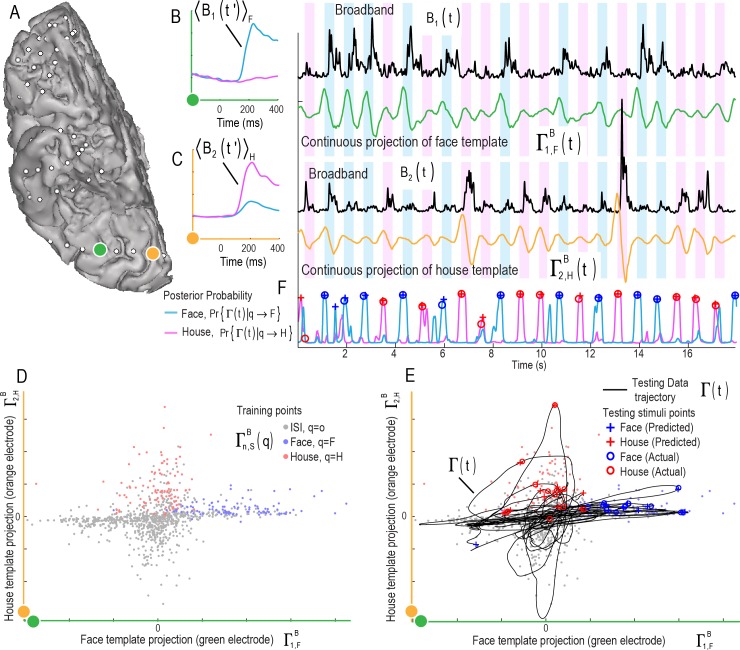
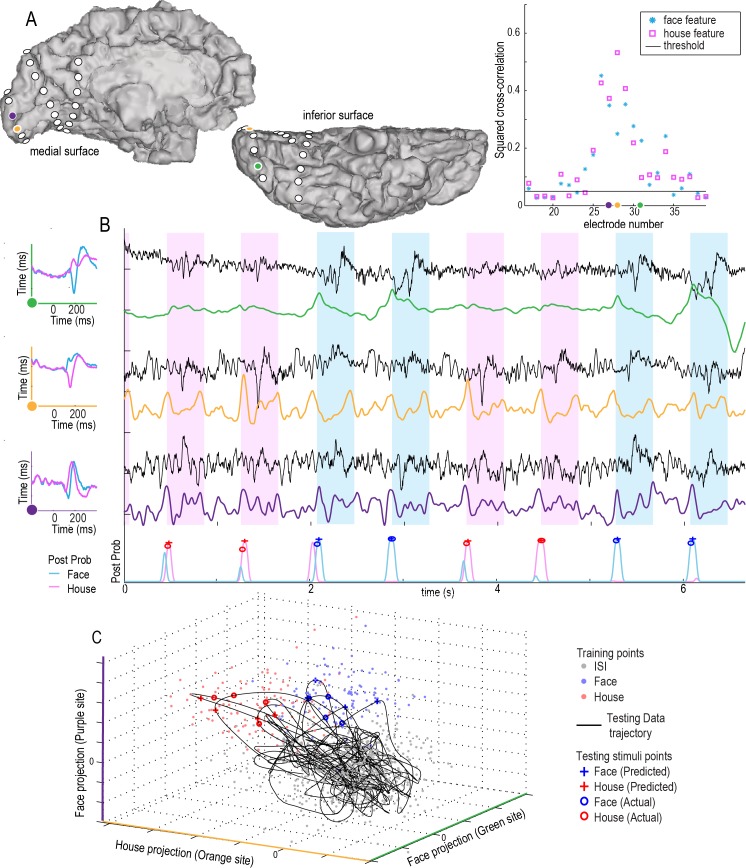
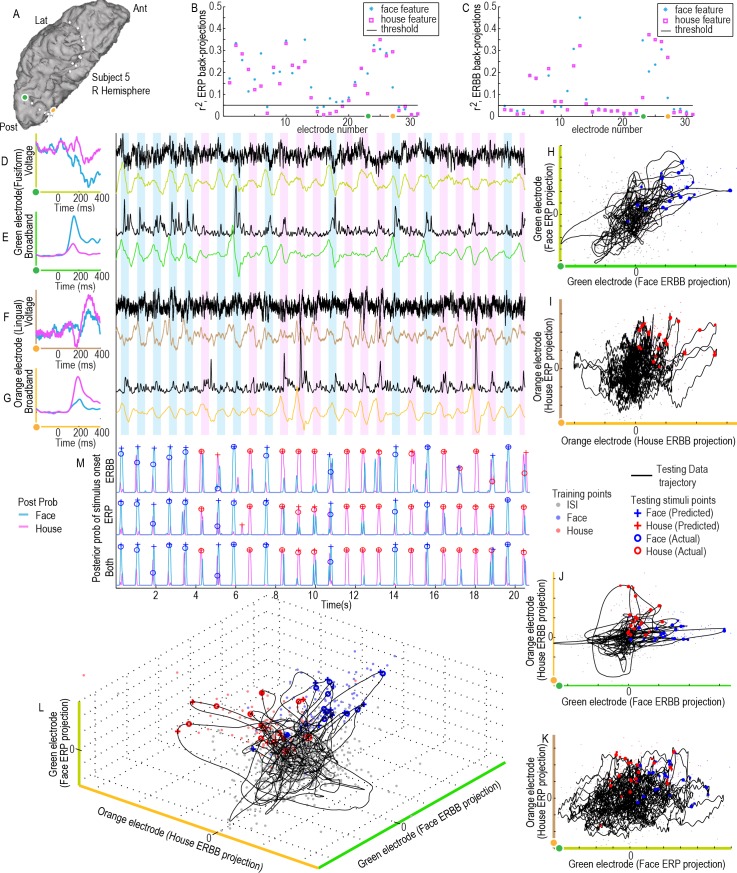
The link between object perception and neural activity in visual cortical areas is a problem of fundamental importance in neuroscience. Here we show that electrical potentials from the ventral temporal cortical surface in humans contain sufficient information for spontaneous and near-instantaneous identification of a subject's perceptual state. Electrocorticographic (ECoG) arrays were placed on the subtemporal cortical surface of seven epilepsy patients. Grayscale images of faces and houses were displayed rapidly in random sequence. We developed a template projection approach to decode the continuous ECoG data stream spontaneously, predicting the occurrence, timing and type of visual stimulus. In this setting, we evaluated the independent and joint use of two well-studied features of brain signals, broadband changes in the frequency power spectrum of the potential and deflections in the raw potential trace (event-related potential; ERP). Our ability to predict both the timing of stimulus onset and the type of image was best when we used a combination of both the broadband response and ERP, suggesting that they capture different and complementary aspects of the subject's perceptual state. Specifically, we were able to predict the timing and type of 96% of all stimuli, with less than 5% false positive rate and a ~20ms error in timing.
在神经科学领域,视觉皮层区域中物体感知与神经活动之间的联系是一个至关重要的基本问题。在此,我们表明,来自人类腹侧颞叶皮质表面的电势包含足够的信息,可用于自发且近乎即时地识别受试者的感知状态。将皮质脑电图(ECoG)阵列放置在七名癫痫患者的颞下皮质表面。面部和房屋的灰度图像以随机顺序快速显示。我们开发了一种模板投影方法,以自发地解码连续的ECoG数据流,预测视觉刺激的发生、时间和类型。在此背景下,我们评估了大脑信号两个经过充分研究的特征的独立使用和联合使用,即电势频率功率谱中的宽带变化以及原始电势轨迹中的偏转(事件相关电位;ERP)。当我们同时使用宽带响应和ERP时,预测刺激开始时间和图像类型的能力最佳,这表明它们捕捉到了受试者感知状态的不同且互补的方面。具体而言,我们能够预测所有刺激中96%的时间和类型,误报率低于5%,时间误差约为20毫秒。