Leone Tiziana, Cetorelli Valeria, Neal Sarah, Matthews Zoë
Department of Social Policy, LSE, London, UK.
Department of Social Statistics, University of Southampton, Southampton, UK.
BMJ Open. 2016 Jan 28;6(1):e009692. doi: 10.1136/bmjopen-2015-009692.
Evidence on whether removing fees benefits the poorest is patchy and weak. The aim of this paper is to measure the impact of user fee reforms on the probability of giving birth in an institution or undergoing a caesarean section (CS) in Ghana, Burkina Faso, Zambia, Cameroon and Nigeria for the poorest strata of the population.
Women's experience of user fees in 5 African countries.
Using quasi-experimental regression analysis we tested the impact of user fee reforms on facilities' births and CS differentiated by wealth, education and residence in Burkina Faso and Ghana. Mapping of the literature followed by key informant interviews are used to verify details of reform implementation and to confirm and support our countries' choice.
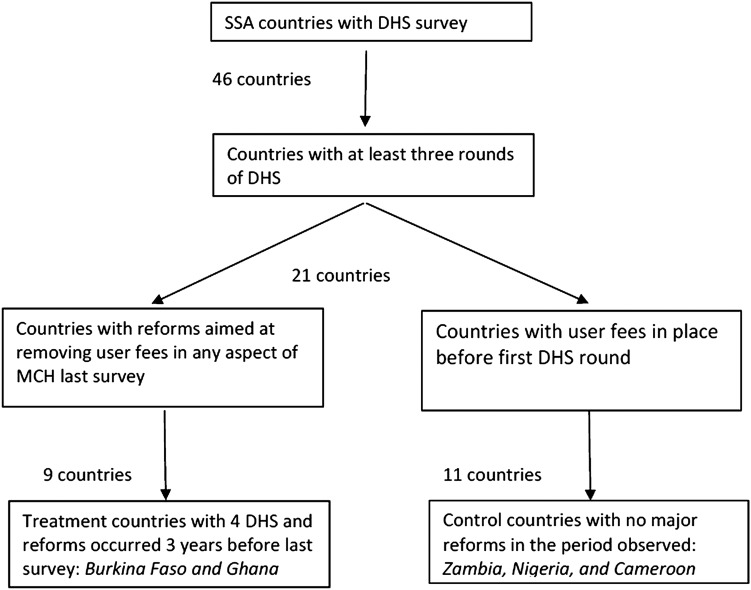
We analysed data from consecutive surveys in 5 countries: 2 case countries that experienced reforms (Ghana and Burkina Faso) by contrast with 3 that did not experience reforms (Zambia, Cameroon, Nigeria).
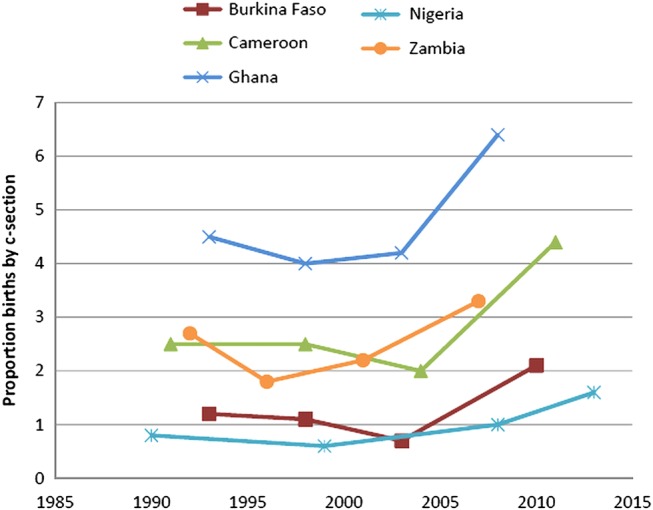
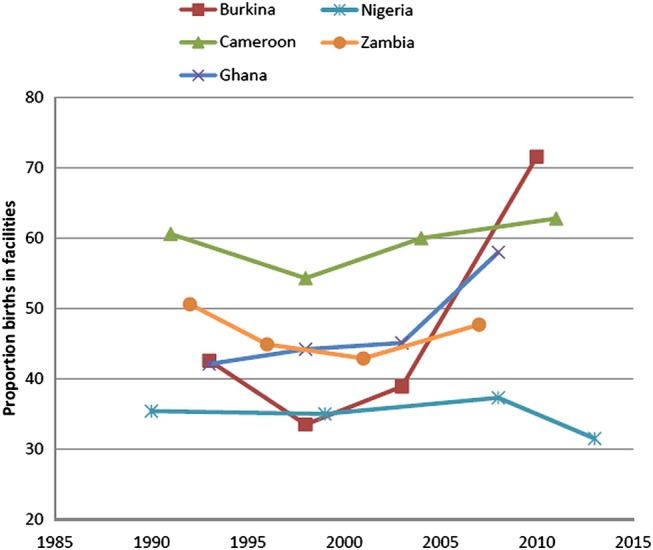
User fee reforms are associated with a significant percentage of the increase in access to facility births (27 percentage points) and to a much lesser extent to CS (0.7 percentage points). Poor (but not the poorest), and non-educated women, and those in rural areas benefitted the most from the reforms. User fees reforms have had a higher impact in Burkina Faso compared with Ghana.
Findings show a clear positive impact on access when user fees are removed, but limited evidence for improved availability of CS for those most in need. More women from rural areas and from lower socioeconomic backgrounds give birth in health facilities after fee reform. Speed and quality of implementation might be the key reason behind the differences between the 2 case countries. This calls for more research into the impact of reforms on quality of care.
关于取消费用是否有利于最贫困人群的证据零散且薄弱。本文旨在衡量加纳、布基纳法索、赞比亚、喀麦隆和尼日利亚等国取消用户费用改革对最贫困阶层在医疗机构分娩或接受剖宫产(CS)概率的影响。
5个非洲国家女性的用户费用体验。
我们采用准实验回归分析,测试了取消用户费用改革对布基纳法索和加纳按财富、教育程度和居住地划分的医疗机构分娩和剖宫产的影响。通过文献梳理并随后进行关键信息访谈,以核实改革实施的细节,并确认和支持我们对国家的选择。
我们分析了5个国家连续调查的数据:2个经历改革的案例国家(加纳和布基纳法索),与3个未经历改革的国家(赞比亚、喀麦隆、尼日利亚)进行对比。
取消用户费用改革与医疗机构分娩可及性显著增加(27个百分点)相关,而对剖宫产的影响程度要小得多(0.7个百分点)。贫困(但非最贫困)、未受过教育的女性以及农村地区的女性从改革中受益最大。与加纳相比,取消用户费用改革在布基纳法索产生的影响更大。
研究结果表明,取消用户费用对可及性有明显的积极影响,但对于最有需要的人群而言,剖宫产可及性改善的证据有限。费用改革后,更多来自农村地区和社会经济背景较低的女性在医疗机构分娩。实施的速度和质量可能是这两个案例国家存在差异的关键原因。这需要更多研究改革对医疗质量的影响。