Silve Aude, Leray Isabelle, Poignard Clair, Mir Lluis M
Institute for Pulsed Power and Microwave Technology, Karlsruhe Institute of Technology, Germany.
Laboratory of Vectorology and Anticancer Therapies, UMR 8203, CNRS, Univ.Paris-Sud, Université Paris-Saclay, Gustave Roussy, PR2, Villejuif, 94805, France.
Sci Rep. 2016 Feb 1;6:19957. doi: 10.1038/srep19957.
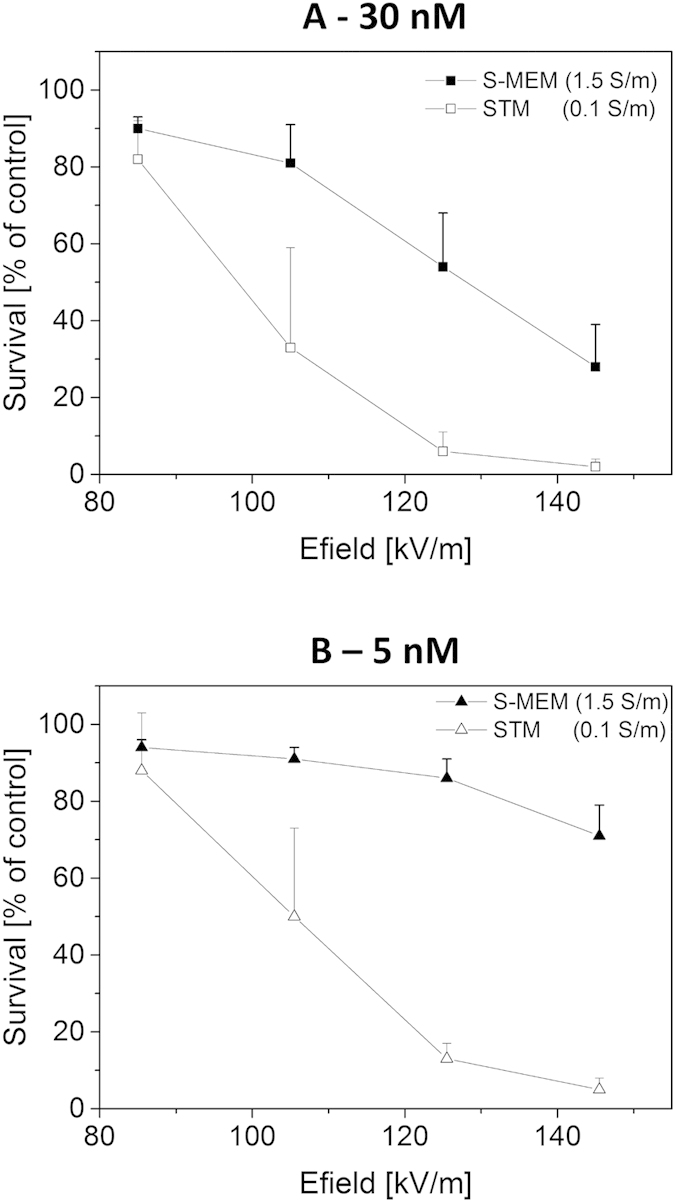
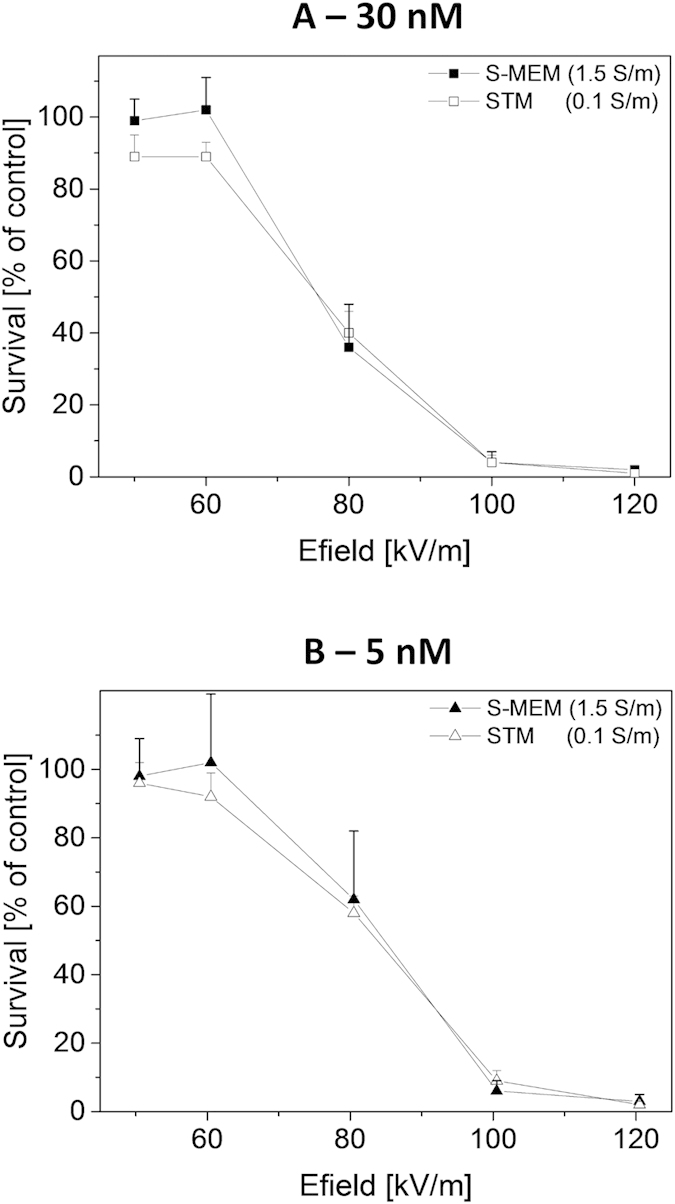
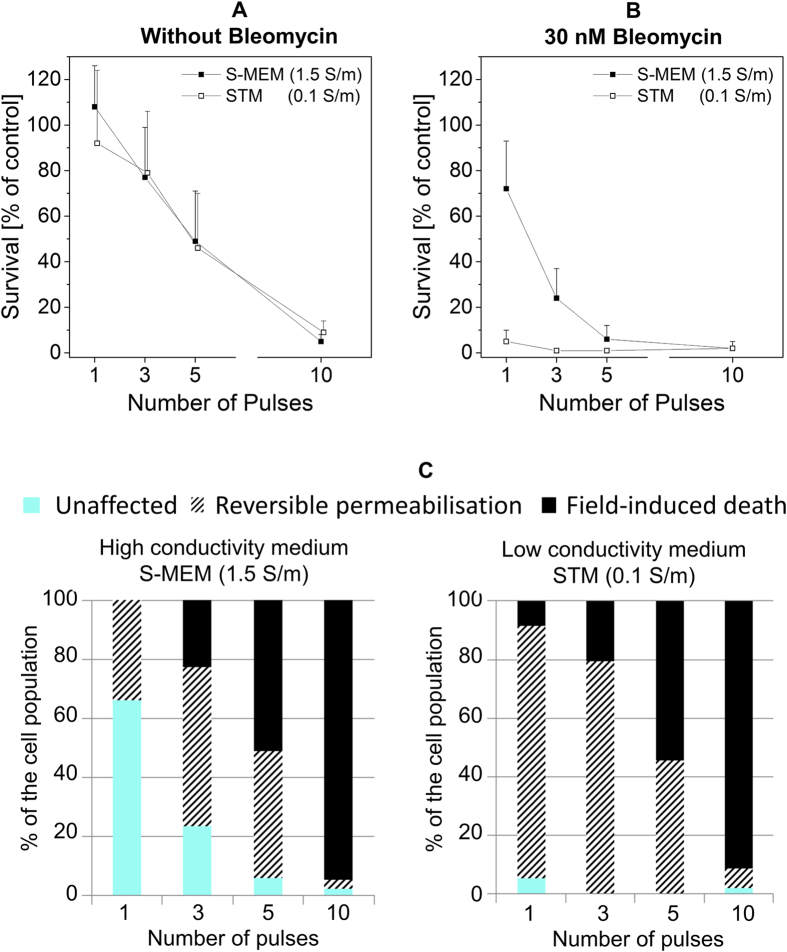
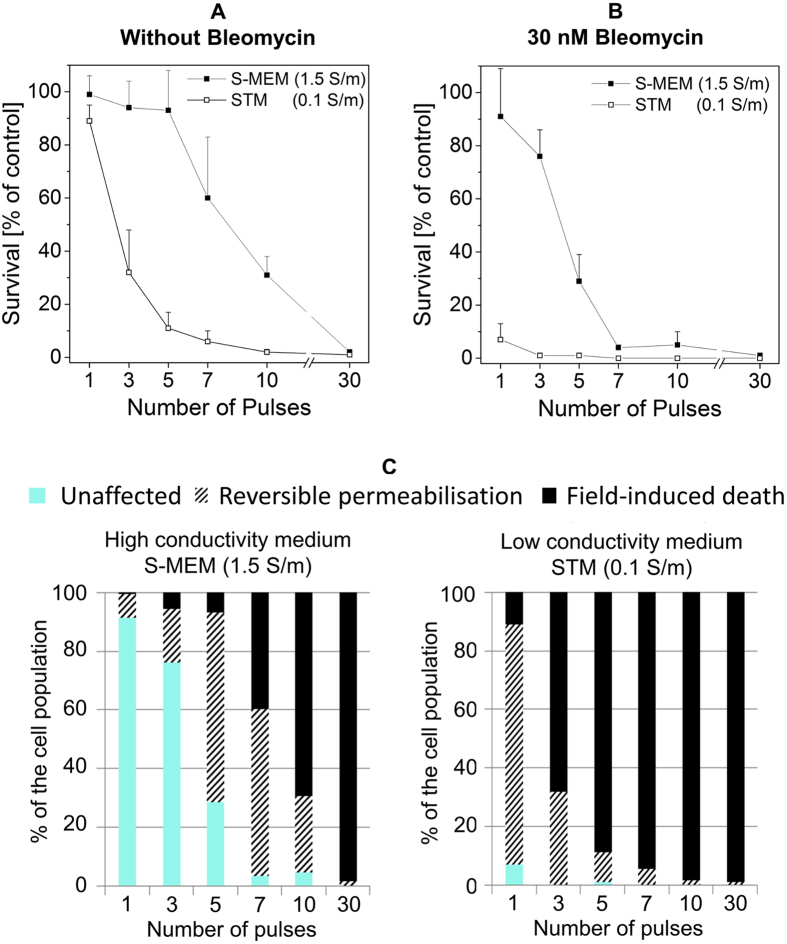
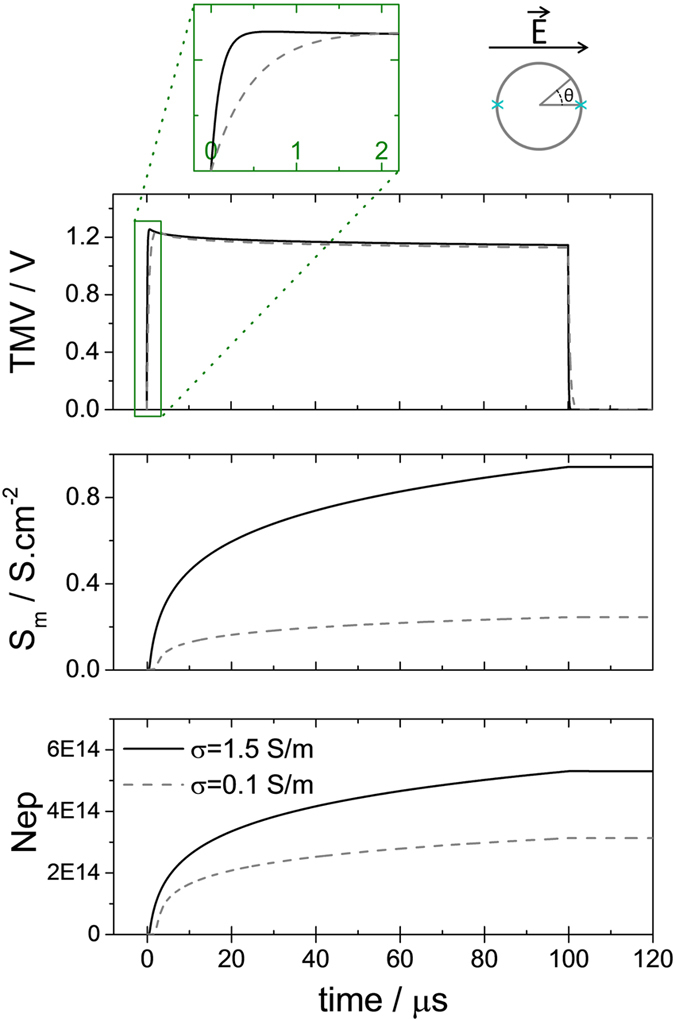
The impact of external medium conductivity on the efficiency of the reversible permeabilisation caused by pulsed electric fields was investigated. Pulses of 12 ns, 102 ns or 100 μs were investigated. Whenever permeabilisation could be detected after the delivery of one single pulse, media of lower conductivity induced more efficient reversible permeabilisation and thus independently of the medium composition. Effect of medium conductivity can however be hidden by some saturation effects, for example when pulses are cumulated (use of trains of 8 pulses) or when the detection method is not sensitive enough. This explains the contradicting results that can be found in the literature. The new data are complementary to those of one of our previous study in which an opposite effect of the conductivity was highlighted. It stresses that the conductivity of the medium influences the reversible permeabilization by several ways. Moreover, these results clearly indicate that electropermeabilisation does not linearly depend on the energy delivered to the cells.
研究了外部介质电导率对脉冲电场引起的可逆通透化效率的影响。研究了12纳秒、102纳秒或100微秒的脉冲。每当在施加单个脉冲后能够检测到通透化时,较低电导率的介质会诱导更有效的可逆通透化,因此与介质组成无关。然而,介质电导率的影响可能会被一些饱和效应掩盖,例如当脉冲累积时(使用8个脉冲的序列)或检测方法不够灵敏时。这解释了文献中可能出现的相互矛盾的结果。这些新数据补充了我们之前一项研究的数据,在该研究中突出了电导率的相反效应。它强调介质的电导率通过多种方式影响可逆通透化。此外,这些结果清楚地表明电通透化并不线性依赖于传递给细胞的能量。