Bridoux Flore, Stofberg Nicole, Den Hartog Deanne
International Strategy and Marketing, Amsterdam Business School, University of Amsterdam Amsterdam, Netherlands.
Amsterdam Business School, University of Amsterdam Amsterdam, Netherlands.
Front Psychol. 2016 Jan 14;6:1992. doi: 10.3389/fpsyg.2015.01992. eCollection 2015.
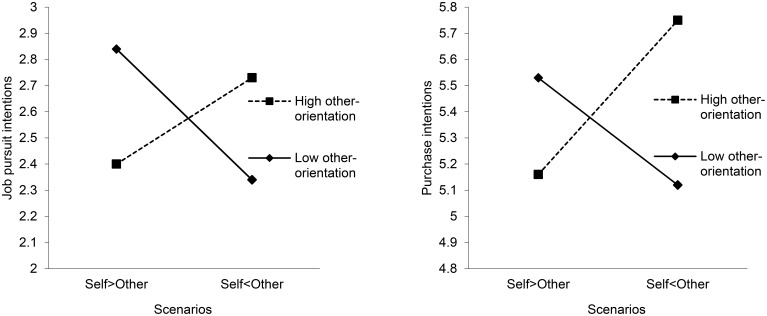
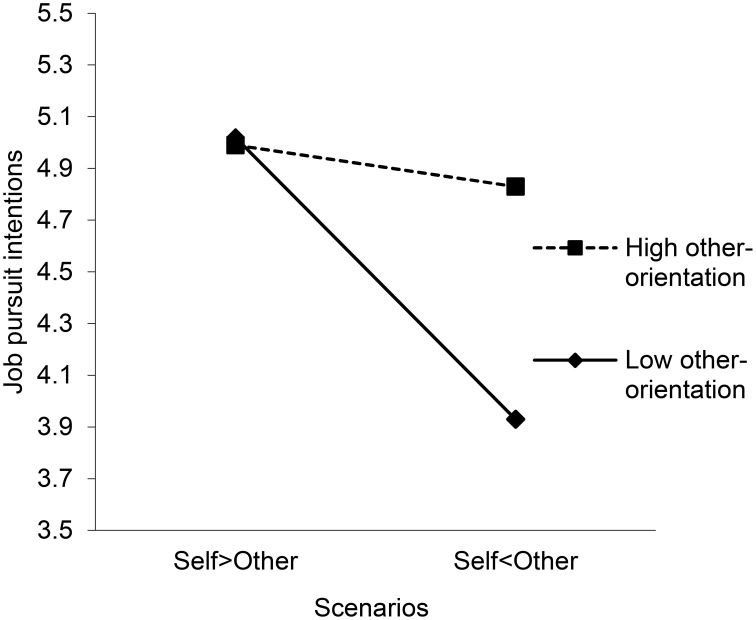
When investing in corporate social responsibility (CSR), managers may strive for a win-win scenario where all stakeholders end up better off, but they may not always be able to avoid trading off stakeholders' interests. To provide guidance to managers who have to make tradeoffs, this study used a vignette-based experiment to explore stakeholders' intention to associate with a firm (i.e., buy from or become an employee) that trades off CSR directed at the stakeholders' own group (self-directed CSR) and CSR directed at another stakeholder group (other-directed CSR). Results show that stakeholders were not systematically more attracted to a firm that favors their own group over another stakeholder group. Specifically, stakeholders' other-orientation moderated their reaction to tradeoffs: stakeholders higher on other-orientation were willing to forego some material benefits to associate with a firm that treated suppliers in developing countries significantly better than its competitors, whereas stakeholders lower on other-orientation were more attracted to a firm favoring their own stakeholder group. Other-orientation also moderated reactions to tradeoffs involving the environment, although high CSR directed at the environment did not compensate for low self-directed CSR even for stakeholders higher on other-orientation. Second, the vignette study showed that trust mediated the relationship between tradeoffs and stakeholders' reactions. The study contributes first and foremost to the burgeoning literature on CSR tradeoffs and to the multimotive approach to CSR, which claims that other motives can drive stakeholders' reactions to CSR in addition to self-interest. First, it provides further evidence that studying CSR tradeoffs is important to understand both (prospective) employees' and customers' reactions to CSR-related activities. Second, it identifies other-orientation as a motive-related individual difference that explains heterogeneity in stakeholders' reactions to CSR. These findings suggest several avenues for future research for organizational psychologists interested in organizational justice. Third, it investigates trust as a mediating mechanism. Fourth, it reveals differences in stakeholders' reactions depending on which other stakeholder group is involved in the tradeoff. For practice, the findings suggest that tradeoffs are important because they influence which stakeholders are attracted to the firm.
在投资企业社会责任(CSR)时,管理者可能会努力实现一种双赢局面,即所有利益相关者最终都能受益更多,但他们可能并不总能避免在利益相关者的利益之间进行权衡。为了给必须做出权衡的管理者提供指导,本研究采用了基于 vignette 的实验,以探讨利益相关者与一家在针对自身群体的企业社会责任(自我导向型企业社会责任)和针对另一个利益相关者群体的企业社会责任(其他导向型企业社会责任)之间进行权衡的公司建立联系(即从该公司购买产品或成为其员工)的意愿。结果表明,利益相关者并没有系统性地更倾向于一家偏袒自身群体而非其他利益相关者群体的公司。具体而言,利益相关者的他人导向调节了他们对权衡的反应:他人导向较高的利益相关者愿意放弃一些物质利益,去与一家对待发展中国家供应商比其竞争对手好得多的公司建立联系,而他人导向较低的利益相关者则更被一家偏袒自身利益相关者群体的公司所吸引。他人导向也调节了对涉及环境的权衡的反应,尽管即使对于他人导向较高的利益相关者来说,针对环境的高企业社会责任也无法弥补低自我导向型企业社会责任。其次, vignette 研究表明,信任在权衡与利益相关者反应之间起到了中介作用。该研究首先为新兴的企业社会责任权衡文献以及企业社会责任的多动机方法做出了贡献,该方法认为除了自身利益之外,其他动机也可以驱动利益相关者对企业社会责任的反应。首先,它提供了进一步的证据,表明研究企业社会责任权衡对于理解(潜在)员工和客户对企业社会责任相关活动的反应很重要。其次,它将他人导向确定为一种与动机相关的个体差异,解释了利益相关者对企业社会责任反应的异质性。这些发现为对组织公正感兴趣的组织心理学家提供了未来研究的几个方向。第三,它研究了信任作为一种中介机制。第四,它揭示了利益相关者反应的差异,这取决于在权衡中涉及的其他利益相关者群体。对于实践而言,这些发现表明权衡很重要,因为它们会影响哪些利益相关者被公司所吸引。