Karch Susanne, Loy Fabian, Krause Daniela, Schwarz Sandra, Kiesewetter Jan, Segmiller Felix, Chrobok Agnieszka I, Keeser Daniel, Pogarell Oliver
Department of Psychiatry and Psychotherapy, Ludwig-Maximilians-University Munich, Germany.
Department of Psychiatry and Psychotherapy, Ludwig-Maximilians-UniversityMunich, Germany; Department of Child and Adolescent Psychiatry, Psychotherapy and Psychosomatic Medicine, Ludwig-Maximilians-UniversityMunich, Germany.
Front Psychol. 2016 Jan 22;7:7. doi: 10.3389/fpsyg.2016.00007. eCollection 2016.
Internally guided actions are defined as being purposeful, self-generated and offering choices between alternatives. Intentional actions are essential to reach individual goals. In previous empirical studies, internally guided actions were predominantly related to functional responses in frontal and parietal areas. The aim of the present study was to distinguish event-related potentials and oscillatory responses of intentional actions and externally guided actions. In addition, we compared neurobiological findings of the decision which action to perform with those referring to the decision whether or not to perform an action.
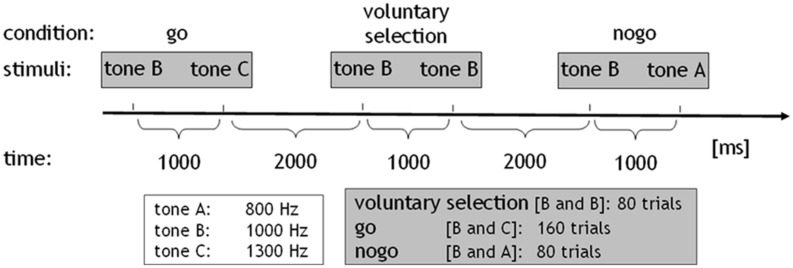
Twenty-eight subjects participated in adapted go/nogo paradigms, including a voluntary selection condition allowing participants to (1) freely decide whether to press the response button or (2) to decide whether they wanted to press the response button with the right index finger or the left index finger.
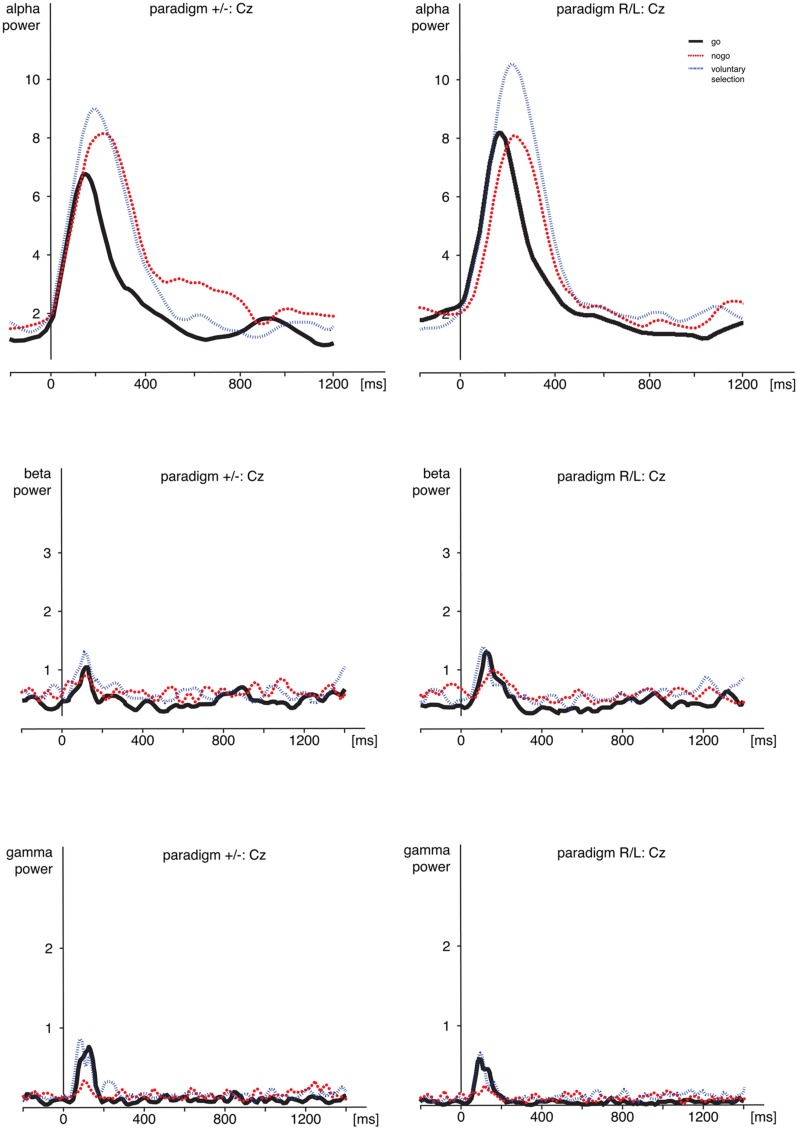
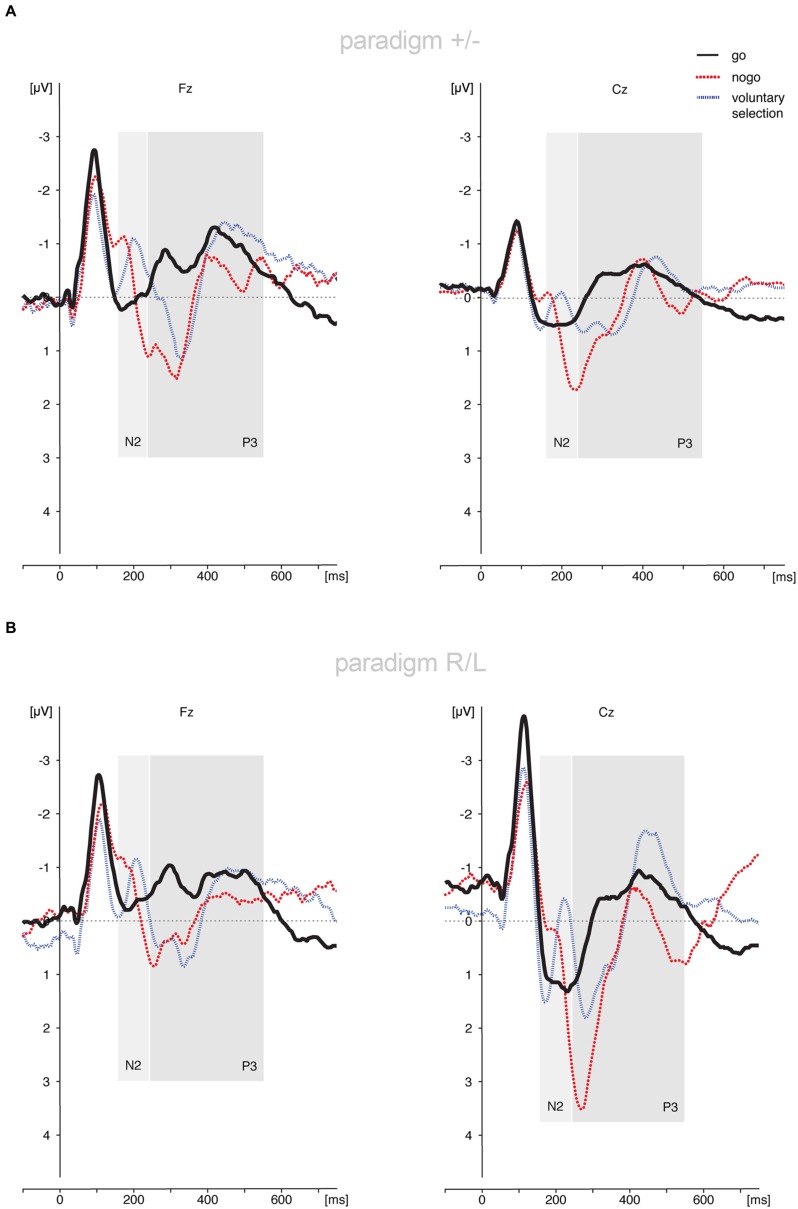
The reaction times were increased when participants freely decided whether and how they wanted to respond compared to the go condition. Intentional processes were associated with a fronto-centrally located N2 and P3 potential. N2 and P3 amplitudes were increased during intentional actions compared to instructed responses (go). In addition, increased activity in the alpha-, beta- and gamma-frequency range was shown during voluntary behavior rather than during externally guided responses.
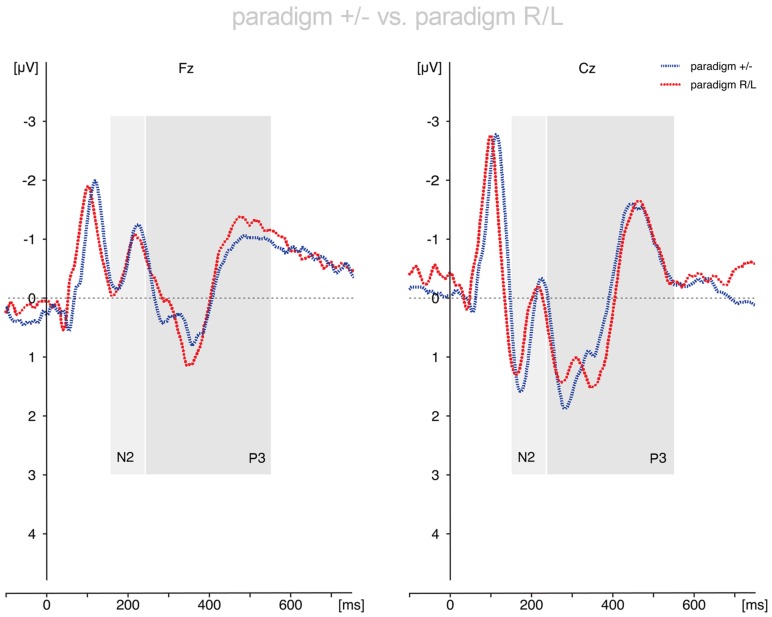
These results may indicate that an additional cognitive process is needed for intentional actions compared to instructed behavior. However, the neural responses were comparatively independent of the kind of decision that was made (1) decision which action to perform; (2) decision whether or not to perform an action).
The study demonstrates the importance of fronto-central alpha-, beta-, and gamma oscillations for voluntary behavior.
内在引导的行动被定义为有目的的、自我产生的且在多种选择之间进行抉择。意向性行动对于实现个人目标至关重要。在先前的实证研究中,内在引导的行动主要与额叶和顶叶区域的功能性反应相关。本研究的目的是区分意向性行动和外部引导行动的事件相关电位及振荡反应。此外,我们比较了关于执行何种行动的决策与关于是否执行行动的决策的神经生物学发现。
28名受试者参与了适应性的“执行/不执行”范式,包括一个自愿选择条件,使参与者能够(1)自由决定是否按下反应按钮,或(2)决定他们想用右手食指还是左手食指按下反应按钮。
与“执行”条件相比,当参与者自由决定是否以及如何做出反应时,反应时间增加。意向性过程与额叶中央部位的N2和P3电位相关。与指令性反应(执行)相比,意向性行动期间N2和P3波幅增加。此外,在自愿行为期间而非外部引导反应期间,α、β和γ频段的活动增加。
这些结果可能表明,与指令性行为相比,意向性行动需要额外的认知过程。然而,神经反应相对独立于所做决策的类型(1)执行何种行动的决策;(2)是否执行行动的决策)。
该研究证明了额叶中央α、β和γ振荡对自愿行为的重要性。