Delfosse Kathleen, Wozny Michael R, Jaipargas Erica-Ashley, Barton Kiah A, Anderson Cole, Mathur Jaideep
Laboratory of Plant Development and Interactions, Department of Molecular and Cellular Biology, University of Guelph Guelph, ON, Canada.
Front Plant Sci. 2016 Jan 20;6:1253. doi: 10.3389/fpls.2015.01253. eCollection 2015.
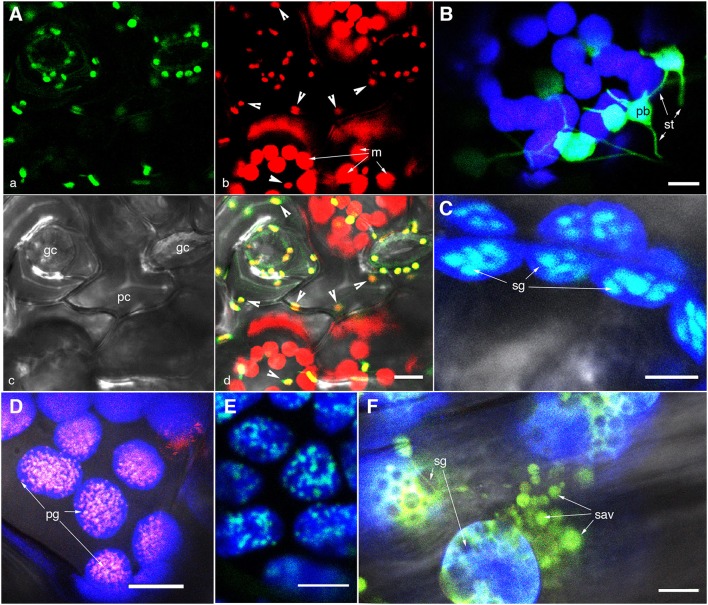
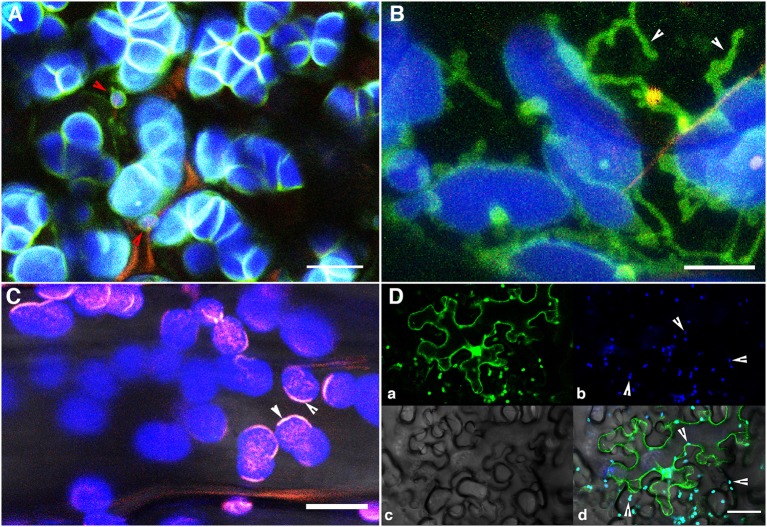
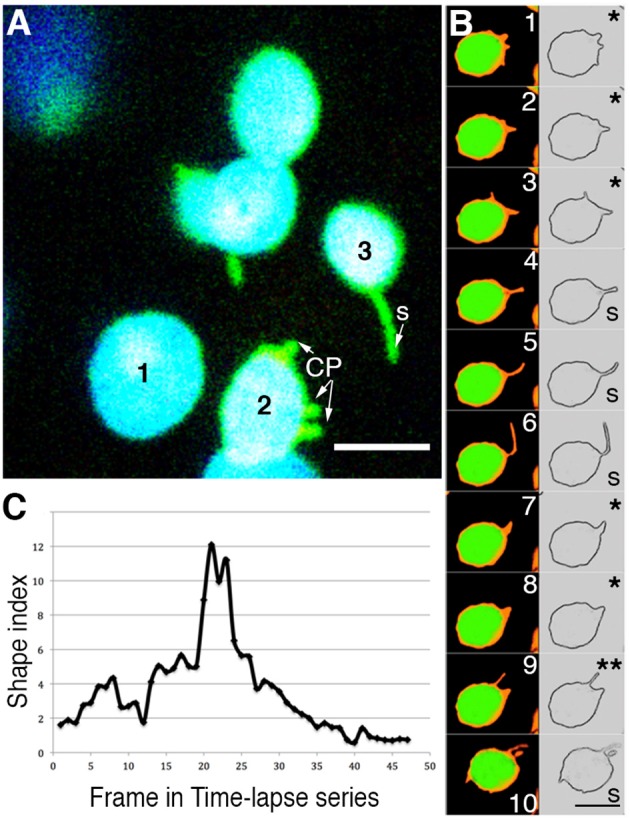
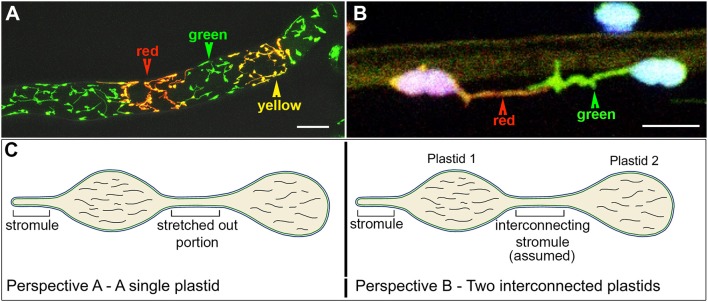
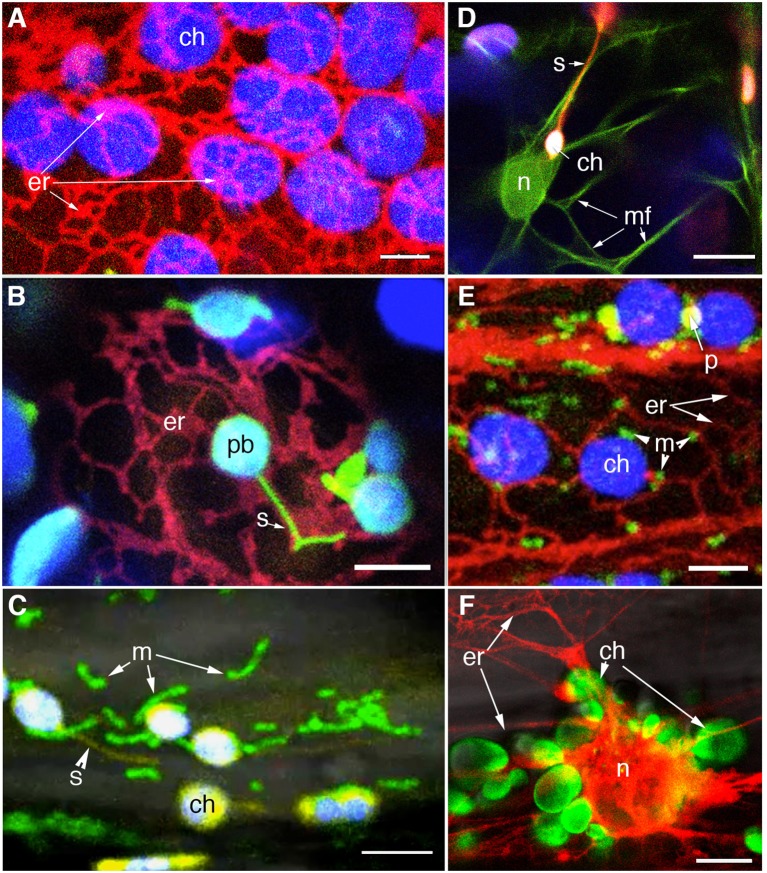
Multi-colored fluorescent proteins targeted to plastids have provided new insights on the dynamic behavior of these organelles and their interactions with other cytoplasmic components and compartments. Sub-plastidic components such as thylakoids, stroma, the inner and outer membranes of the plastid envelope, nucleoids, plastoglobuli, and starch grains have been efficiently highlighted in living plant cells. In addition, stroma filled membrane extensions called stromules have drawn attention to the dynamic nature of the plastid and its interactions with the rest of the cell. Use of dual and triple fluorescent protein combinations has begun to reveal plastid interactions with mitochondria, the nucleus, the endoplasmic reticulum and F-actin and suggests integral roles of plastids in retrograde signaling, cell to cell communication as well as plant-pathogen interactions. While the rapid advances and insights achieved through fluorescent protein based research on plastids are commendable it is necessary to endorse meaningful observations but subject others to closer scrutiny. Here, in order to develop a better and more comprehensive understanding of plastids and their extensions we provide a critical appraisal of recent information that has been acquired using targeted fluorescent protein probes.
靶向质体的多色荧光蛋白为这些细胞器的动态行为及其与其他细胞质成分和区室的相互作用提供了新的见解。类囊体、基质、质体包膜的内膜和外膜、类核、质体小球和淀粉粒等亚质体成分已在活植物细胞中得到有效突出显示。此外,被称为质体小管的充满基质的膜延伸结构,已引起人们对质体动态性质及其与细胞其他部分相互作用的关注。使用双荧光蛋白和三荧光蛋白组合已开始揭示质体与线粒体、细胞核、内质网和F-肌动蛋白的相互作用,并表明质体在逆行信号传导、细胞间通讯以及植物-病原体相互作用中发挥着不可或缺的作用。虽然基于荧光蛋白的质体研究取得的快速进展和见解值得称赞,但有必要认可有意义的观察结果,而对其他结果则需进行更仔细的审查。在此,为了更好、更全面地了解质体及其延伸结构,我们对使用靶向荧光蛋白探针获得的最新信息进行了批判性评估。