Zhang Long, Ren Yulong, Lu Bingyue, Yang Chunyan, Feng Zhiming, Liu Zhou, Chen Jun, Ma Weiwei, Wang Ying, Yu Xiaowen, Wang Yunlong, Zhang Wenwei, Wang Yihua, Liu Shijia, Wu Fuqing, Zhang Xin, Guo Xiuping, Bao Yiqun, Jiang Ling, Wan Jianmin
State Key Laboratory for Crop Genetics and Germplasm Enhancement, Jiangsu Plant Gene Engineering Research Center, Nanjing Agricultural University, Nanjing 210095, PR China.
National Key Facility for Crop Resources and Genetic Improvement, Institute of Crop Science, Chinese Academy of Agricultural Sciences, Beijing 100081, PR China.
J Exp Bot. 2016 Feb;67(3):633-47. doi: 10.1093/jxb/erv469. Epub 2015 Nov 24.
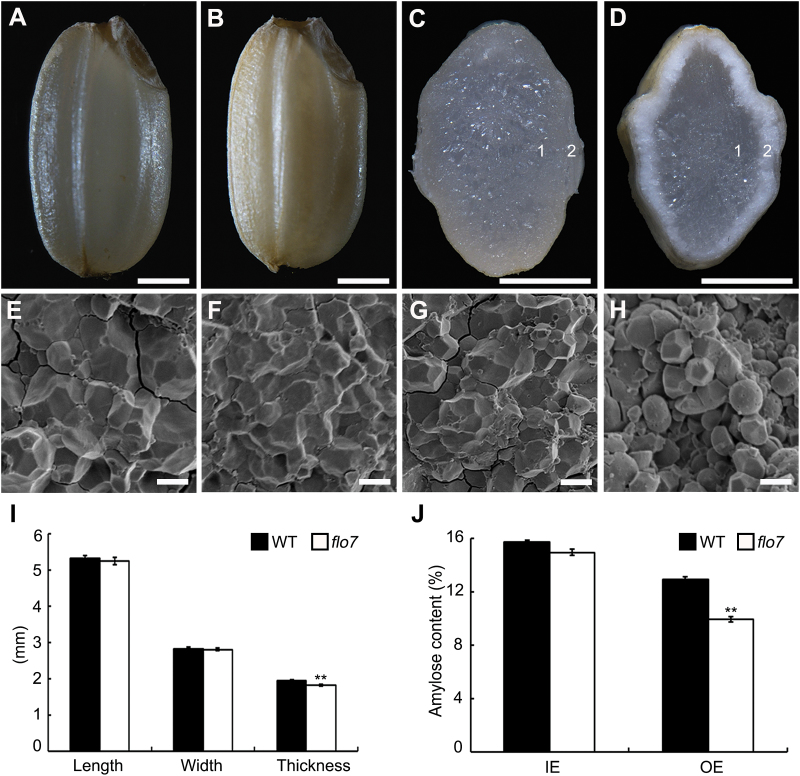
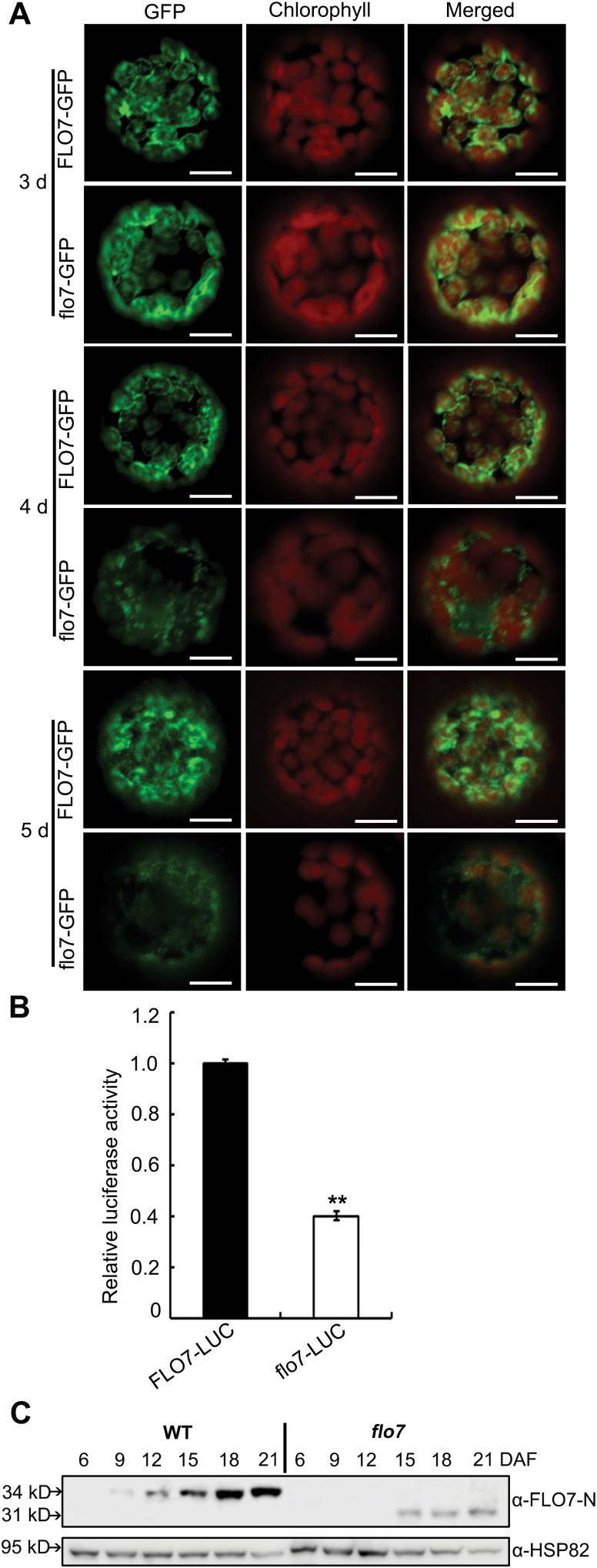
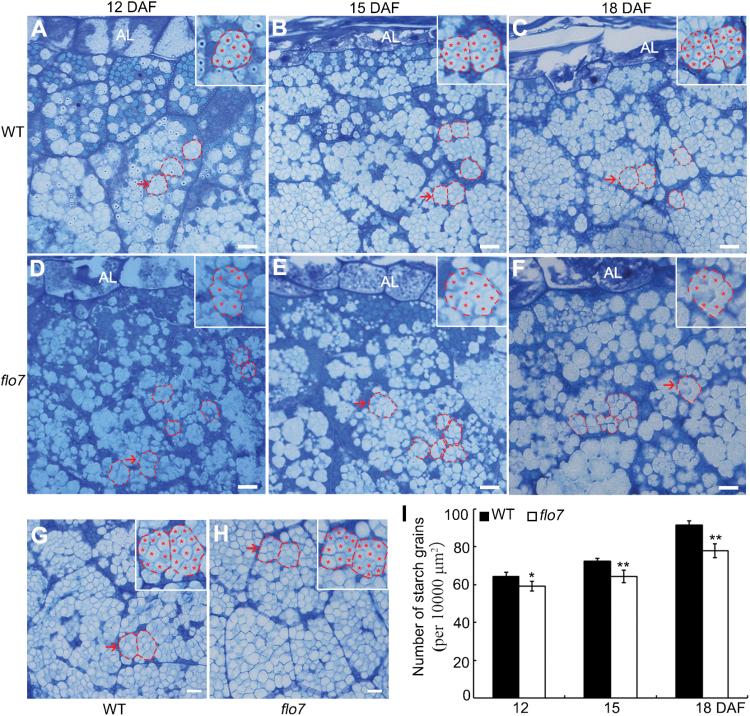
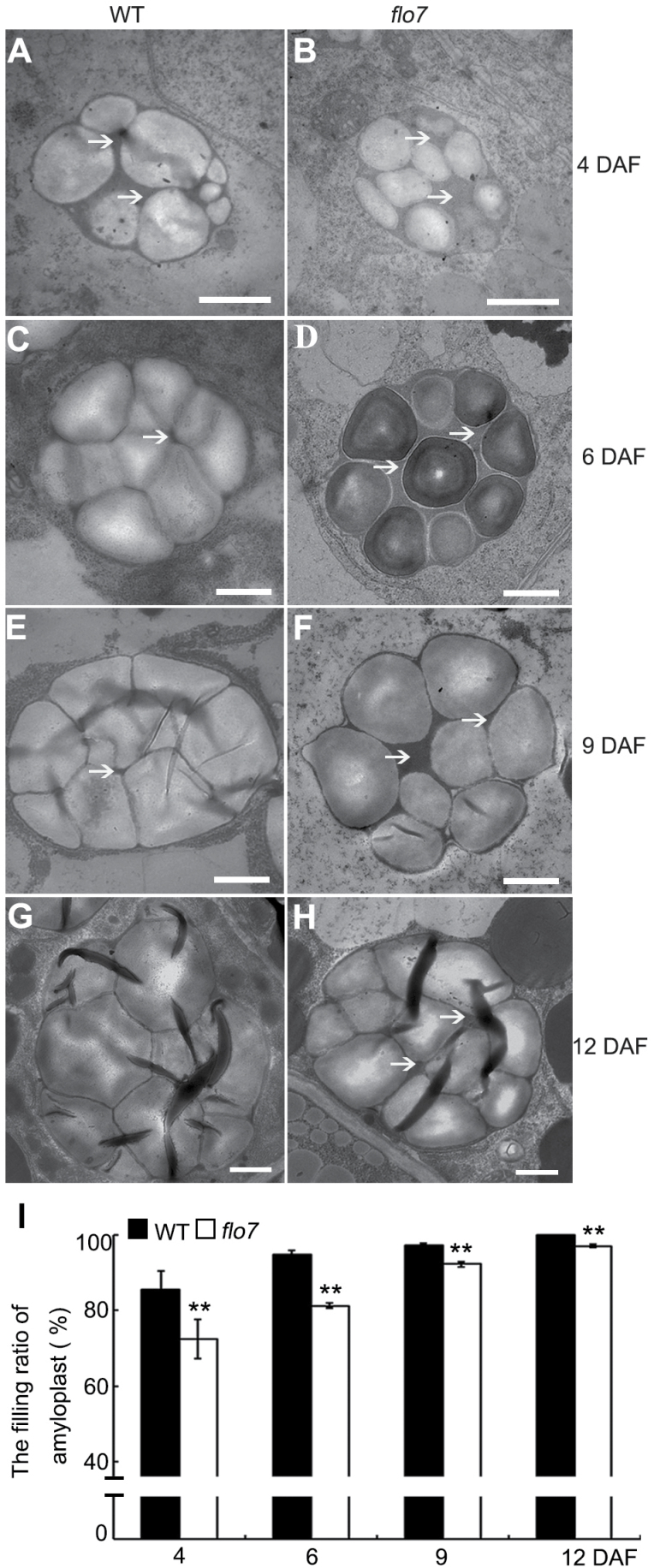
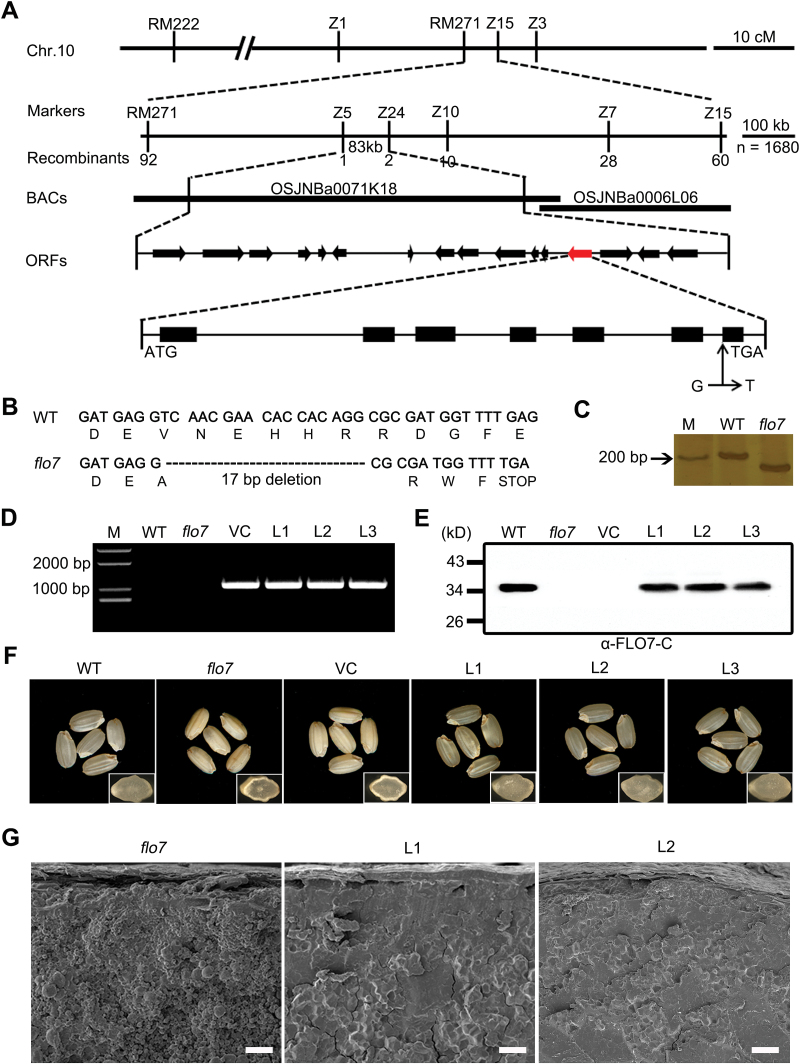
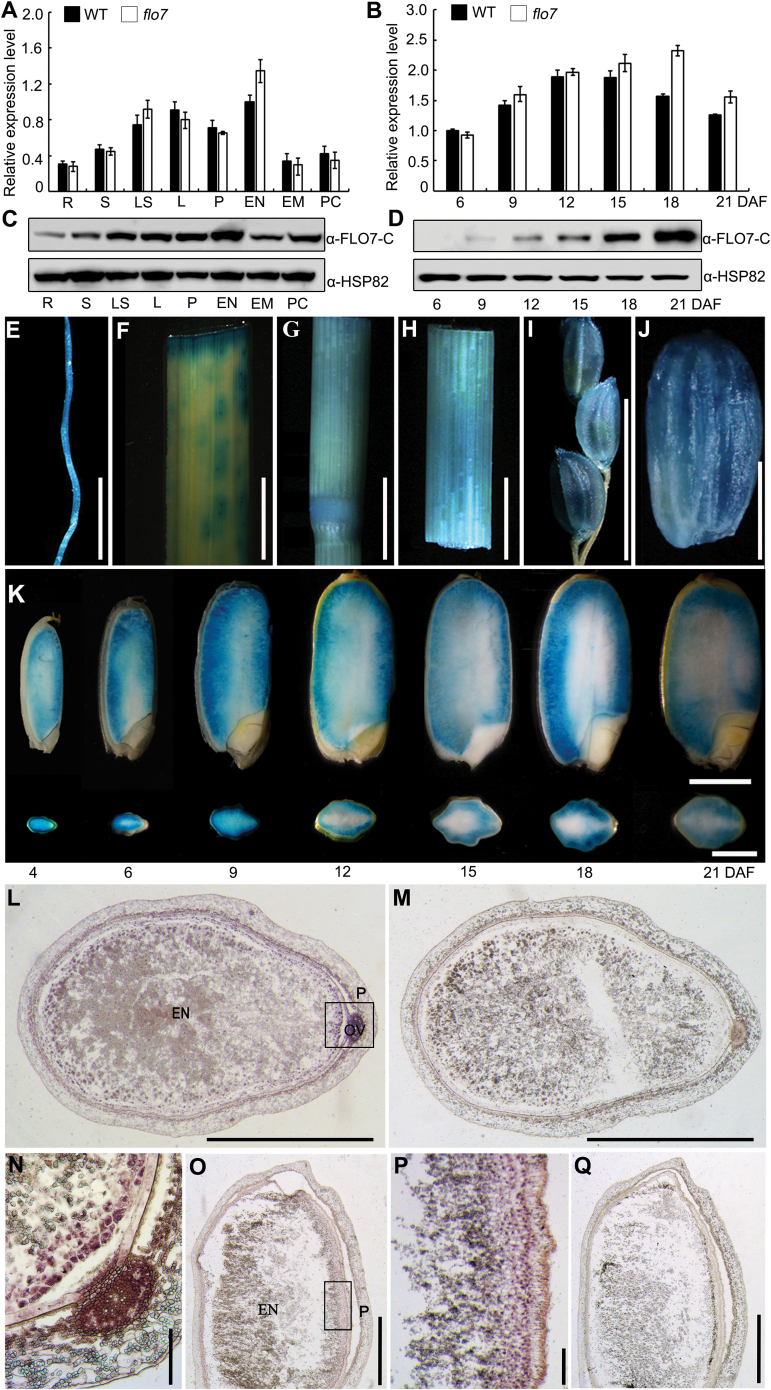
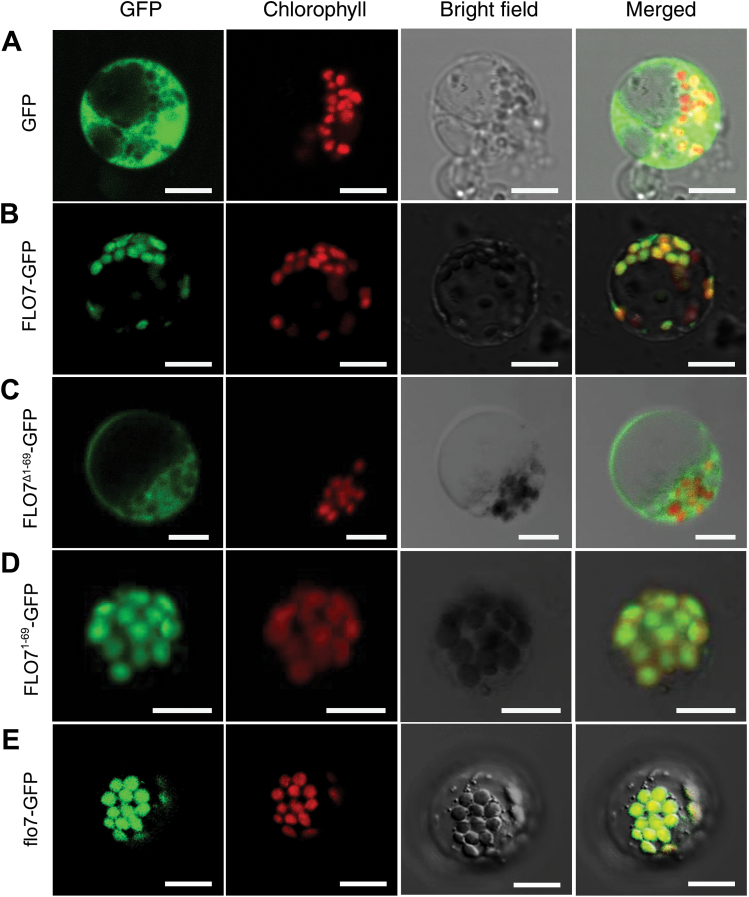
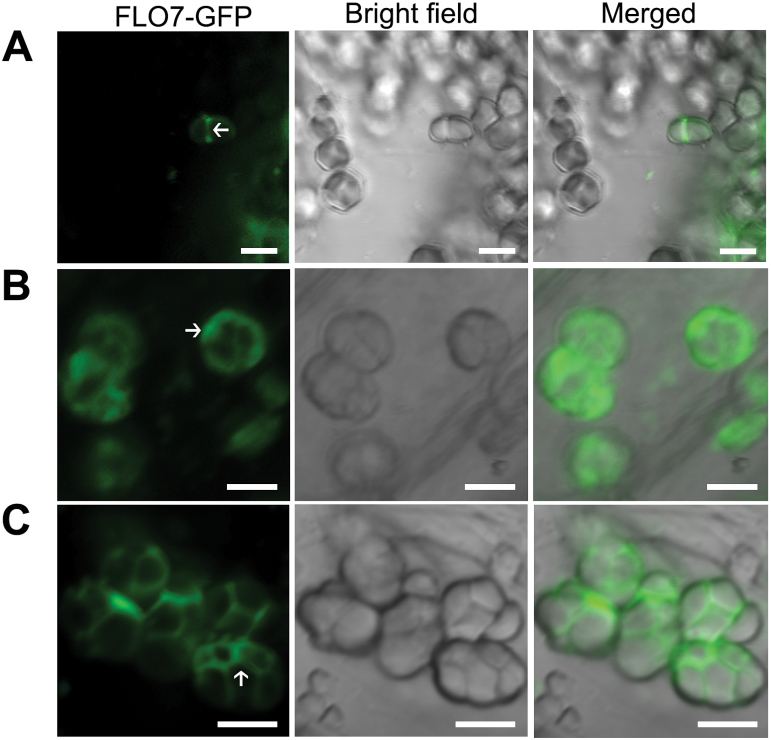
In cereal crops, starch synthesis and storage depend mainly on a specialized class of plastids, termed amyloplasts. Despite the importance of starch, the molecular machinery regulating starch synthesis and amyloplast development remains largely unknown. Here, we report the characterization of the rice (Oryza sativa) floury endosperm7 (flo7) mutant, which develops a floury-white endosperm only in the periphery and not in the inner portion. Consistent with the phenotypic alternation in flo7 endosperm, the flo7 mutant had reduced amylose content and seriously disrupted amylopectin structure only in the peripheral endosperm. Notably, flo7 peripheral endosperm cells showed obvious defects in compound starch grain development. Map-based cloning of FLO7 revealed that it encodes a protein of unknown function. FLO7 harbors an N-terminal transit peptide capable of targeting functional FLO7 fused to green fluorescent protein to amyloplast stroma in developing endosperm cells, and a domain of unknown function 1338 (DUF1338) that is highly conserved in green plants. Furthermore, our combined β-glucuronidase activity and RNA in situ hybridization assays showed that the FLO7 gene was expressed ubiquitously but exhibited a specific expression in the endosperm periphery. Moreover, a set of in vivo experiments demonstrated that the missing 32 aa in the flo7 mutant protein are essential for the stable accumulation of FLO7 in the endosperm. Together, our findings identify FLO7 as a unique plant regulator required for starch synthesis and amyloplast development within the peripheral endosperm and provide new insights into the spatial regulation of endosperm development in rice.
在谷类作物中,淀粉的合成与储存主要依赖于一类特化的质体,即造粉体。尽管淀粉很重要,但调控淀粉合成和造粉体发育的分子机制仍 largely 未知。在此,我们报道了水稻(Oryza sativa)粉质胚乳7(flo7)突变体的特征,该突变体仅在胚乳外周发育出粉质白色胚乳,而内部没有。与 flo7 胚乳的表型变化一致,flo7 突变体仅在外周胚乳中直链淀粉含量降低且支链淀粉结构严重破坏。值得注意的是,flo7 外周胚乳细胞在复合淀粉粒发育方面表现出明显缺陷。通过图位克隆 FLO7 发现它编码一种功能未知的蛋白质。FLO7 含有一个 N 端转运肽,能够将与绿色荧光蛋白融合的功能性 FLO7 靶向发育中胚乳细胞的造粉体基质,以及一个在绿色植物中高度保守的未知功能结构域 1338(DUF1338)。此外,我们结合β-葡萄糖醛酸酶活性和 RNA 原位杂交分析表明,FLO7 基因在各处均有表达,但在胚乳外周有特异性表达。而且,一系列体内实验表明,flo7 突变体蛋白中缺失的 32 个氨基酸对于 FLO7 在胚乳中的稳定积累至关重要。总之,我们的研究结果确定 FLO7 是外周胚乳中淀粉合成和造粉体发育所需的独特植物调节因子,并为水稻胚乳发育的空间调控提供了新见解。