Suppr超能文献

核心生物钟基因Bmal1的表达时间会影响其对衰老和生存的作用。

Timing of expression of the core clock gene Bmal1 influences its effects on aging and survival.

作者信息

Yang Guangrui, Chen Lihong, Grant Gregory R, Paschos Georgios, Song Wen-Liang, Musiek Erik S, Lee Vivian, McLoughlin Sarah C, Grosser Tilo, Cotsarelis George, FitzGerald Garret A

机构信息

The Institute for Translational Medicine and Therapeutics, Perelman School of Medicine, University of Pennsylvania, Philadelphia, PA 19104, USA.

The Institute for Translational Medicine and Therapeutics, Perelman School of Medicine, University of Pennsylvania, Philadelphia, PA 19104, USA. Department of Genetics, University of Pennsylvania, Philadelphia, PA 19104, USA.

出版信息

Sci Transl Med. 2016 Feb 3;8(324):324ra16. doi: 10.1126/scitranslmed.aad3305.

Abstract

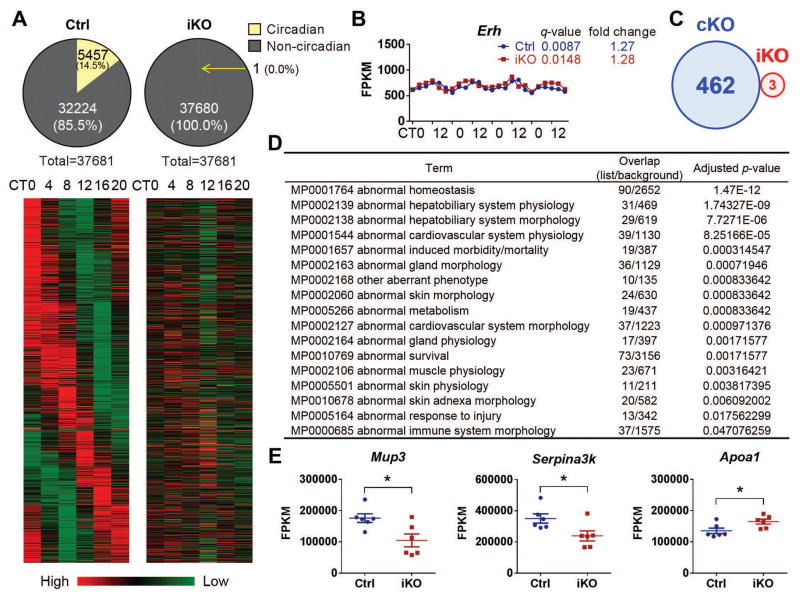
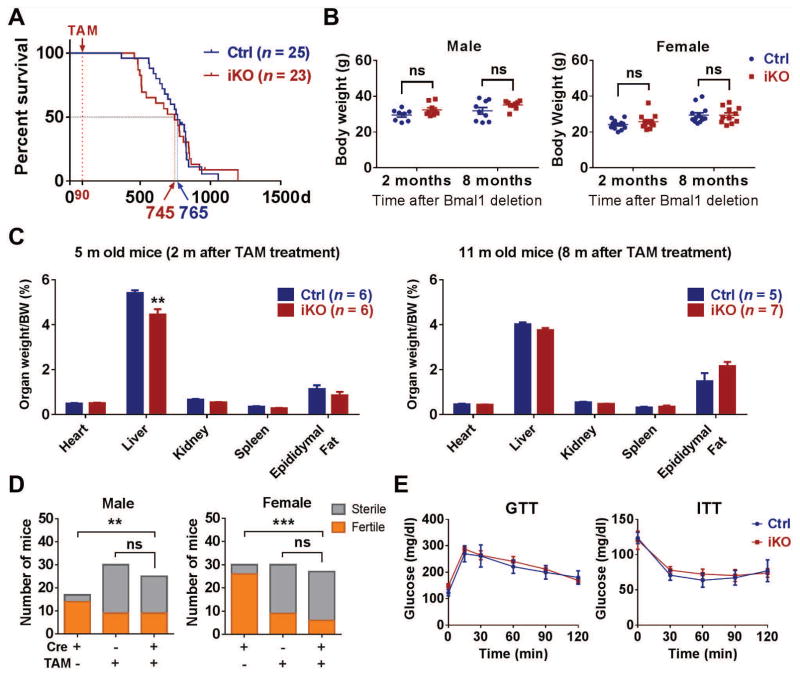
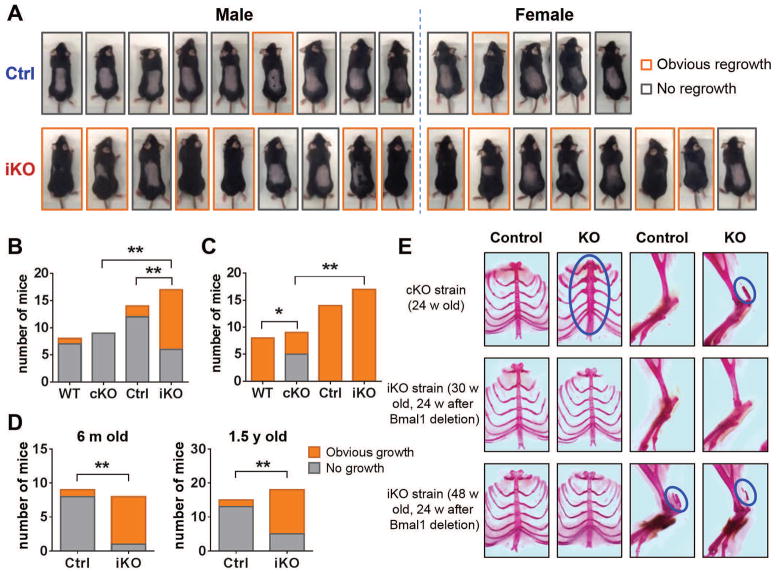
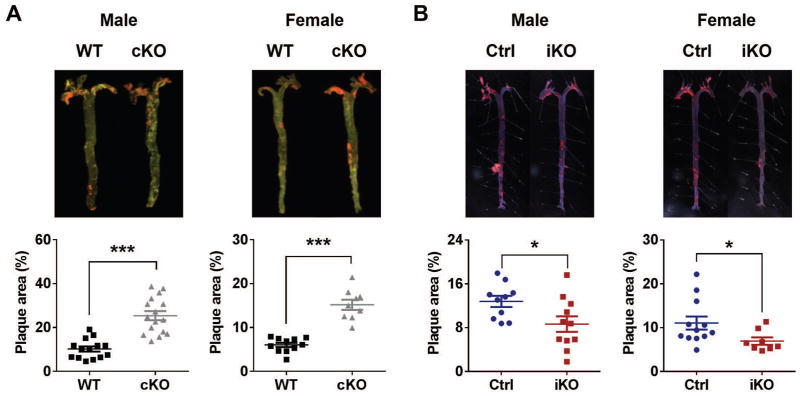
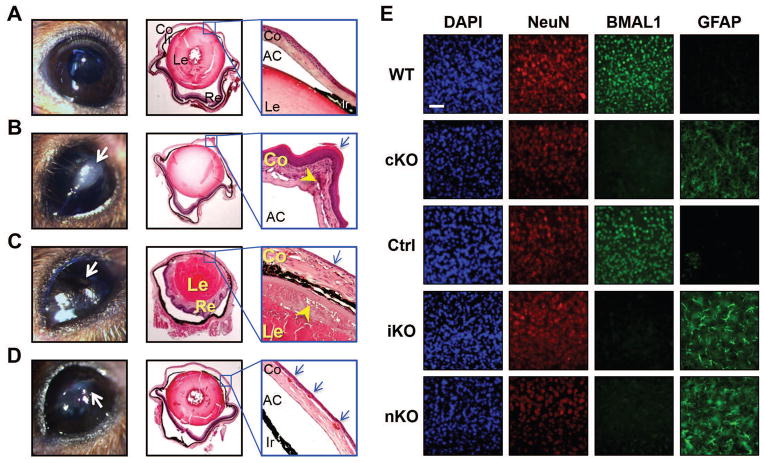
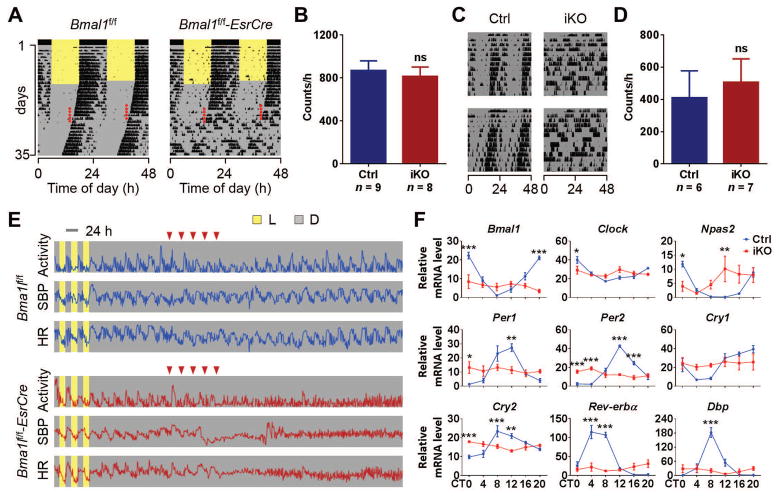
The absence of Bmal1, a core clock gene, results in a loss of circadian rhythms, an acceleration of aging, and a shortened life span in mice. To address the importance of circadian rhythms in the aging process, we generated conditional Bmal1 knockout mice that lacked the BMAL1 protein during adult life and found that wild-type circadian variations in wheel-running activity, heart rate, and blood pressure were abolished. Ocular abnormalities and brain astrogliosis were conserved irrespective of the timing of Bmal1 deletion. However, life span, fertility, body weight, blood glucose levels, and age-dependent arthropathy, which are altered in standard Bmal1 knockout mice, remained unaltered, whereas atherosclerosis and hair growth improved, in the conditional adult-life Bmal1 knockout mice, despite abolition of clock function. Hepatic RNA-Seq revealed that expression of oscillatory genes was dampened in the adult-life Bmal1 knockout mice, whereas overall gene expression was largely unchanged. Thus, many phenotypes in conventional Bmal1 knockout mice, hitherto attributed to disruption of circadian rhythms, reflect the loss of properties of BMAL1 that are independent of its role in the clock. These findings prompt reevaluation of the systemic consequences of disruption of the molecular clock.

摘要

核心生物钟基因Bmal1的缺失会导致小鼠昼夜节律丧失、衰老加速以及寿命缩短。为了探究昼夜节律在衰老过程中的重要性,我们构建了条件性Bmal1基因敲除小鼠,这些小鼠在成年期缺乏BMAL1蛋白,结果发现其转轮活动、心率和血压的野生型昼夜变化消失。眼部异常和脑星形胶质细胞增生不受Bmal1基因敲除时间的影响。然而,标准Bmal1基因敲除小鼠中发生改变的寿命、生育能力、体重、血糖水平和年龄相关性关节病,在条件性成年期Bmal1基因敲除小鼠中并未改变,尽管其生物钟功能丧失,但动脉粥样硬化和毛发生长却得到改善。肝脏RNA测序显示,成年期Bmal1基因敲除小鼠中振荡基因的表达受到抑制,而整体基因表达基本未变。因此,传统Bmal1基因敲除小鼠中许多迄今归因于昼夜节律紊乱的表型,反映了BMAL1独立于其在生物钟中的作用的特性丧失。这些发现促使人们重新评估分子生物钟紊乱的全身影响。
相似文献

1
Timing of expression of the core clock gene Bmal1 influences its effects on aging and survival.
Sci Transl Med. 2016 Feb 3;8(324):324ra16. doi: 10.1126/scitranslmed.aad3305.
3
Voluntary Wheel Running Exercise Does Not Attenuate Circadian and Cardiac Dysfunction Caused by Conditional Deletion of .
J Biol Rhythms. 2023 Jun;38(3):290-304. doi: 10.1177/07487304231152398. Epub 2023 Feb 20.
4
Clock gene Bmal1 controls diurnal rhythms in expression and activity of intestinal carboxylesterase 1.
J Pharm Pharmacol. 2021 Mar 1;73(1):52-59. doi: 10.1093/jpp/rgaa035.
6
A Novel Bmal1 Mutant Mouse Reveals Essential Roles of the C-Terminal Domain on Circadian Rhythms.
PLoS One. 2015 Sep 22;10(9):e0138661. doi: 10.1371/journal.pone.0138661. eCollection 2015.
7
Circadian rhythms in the absence of the clock gene .
Science. 2020 Feb 14;367(6479):800-806. doi: 10.1126/science.aaw7365.
8
Genetic deletion of the circadian clock transcription factor BMAL1 and chronic alcohol consumption differentially alter hepatic glycogen in mice.
Am J Physiol Gastrointest Liver Physiol. 2018 Mar 1;314(3):G431-G447. doi: 10.1152/ajpgi.00281.2017. Epub 2017 Nov 30.
10
PI3K regulates BMAL1/CLOCK-mediated circadian transcription from the Dbp promoter.
Biosci Biotechnol Biochem. 2016 Jun;80(6):1131-40. doi: 10.1080/09168451.2015.1136885. Epub 2016 Mar 29.

引用本文的文献

1
Circadian Rhythm and Muscle Function.
Adv Exp Med Biol. 2025;1478:101-112. doi: 10.1007/978-3-031-88361-3_6.
3
Circadian Gene BMAL1 Regulation of Cellular Senescence in Thyroid Aging.
Aging Cell. 2025 Aug;24(8):e70119. doi: 10.1111/acel.70119. Epub 2025 May 28.
5
Circadian Rhythms, Immune Regulation, and the Risk for Sepsis: Circadian Rhythms and Neonatal Care.
Clin Perinatol. 2025 Mar;52(1):185-197. doi: 10.1016/j.clp.2024.10.012. Epub 2024 Nov 26.
6
Maternal circadian rhythms during pregnancy dictate metabolic plasticity in offspring.
Cell Metab. 2025 Feb 4;37(2):395-412.e6. doi: 10.1016/j.cmet.2024.12.002. Epub 2025 Jan 14.
7
Frequent Shifts During Chronic Jet Lag Uncouple Liver Rhythms From the Light Cycle in Male Mice.
J Biol Rhythms. 2025 Apr;40(2):194-207. doi: 10.1177/07487304241311328. Epub 2025 Jan 8.
8
Feeding- and Light-Cycle Synergistically Regulate Mouse Blood Pressure Daily Rhythm via -Dependent and Independent Mechanisms.
J Biol Rhythms. 2025 Feb;40(1):76-90. doi: 10.1177/07487304241302510. Epub 2025 Jan 8.
10
Circadian clock communication during homeostasis and ageing.
Nat Rev Mol Cell Biol. 2025 Apr;26(4):314-331. doi: 10.1038/s41580-024-00802-3. Epub 2025 Jan 3.

本文引用的文献

1
Hepatocyte circadian clock controls acetaminophen bioactivation through NADPH-cytochrome P450 oxidoreductase.
Proc Natl Acad Sci U S A. 2014 Dec 30;111(52):18757-62. doi: 10.1073/pnas.1421708111. Epub 2014 Dec 15.
2
A circadian gene expression atlas in mammals: implications for biology and medicine.
Proc Natl Acad Sci U S A. 2014 Nov 11;111(45):16219-24. doi: 10.1073/pnas.1408886111. Epub 2014 Oct 27.
3
Circadian clock proteins regulate neuronal redox homeostasis and neurodegeneration.
J Clin Invest. 2013 Dec;123(12):5389-400. doi: 10.1172/JCI70317. Epub 2013 Nov 25.
4
Impaired cholesterol metabolism and enhanced atherosclerosis in clock mutant mice.
Circulation. 2013 Oct 15;128(16):1758-69. doi: 10.1161/CIRCULATIONAHA.113.002885. Epub 2013 Sep 6.
5
7
STAR: ultrafast universal RNA-seq aligner.
Bioinformatics. 2013 Jan 1;29(1):15-21. doi: 10.1093/bioinformatics/bts635. Epub 2012 Oct 25.
8
Transcriptional architecture and chromatin landscape of the core circadian clock in mammals.
Science. 2012 Oct 19;338(6105):349-54. doi: 10.1126/science.1226339. Epub 2012 Aug 30.
9
Systemic PPARγ deletion impairs circadian rhythms of behavior and metabolism.
PLoS One. 2012;7(8):e38117. doi: 10.1371/journal.pone.0038117. Epub 2012 Aug 10.
10
Disruption of the 5-lipoxygenase pathway attenuates atherogenesis consequent to COX-2 deletion in mice.
Proc Natl Acad Sci U S A. 2012 Apr 24;109(17):6727-32. doi: 10.1073/pnas.1115313109. Epub 2012 Apr 9.

文献AI研究员

20分钟写一篇综述,助力文献阅读效率提升50倍。

立即体验

用中文搜PubMed

大模型驱动的PubMed中文搜索引擎

马上搜索

文档翻译

学术文献翻译模型,支持多种主流文档格式。

立即体验