Gillespie Alyssa Lundgren, Teoh Jeffrey, Lee Heather, Prince Jessica, Stadnisky Michael D, Anderson Monique, Nash William, Rival Claudia, Wei Hairong, Gamache Awndre, Farber Charles R, Tung Kenneth, Brown Michael G
Department of Medicine, Division of Nephrology, University of Virginia, Charlottesville, Virginia, United States of America.
Beirne Carter Center for Immunology Research, University of Virginia, Charlottesville, Virginia, United States of America.
PLoS Pathog. 2016 Feb 4;12(2):e1005419. doi: 10.1371/journal.ppat.1005419. eCollection 2016 Feb.
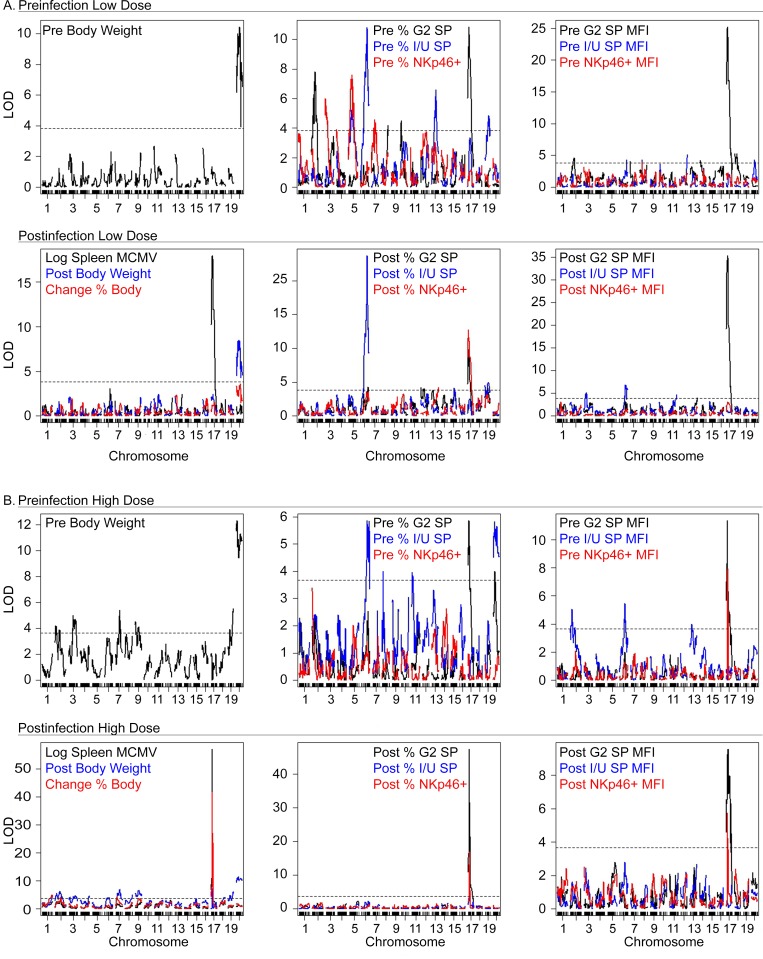
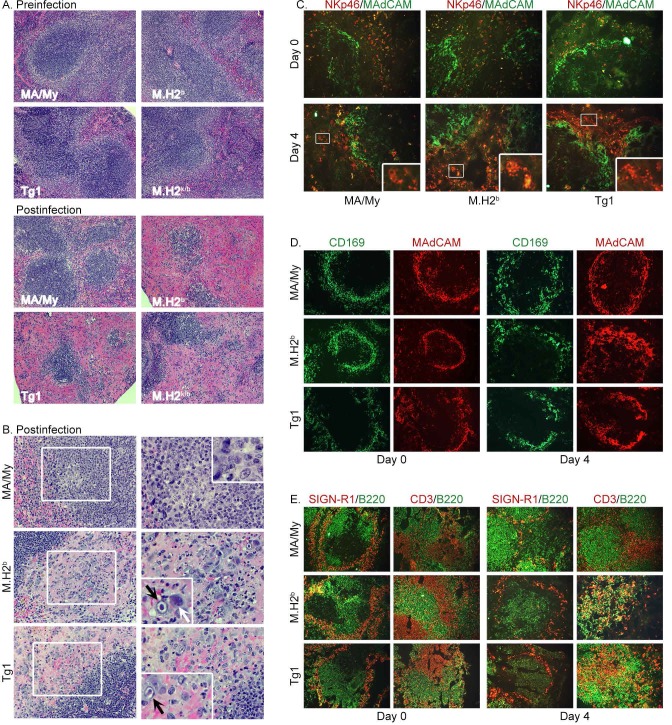
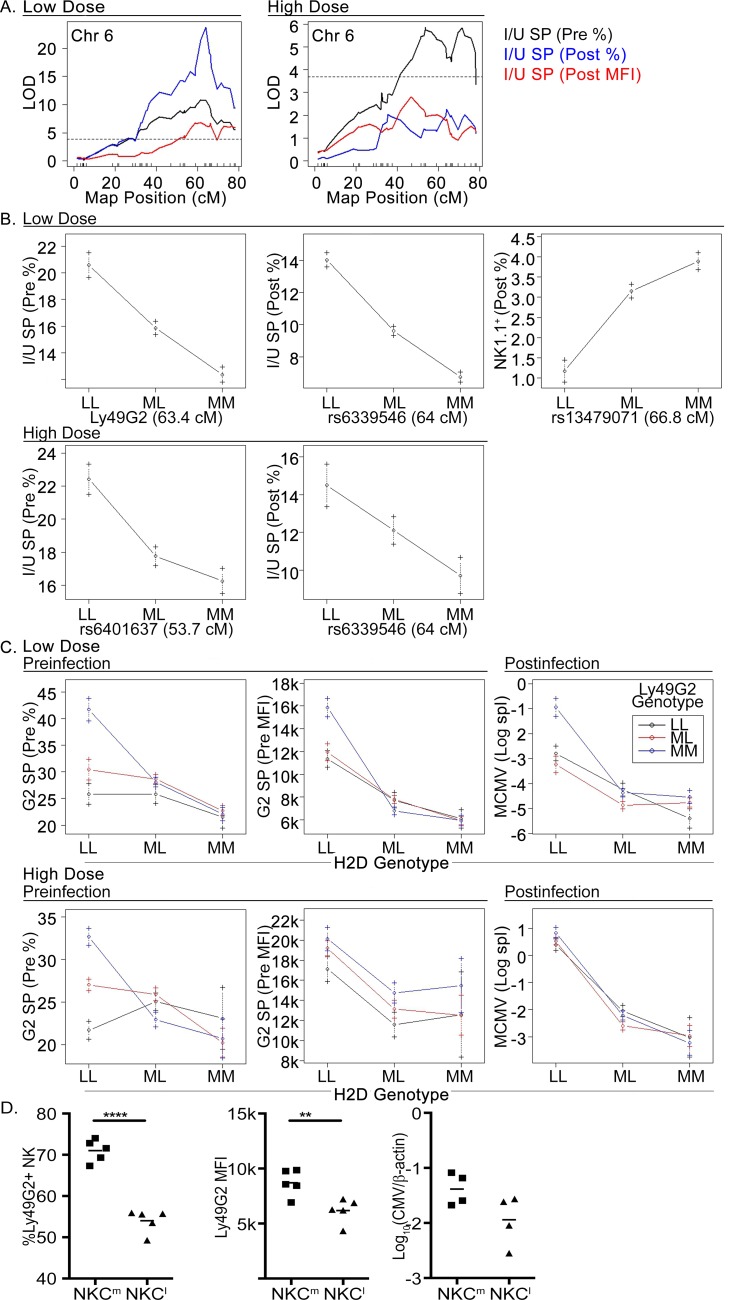
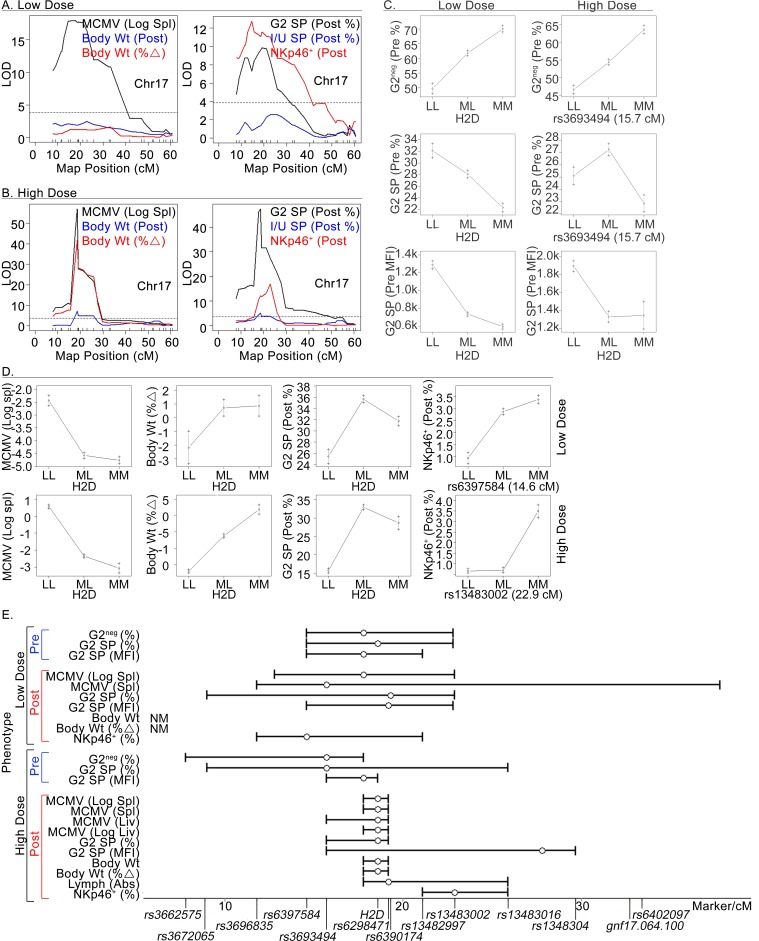
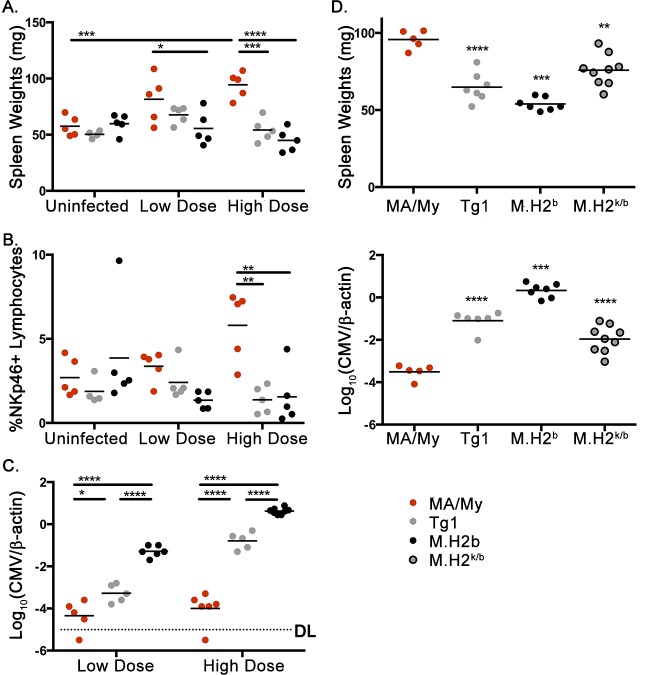
The MHC class I D(k) molecule supplies vital host resistance during murine cytomegalovirus (MCMV) infection. Natural killer (NK) cells expressing the Ly49G2 inhibitory receptor, which specifically binds D(k), are required to control viral spread. The extent of D(k)-dependent host resistance, however, differs significantly amongst related strains of mice, C57L and MA/My. As a result, we predicted that relatively small-effect modifier genetic loci might together shape immune cell features, NK cell reactivity, and the host immune response to MCMV. A robust D(k)-dependent genetic effect, however, has so far hindered attempts to identify additional host resistance factors. Thus, we applied genomic mapping strategies and multicolor flow cytometric analysis of immune cells in naive and virus-infected hosts to identify genetic modifiers of the host immune response to MCMV. We discovered and validated many quantitative trait loci (QTL); these were mapped to at least 19 positions on 16 chromosomes. Intriguingly, one newly discovered non-MHC locus (Cmv5) controlled splenic NK cell accrual, secondary lymphoid organ structure, and lymphoid follicle development during MCMV infection. We infer that Cmv5 aids host resistance to MCMV infection by expanding NK cells needed to preserve and protect essential tissue structural elements, to enhance lymphoid remodeling and to increase viral clearance in spleen.
在鼠巨细胞病毒(MCMV)感染期间,MHC I类D(k)分子提供至关重要的宿主抵抗力。表达Ly49G2抑制性受体(该受体特异性结合D(k))的自然杀伤(NK)细胞对于控制病毒传播是必需的。然而,在相关的小鼠品系C57L和MA/My中,依赖D(k)的宿主抵抗力程度存在显著差异。因此,我们预测相对较小效应的修饰基因位点可能共同塑造免疫细胞特征、NK细胞反应性以及宿主对MCMV的免疫反应。然而,到目前为止,强大的依赖D(k)的遗传效应阻碍了识别其他宿主抗性因子的尝试。因此,我们应用基因组定位策略以及对未感染和病毒感染宿主中的免疫细胞进行多色流式细胞术分析,以识别宿主对MCMV免疫反应的遗传修饰因子。我们发现并验证了许多数量性状位点(QTL);这些位点被定位到16条染色体上的至少19个位置。有趣的是,一个新发现的非MHC位点(Cmv5)在MCMV感染期间控制脾脏NK细胞的积累、次级淋巴器官结构和淋巴滤泡发育。我们推断,Cmv5通过扩增维持和保护重要组织结构要素、增强淋巴组织重塑以及增加脾脏中病毒清除所需的NK细胞,来帮助宿主抵抗MCMV感染。