Atchley R, Klee D, Memmott T, Goodrich E, Wahbeh H, Oken B
Oregon Health & Science University, Portland, OR, USA.
Oregon Health & Science University, Portland, OR, USA.
Neuroscience. 2016 Apr 21;320:83-92. doi: 10.1016/j.neuroscience.2016.01.051. Epub 2016 Feb 3.
This cross-sectional study evaluated event-related potentials (ERPs) across three groups: naïve, novice, and experienced meditators as potential physiological markers of mindfulness meditation competence.
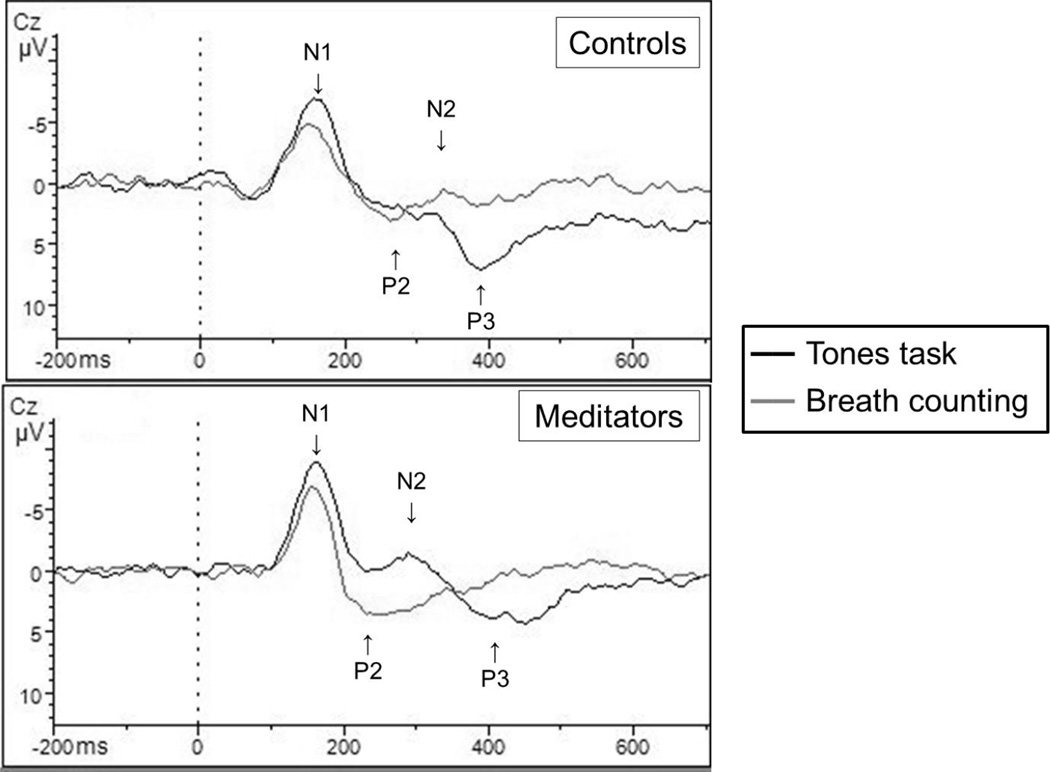
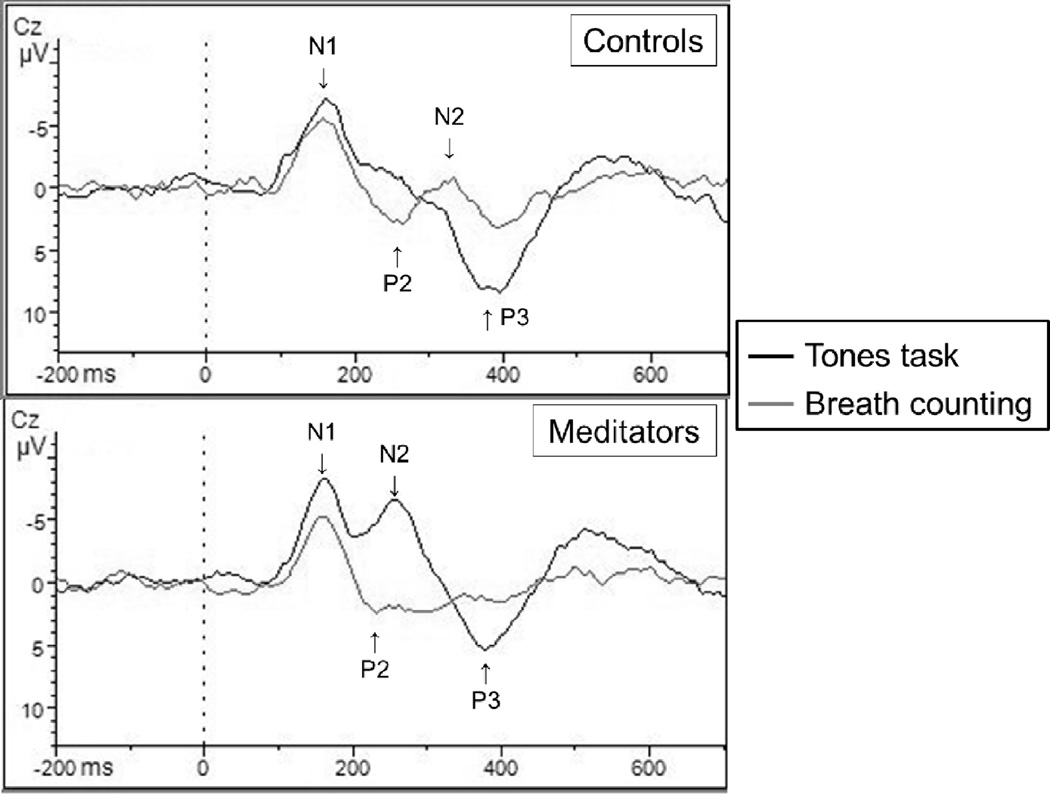
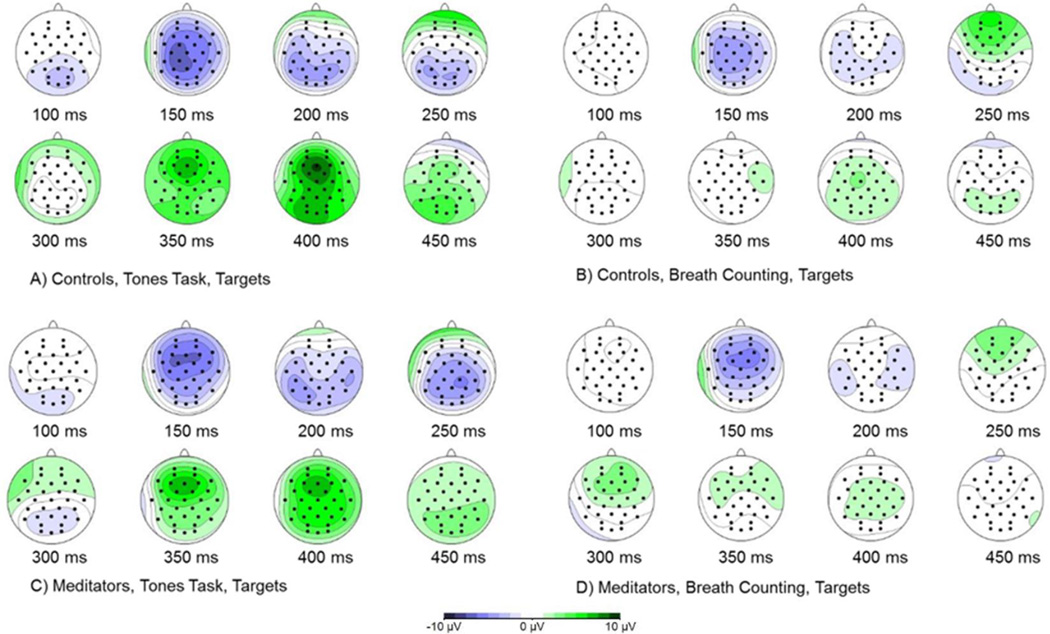
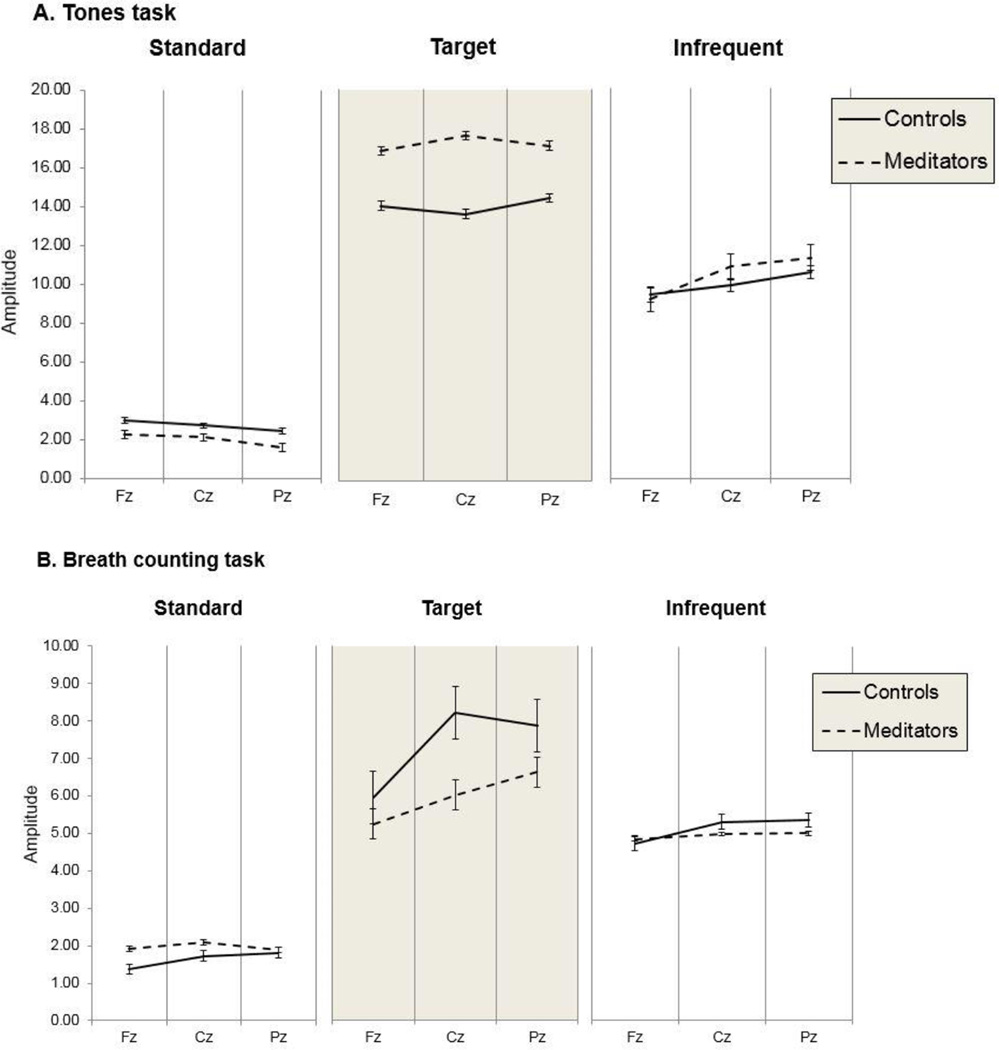
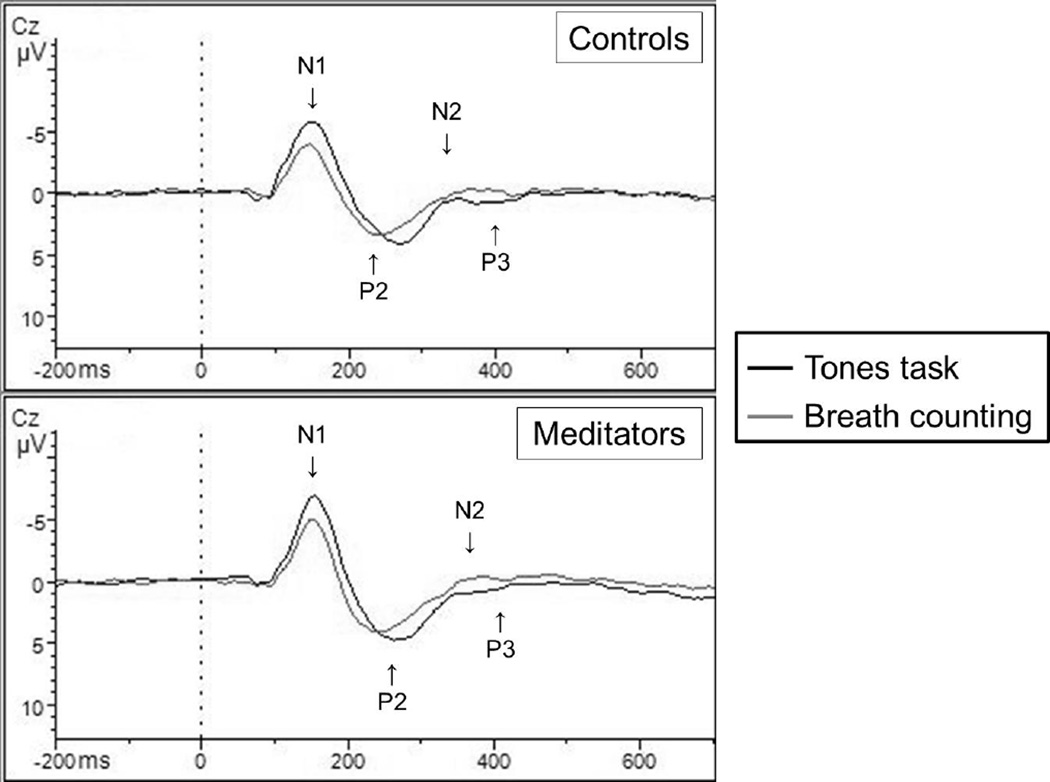
Electroencephalographic (EEG) data were collected during a target tone detection task and a Breath Counting task. The Breath Counting task served as the mindfulness meditation condition for the novice and experienced meditator groups. Participants were instructed to respond to target tones with a button press in the first task (Tones), and then ignore the primed tones while Breath Counting. The primary outcomes were ERP responses to target tones, namely the N2 and P3, as markers of stimulus discrimination and attention, respectively.
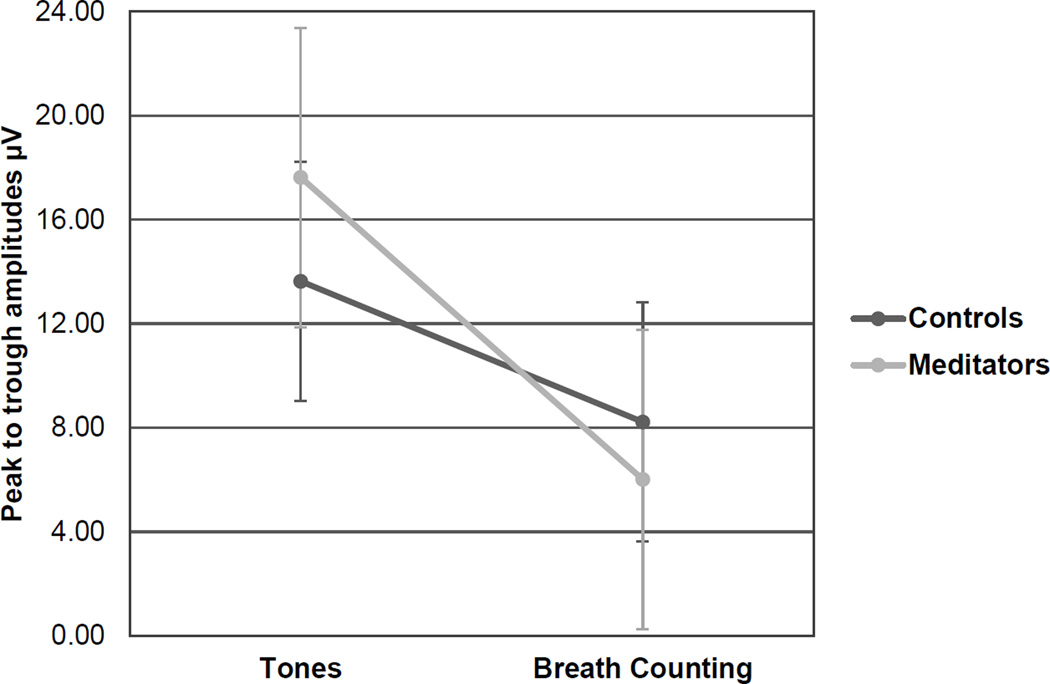
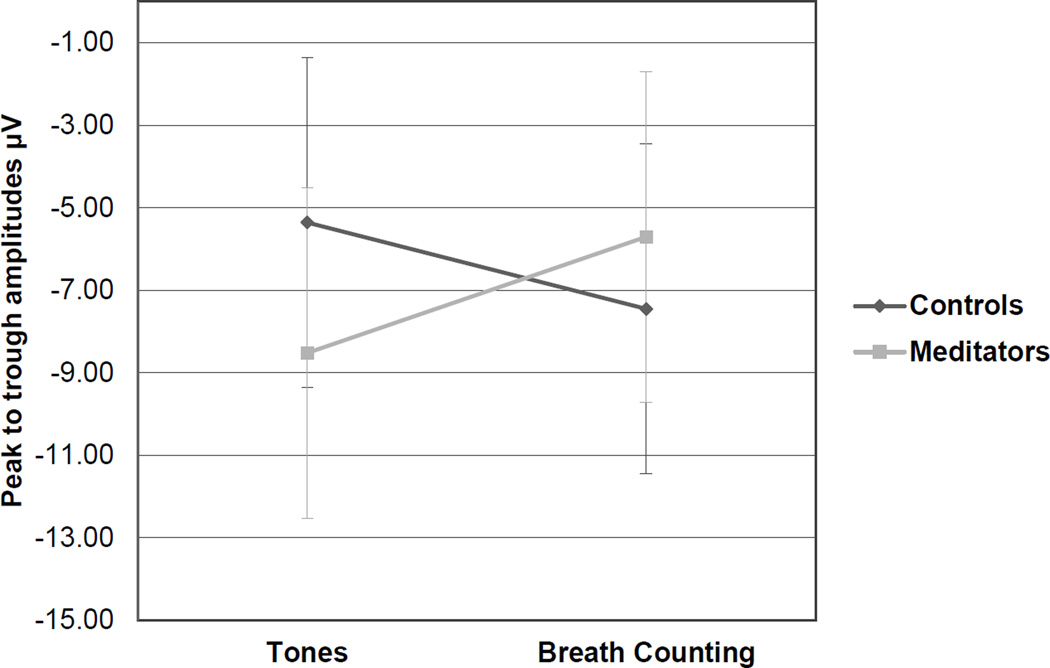
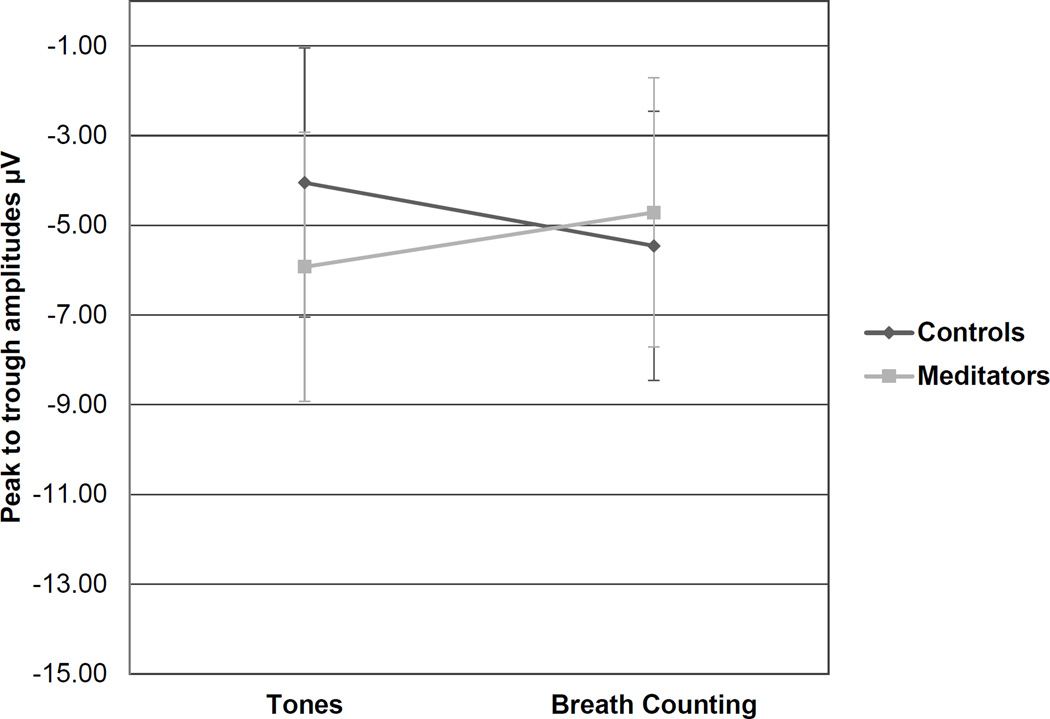
As expected, P3 amplitudes elicited by target tones were attenuated within groups during the Breath Counting task in comparison to the Tones task (p<.001). There was a task by group interaction for P3 (p=.039). Both meditator groups displayed greater change in peak-to-trough P3 amplitudes, with higher amplitudes during the Tones condition and more pronounced reductions in P3 amplitudes during the Breath Counting meditation task in comparison to the naïve group.
Meditators had stronger P3 amplitude responses to target tones when instructed to attend to the tones, and a greater attenuation of P3 amplitudes when instructed to ignore the same tones during the Breath Counting task. This study introduces the idea of identifying ERP markers as a means of measuring mindfulness meditation competence, and results suggest this may be a valid approach. This information has the potential to improve mindfulness meditation interventions by allowing objective assessment of mindfulness meditation quality.
本横断面研究评估了三组人群(新手、初学者和经验丰富的冥想者)的事件相关电位(ERP),将其作为正念冥想能力的潜在生理标志物。
在目标音调检测任务和呼吸计数任务期间收集脑电图(EEG)数据。呼吸计数任务是初学者和经验丰富的冥想者组的正念冥想条件。在第一个任务(音调)中,参与者被指示通过按键对目标音调做出反应,然后在呼吸计数时忽略启动的音调。主要结果是对目标音调的ERP反应,即N2和P3,分别作为刺激辨别和注意力的标志物。
正如预期的那样,与音调任务相比,在呼吸计数任务期间,各组内目标音调引发的P3波幅均有所衰减(p<0.001)。P3存在任务与组的交互作用(p = 0.039)。与新手组相比,两个冥想者组在波峰到波谷的P3波幅变化更大,在音调条件下波幅更高,在呼吸计数冥想任务期间P3波幅的降低更明显。
当被指示关注音调时,冥想者对目标音调的P3波幅反应更强,而在呼吸计数任务中被指示忽略相同音调时,P3波幅的衰减更大。本研究提出了将ERP标志物作为测量正念冥想能力的一种手段的想法,结果表明这可能是一种有效的方法。这些信息有可能通过允许对正念冥想质量进行客观评估来改善正念冥想干预。