Dowell Frederick, Cardman Zena, Dasarathy Srishti, Kellermann Matthias Y, Lipp Julius S, Ruff S Emil, Biddle Jennifer F, McKay Luke J, MacGregor Barbara J, Lloyd Karen G, Albert Daniel B, Mendlovitz Howard, Hinrichs Kai-Uwe, Teske Andreas
Department of Marine Sciences, University of North Carolina at Chapel Hill Chapel Hill, NC, USA.
MARUM Center for Marine Environmental Sciences and Department of Geosciences, University of BremenBremen, Germany; Department of Earth Science and Marine Science Institute, University of California at Santa BarbaraSanta Barbara, CA, USA.
Front Microbiol. 2016 Jan 29;7:17. doi: 10.3389/fmicb.2016.00017. eCollection 2016.
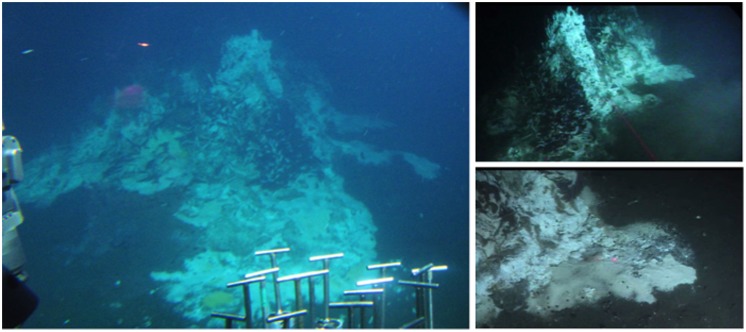
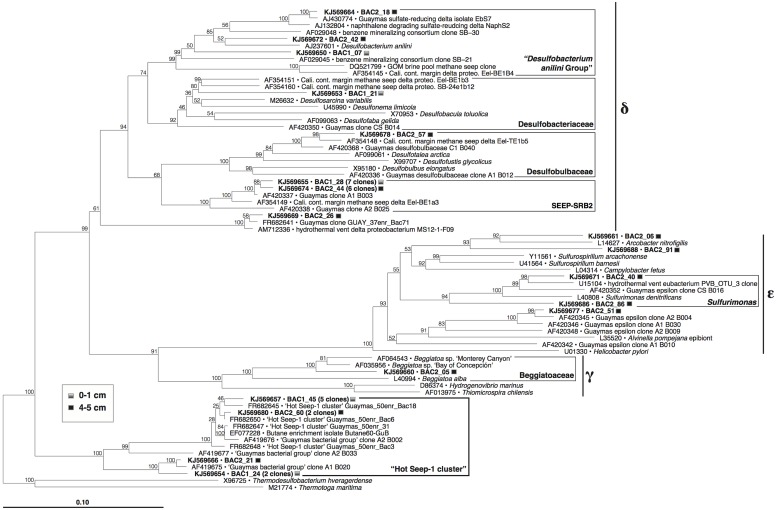
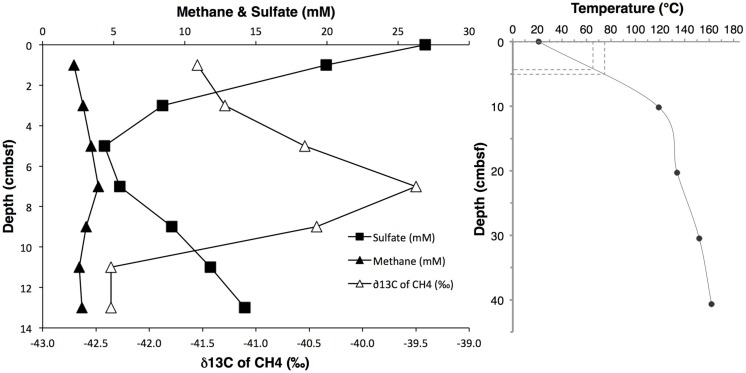
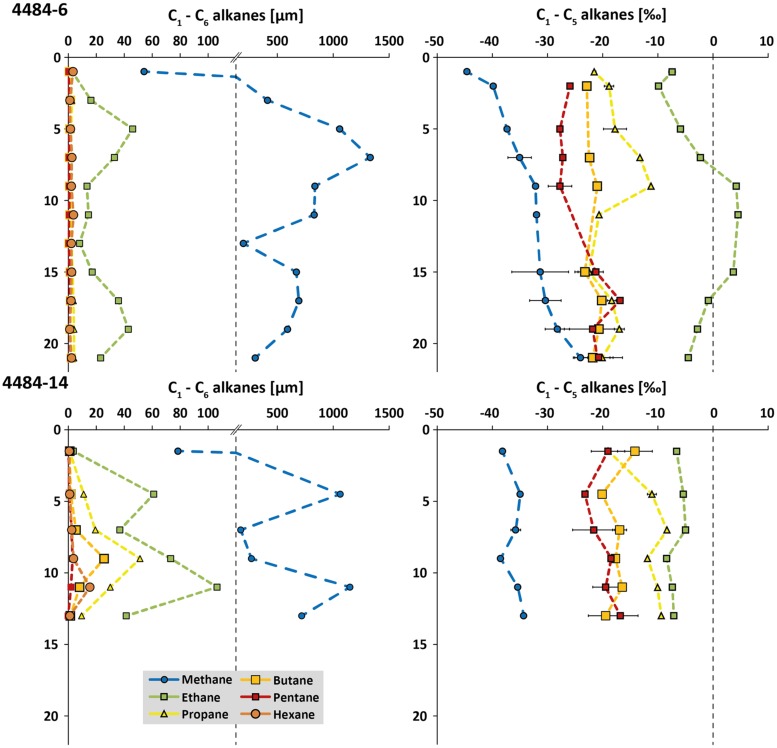
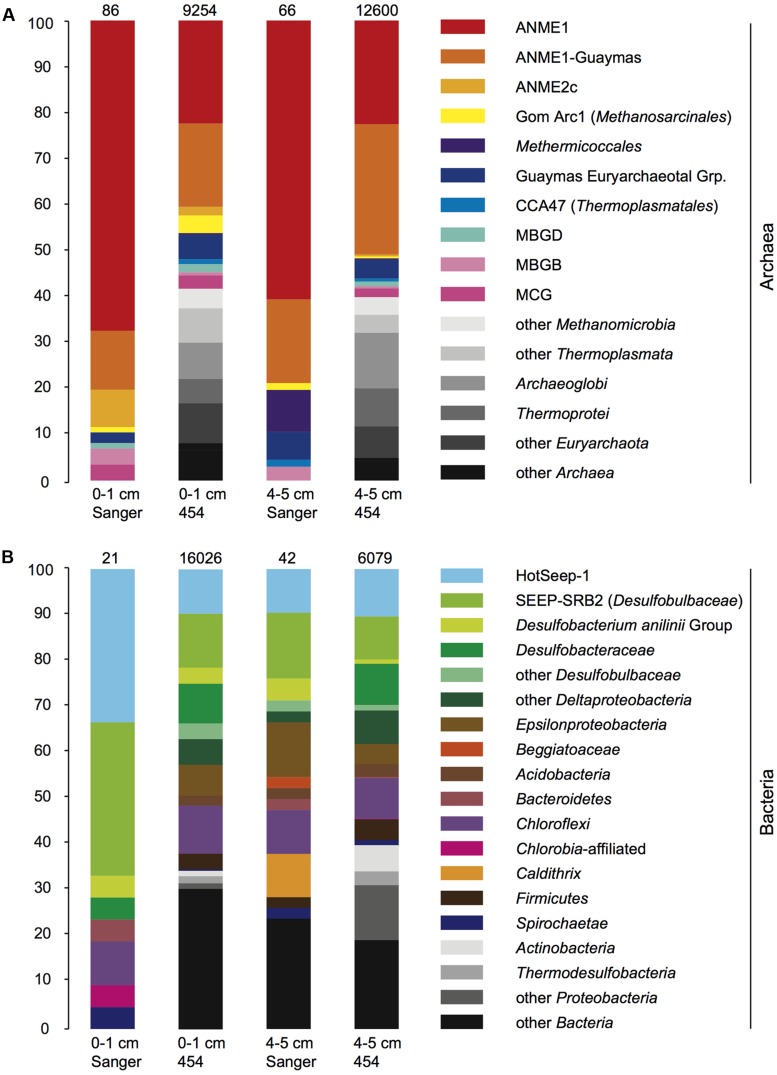
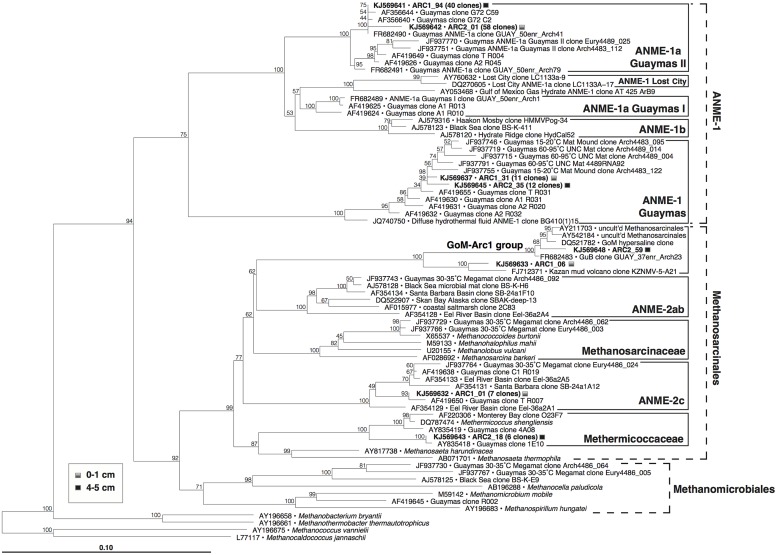
The hydrothermal sediments of Guaymas Basin, an active spreading center in the Gulf of California (Mexico), are rich in porewater methane, short-chain alkanes, sulfate and sulfide, and provide a model system to explore habitat preferences of microorganisms, including sulfate-dependent, methane- and short chain alkane-oxidizing microbial communities. In this study, hot sediments (above 60°C) covered with sulfur-oxidizing microbial mats surrounding a hydrothermal mound (termed "Mat Mound") were characterized by porewater geochemistry of methane, C2-C6 short-chain alkanes, sulfate, sulfide, sulfate reduction rate measurements, in situ temperature gradients, bacterial and archaeal 16S rRNA gene clone libraries and V6 tag pyrosequencing. The most abundantly detected groups in the Mat mound sediments include anaerobic methane-oxidizing archaea of the ANME-1 lineage and its sister clade ANME-1Guaymas, the uncultured bacterial groups SEEP-SRB2 within the Deltaproteobacteria and the separately branching HotSeep-1 Group; these uncultured bacteria are candidates for sulfate-reducing alkane oxidation and for sulfate-reducing syntrophy with ANME archaea. The archaeal dataset indicates distinct habitat preferences for ANME-1, ANME-1-Guaymas, and ANME-2 archaea in Guaymas Basin hydrothermal sediments. The bacterial groups SEEP-SRB2 and HotSeep-1 co-occur with ANME-1 and ANME-1Guaymas in hydrothermally active sediments underneath microbial mats in Guaymas Basin. We propose the working hypothesis that this mixed bacterial and archaeal community catalyzes the oxidation of both methane and short-chain alkanes, and constitutes a microbial community signature that is characteristic for hydrothermal and/or cold seep sediments containing both substrates.
瓜伊马斯盆地是位于加利福尼亚湾(墨西哥)的一个活跃扩张中心,其热液沉积物富含孔隙水甲烷、短链烷烃、硫酸盐和硫化物,为探索微生物的栖息地偏好提供了一个模型系统,这些微生物包括依赖硫酸盐、以甲烷和短链烷烃为食的微生物群落。在本研究中,对一个热液丘(称为“席垫丘”)周围覆盖着硫氧化微生物席垫的热沉积物(60°C以上)进行了表征,分析内容包括孔隙水甲烷、C2 - C6短链烷烃、硫酸盐、硫化物的地球化学特征、硫酸盐还原速率测量、原位温度梯度、细菌和古菌16S rRNA基因克隆文库以及V6标签焦磷酸测序。在席垫丘沉积物中检测到的最丰富的类群包括ANME - 1谱系的厌氧甲烷氧化古菌及其姐妹分支ANME - 1Guaymas、变形菌门内未培养的细菌类群SEEP - SRB2以及单独分支的HotSeep - 1类群;这些未培养细菌是还原硫酸盐的烷烃氧化以及与ANME古菌进行还原硫酸盐互营作用的候选者。古菌数据集表明瓜伊马斯盆地热液沉积物中ANME - 1、ANME - 1 - Guaymas和ANME - 2古菌具有明显不同的栖息地偏好。在瓜伊马斯盆地微生物席垫下方的热液活动沉积物中,细菌类群SEEP - SRB2和HotSeep - 1与ANME - 1和ANME - 1Guaymas共同出现。我们提出一个工作假设,即这个混合的细菌和古菌群落催化甲烷和短链烷烃的氧化,并构成了一个微生物群落特征,这是同时含有这两种底物的热液和/或冷泉沉积物所特有的。