Luo Dee, Smith James A, Meadows Nick A, Schuh A, Manescu Katie E, Bure Kim, Davies Benjamin, Horne Rob, Kope Mike, DiGiusto David L, Brindley David A
Department of Biological Basis of Behavior, University of Pennsylvania Phildephila, PA, USA.
The Oxford - UCL Centre for the Advancement of Sustainable Medical Innovation, University of OxfordOxford, UK; Nuffield Department of Orthopaedics, Rheumatology and Musculoskeletal Sciences, University of OxfordOxford, UK.
Front Genet. 2016 Jan 28;6:357. doi: 10.3389/fgene.2015.00357. eCollection 2015.
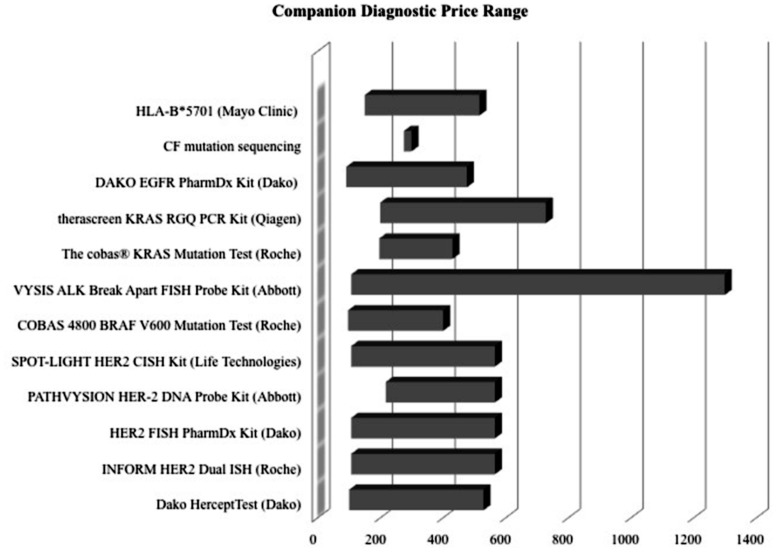
Rapid innovation in (epi)genetics and biomarker sciences is driving a new drug development and product development pathway, with the personalized medicine era dominated by biologic therapeutics and companion diagnostics. Companion diagnostics (CDx) are tests and assays that detect biomarkers and specific mutations to elucidate disease pathways, stratify patient populations, and target drug therapies. CDx can substantially influence the development and regulatory approval for certain high-risk biologics. However, despite the increasingly important role of companion diagnostics in the realization of personalized medicine, in the USA, there are only 23 Food and Drug Administration (FDA) approved companion diagnostics on the market for 11 unique indications. Personalized medicines have great potential, yet their use is currently constrained. A major factor for this may lie in the increased complexity of the companion diagnostic and corresponding therapeutic development and adoption pathways. Understanding the market dynamics of companion diagnostic/therapeutic (CDx/Rx) pairs is important to further development and adoption of personalized medicine. Therefore, data collected on a variety of factors may highlight incentives or disincentives driving the development of companion diagnostics. Statistical analysis for 36 hypotheses resulted in two significant relationships and 34 non-significant relationships. The sensitivity of the companion diagnostic was the only factor that significantly correlated with the price of the companion diagnostic. This result indicates that while there is regulatory pressure for the diagnostic and pharmaceutical industry to collaborate and co-develop companion diagnostics for the approval of personalized therapeutics, there seems to be a lack of parallel economic collaboration to incentivize development of companion diagnostics.
(表观)遗传学和生物标志物科学领域的快速创新正在推动一种新的药物开发和产品开发途径,个性化医疗时代以生物治疗药物和伴随诊断为主导。伴随诊断(CDx)是用于检测生物标志物和特定突变的检测和分析方法,以阐明疾病途径、对患者群体进行分层并靶向药物治疗。CDx可对某些高风险生物制剂的开发和监管批准产生重大影响。然而,尽管伴随诊断在实现个性化医疗方面的作用日益重要,但在美国,市场上仅有23种获得美国食品药品监督管理局(FDA)批准的伴随诊断用于11种独特适应症。个性化药物具有巨大潜力,但其应用目前受到限制。造成这种情况的一个主要因素可能在于伴随诊断以及相应治疗开发和采用途径的复杂性增加。了解伴随诊断/治疗(CDx/Rx)组合的市场动态对于个性化医疗的进一步发展和采用至关重要。因此,收集的关于各种因素的数据可能会突出推动伴随诊断开发的激励因素或抑制因素。对36个假设进行的统计分析得出了两个显著关系和34个非显著关系。伴随诊断的灵敏度是唯一与伴随诊断价格显著相关的因素。这一结果表明,虽然监管部门要求诊断和制药行业合作并共同开发伴随诊断以批准个性化治疗药物,但似乎缺乏相应的经济合作来激励伴随诊断的开发。