Liu Shuzhen, Zhao Zhenzhen, Han Lu, Liu Song, Luo Bing
Department of Blood Transfusion, the Affiliated Hospital of Qingdao University, 16 Jiangsu Road, Qingdao, 266003, China.
Department of Medical Microbiology, Qingdao University Medical College, 38 Dengzhou Road, Qingdao, 266021, China.
PLoS One. 2016 Feb 9;11(2):e0148342. doi: 10.1371/journal.pone.0148342. eCollection 2016.
Epstein-Barr virus (EBV) is associated with a subset of gastric carcinoma which was defined as EBV associated gastric carcinoma (EBVaGC). The proportion of EBVaGC in gastric remnant carcinoma (GRC) which occurs in the intact stomach five or more years after gastric surgery for benign disease is significantly higher than that in conventional gastric carcinoma (CGC). The infection of EBV in recurrent gastric carcinoma (RGC) with local anastomotic recurrence is poorly understood.
53 cases of GRC and 58 cases of RGC were analyzed for the presence of EBV, and the variants of EBV Encoded RNAs (EBER), EBV Nuclear Antigen 1 (EBNA1) and Latent Membrane Protein 1 (LMP1) gene in both groups were investigated.
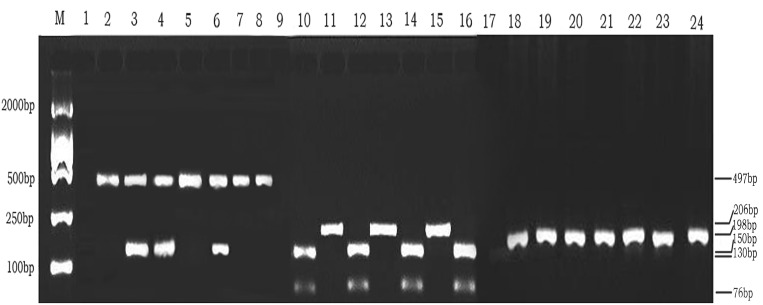
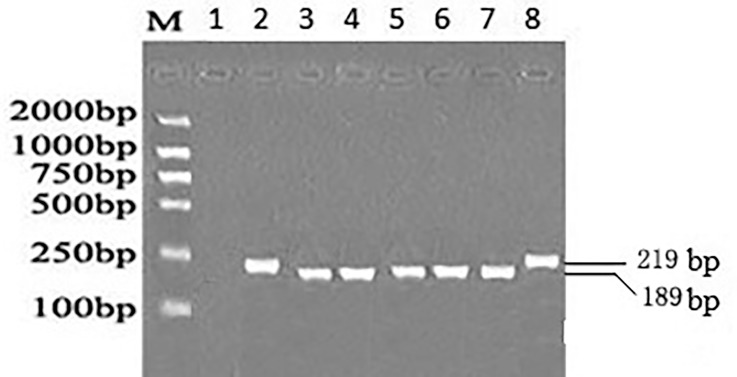
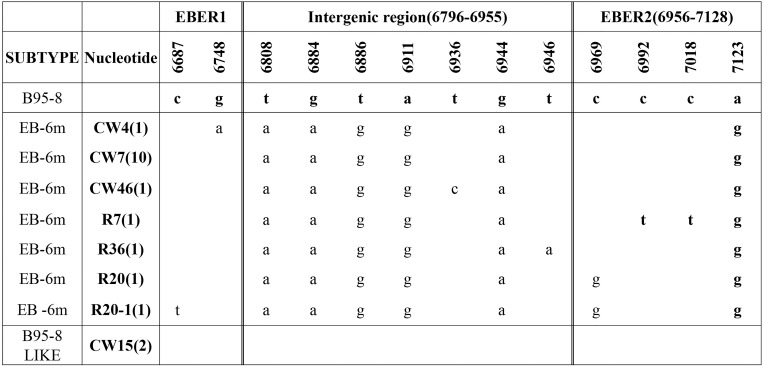
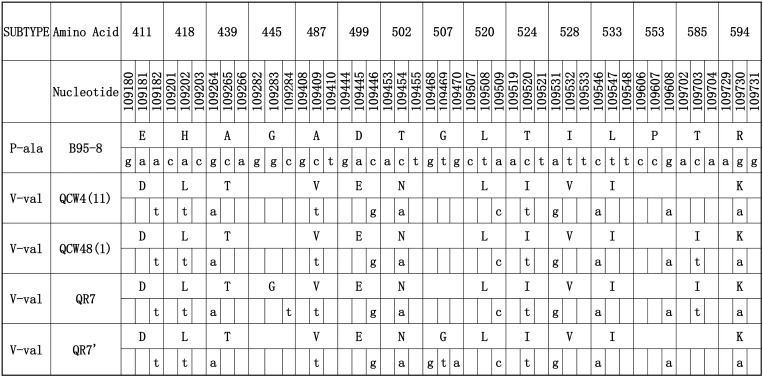
Thirteen (24.5%) out of 53 GRC cases and 3 (5.2%) out of 58 RGC cases were identified as EBVaGCs. In 17 paired RGC cases, only one case was classified as EBVaGC in both times specimen. Another one case was identified as EBVaGC in the primary gastroectomy specimen while the recurrent gastric cancer was not. The third EBVaGC in RGC was identified while the primary gastric cancer was not EBVaGC. In GRC and RGC cases, type 1, type F, EB-6m, V-val subtype, del-LMP1 were predominant type or variants, accounting for 10(76.9%) and 2(66.7%), 13(100%) and 3(100%), 13(100%) and 3(100%), 9(69.2%) and 3(100%), 12(92.3%) and 3(100%), respectively. However, Type C was the predominant type in GRC accounting for 9(69.2%) cases while type D was the predominant one accounting for 2(66.7%) cases in RGC.
The prevalence of EBVaGc in GRC and RGC was significantly different. The distributions of these variants were similar to each other in the two groups which indicated that there were no more aggressive EBV variants in EBVaGC in GRC compared with that in RGC.
爱泼斯坦-巴尔病毒(EBV)与一部分胃癌相关,这部分胃癌被定义为EBV相关胃癌(EBVaGC)。胃残余癌(GRC)是指在良性疾病胃手术后五年或更长时间,在完整胃中发生的癌症,其EBVaGC的比例显著高于传统胃癌(CGC)。对于局部吻合口复发的复发性胃癌(RGC)中EBV的感染情况了解甚少。
分析53例GRC和58例RGC中EBV的存在情况,并研究两组中EBV编码RNA(EBER)、EBV核抗原1(EBNA1)和潜伏膜蛋白1(LMP1)基因的变异情况。
53例GRC病例中有13例(24.5%)被鉴定为EBVaGC,58例RGC病例中有3例(5.2%)被鉴定为EBVaGC。在17对RGC病例中,只有1例在两次标本检测中均被分类为EBVaGC。另一例在初次胃切除标本中被鉴定为EBVaGC,而复发性胃癌中未被鉴定为EBVaGC。RGC中的第三例EBVaGC在原发性胃癌中未被鉴定为EBVaGC。在GRC和RGC病例中,1型、F型、EB-6m、V-val亚型、del-LMP1是主要类型或变异型,分别占10例(76.9%)和2例(66.7%)、13例(100%)和3例(100%)、13例(100%)和3例(100%)、9例(69.2%)和3例(100%)、12例(92.3%)和3例(100%)。然而,C型是GRC中的主要类型,占9例(69.2%),而D型是RGC中的主要类型,占2例(66.7%)。
GRC和RGC中EBVaGc的患病率有显著差异。两组中这些变异型的分布彼此相似,这表明与RGC中的EBVaGC相比,GRC中的EBVaGC不存在更具侵袭性的EBV变异型。