Wieck Minna M, Spurrier Ryan G, Levin Daniel E, Mojica Salvador Garcia, Hiatt Michael J, Reddy Raghava, Hou Xiaogang, Navarro Sonia, Lee Jooeun, Lundin Amber, Driscoll Barbara, Grikscheit Tracy C
Division of Pediatric Surgery, Saban Research Institute, Children's Hospital Los Angeles, Los Angeles, California, United States of America.
Developmental Biology and Regenerative Medicine Program, Saban Research Institute, Children's Hospital Los Angeles, Los Angeles, California, United States of America.
PLoS One. 2016 Feb 10;11(2):e0148323. doi: 10.1371/journal.pone.0148323. eCollection 2016.
Neonatal respiratory distress syndrome is a restrictive lung disease characterized by surfactant deficiency. Decreased vascular endothelial growth factor (VEGF), which demonstrates important roles in angiogenesis and vasculogenesis, has been implicated in the pathogenesis of restrictive lung diseases. Current animal models investigating VEGF in the etiology and outcomes of RDS require premature delivery, hypoxia, anatomically or temporally limited inhibition, or other supplemental interventions. Consequently, little is known about the isolated effects of chronic VEGF inhibition, started at birth, on subsequent developing lung structure and function.
To determine whether inducible, mesenchyme-specific VEGF inhibition in the neonatal mouse lung results in long-term modulation of AECII and whole lung function.
Triple transgenic mice expressing the soluble VEGF receptor sFlt-1 specifically in the mesenchyme (Dermo-1/rtTA/sFlt-1) were generated and compared to littermate controls at 3 months to determine the impact of neonatal downregulation of mesenchymal VEGF expression on lung structure, cell composition and function. Reduced tissue VEGF bioavailability has previously been demonstrated with this model.
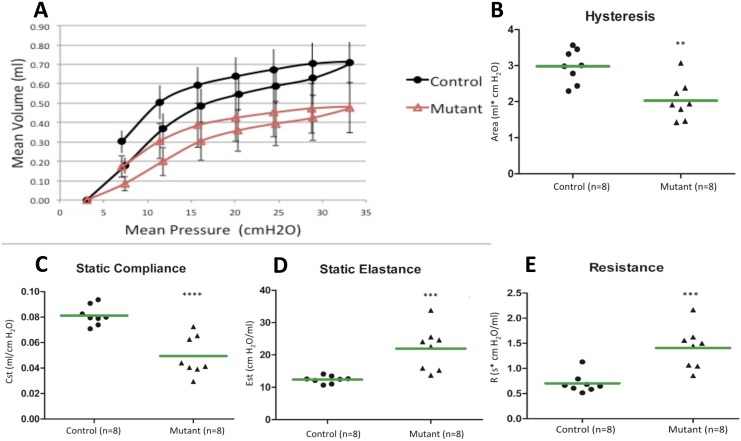
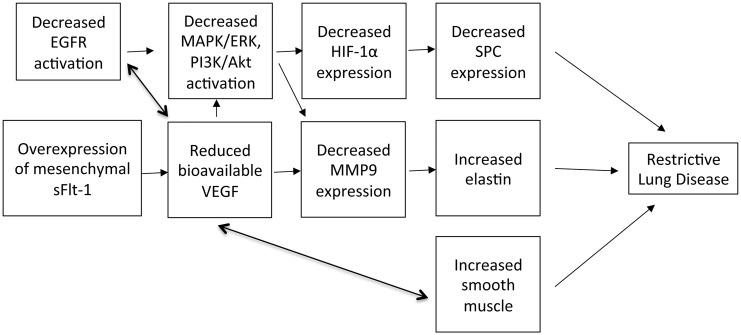
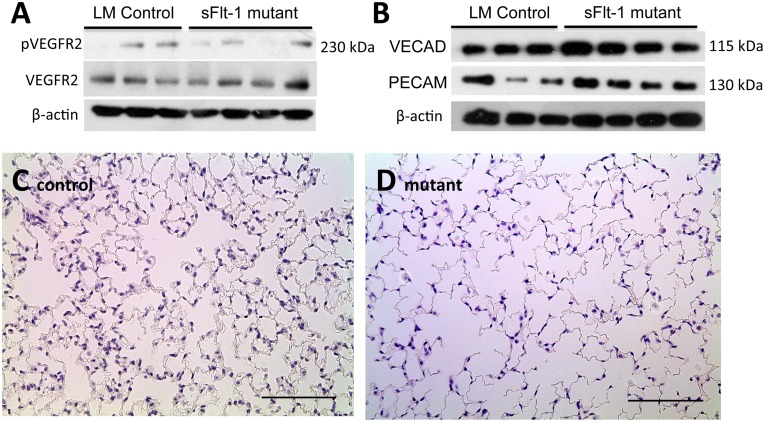
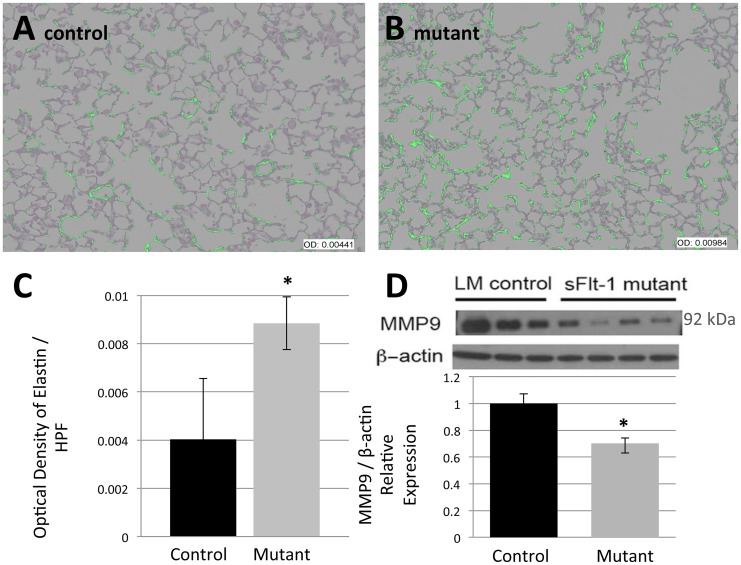
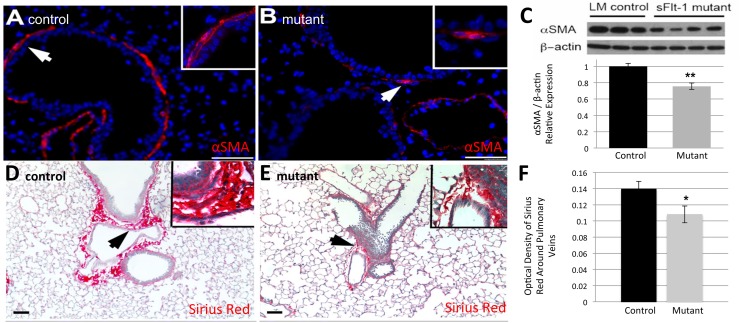
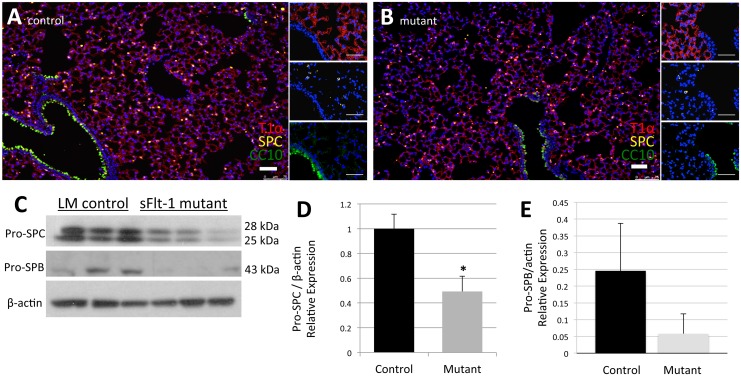
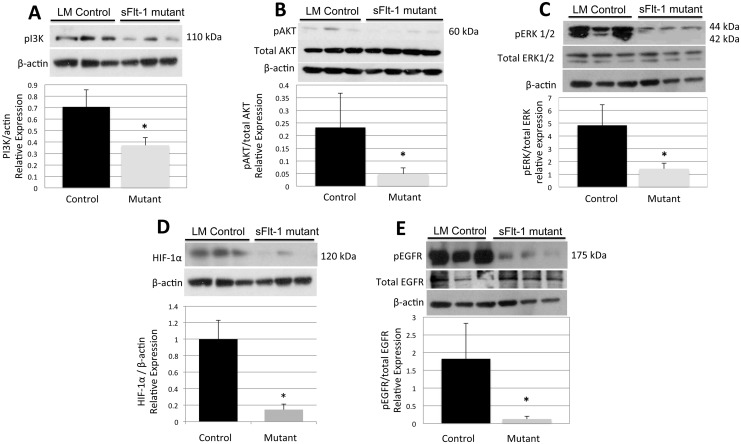
Triple transgenic mice demonstrated restrictive lung pathology. No differences in gross vascular development or protein levels of vascular endothelial markers was noted, but there was a significant decrease in perivascular smooth muscle and type I collagen. Mutants had decreased expression levels of surfactant protein C and hypoxia inducible factor 1-alpha without a difference in number of type II pneumocytes.
These data show that mesenchyme-specific inhibition of VEGF in neonatal mice results in late restrictive disease, making this transgenic mouse a novel model for future investigations on the consequences of neonatal RDS and potential interventions.
新生儿呼吸窘迫综合征是一种以表面活性剂缺乏为特征的限制性肺病。血管内皮生长因子(VEGF)在血管生成和血管发生中发挥重要作用,其水平降低与限制性肺病的发病机制有关。目前研究VEGF在RDS病因和结局中的作用的动物模型需要早产、缺氧、解剖学或时间上有限的抑制或其他补充干预措施。因此,关于出生时开始的慢性VEGF抑制对后续发育中的肺结构和功能的单独影响知之甚少。
确定新生小鼠肺中可诱导的、间充质特异性VEGF抑制是否会导致II型肺泡上皮细胞(AECII)和全肺功能的长期调节。
构建在间充质中特异性表达可溶性VEGF受体sFlt-1的三转基因小鼠(Dermo-1/rtTA/sFlt-1),并在3个月时与同窝对照小鼠进行比较,以确定新生期间充质VEGF表达下调对肺结构、细胞组成和功能的影响。此前已证明该模型可降低组织VEGF的生物利用度。
三转基因小鼠表现出限制性肺病病理。在总体血管发育或血管内皮标志物的蛋白水平上未观察到差异,但血管周围平滑肌和I型胶原蛋白显著减少。突变体中表面活性蛋白C和缺氧诱导因子1-α的表达水平降低,II型肺细胞数量无差异。
这些数据表明,新生小鼠中间充质特异性VEGF抑制会导致晚期限制性疾病,使这种转基因小鼠成为未来研究新生儿RDS后果和潜在干预措施的新型模型。