Zawar Vijay P, Agarwal Madhuri, Vasudevan Biju
Department of Dermatology, Skin Diseases Centre, Nashik, Maharashtra, India.
Department of Dermatology, Skin and Aesthetic Clinic, Mumbai, Maharashtra, India.
J Cutan Aesthet Surg. 2015 Oct-Dec;8(4):222-6. doi: 10.4103/0974-2077.172196.
Postinflammatory hyperpigmentation (PIH) is a common sequela seen in the Indian population following affliction by acne. It is psychologically extremely disturbing for the patients and can severely affect the quality of life. Very few therapeutic modalities have proved to be really efficacious in this condition.
The aim was to review our experience with 1,064-nm Q-switched neodymium-doped yttrium aluminum garnet (QSNY) laser in the treatment of PIH.
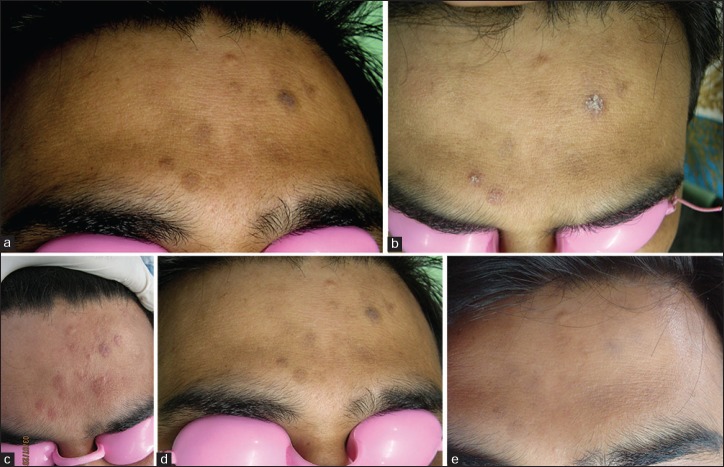
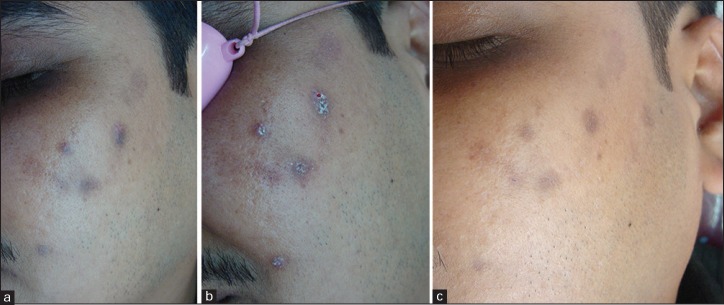
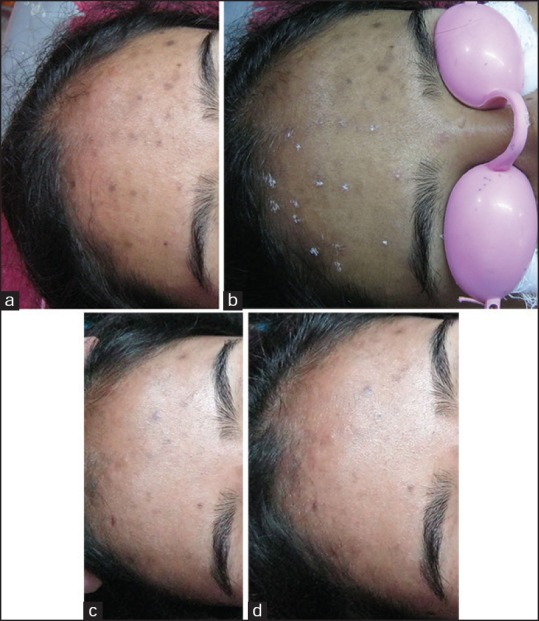
Seventy-eight patients with postacne hyperpigmentation were included in the study. They were treated with six sessions at two weekly intervals using a 1,064-nm QSNY laser. Patient and physician scores were assessed at 1 month and 3 months after the last treatment. Clinical photographs also were reviewed to determine the efficacy. Adverse effects were noted.
Seventy percent of the patients reported significant improvement in hyperpigmentation as compared to the baseline. The majority of the adverse events were limited to mild, brief erythema.
The 1,064-nm QSNY laser is an effective modality for the treatment of PIH caused by acne.
炎症后色素沉着(PIH)是印度人群痤疮发作后的常见后遗症。对患者而言,它在心理上极具困扰,且会严重影响生活质量。在这种情况下,很少有治疗方式被证明真正有效。
目的是回顾我们使用1064纳米调Q掺钕钇铝石榴石(QSNY)激光治疗PIH的经验。
78例痤疮后色素沉着患者纳入研究。使用1064纳米QSNY激光,每隔一周治疗一次,共进行六次治疗。在最后一次治疗后1个月和3个月评估患者和医生评分。还查看临床照片以确定疗效。记录不良反应。
70%的患者报告色素沉着较基线有显著改善。大多数不良事件仅限于轻度、短暂的红斑。
1064纳米QSNY激光是治疗痤疮引起的PIH的有效方式。