Britton Sumudu, Cheng Qin, Grigg Matthew J, Poole Catherine B, Pasay Cielo, William Timothy, Fornace Kimberley, Anstey Nicholas M, Sutherland Colin J, Drakeley Chris, McCarthy James S
University of Queensland, Brisbane, Australia and QIMR Berghofer Medical Research Institute, Brisbane, Australia.
Australian Army Malaria Institute, Brisbane, Australia.
PLoS Negl Trop Dis. 2016 Feb 12;10(2):e0004443. doi: 10.1371/journal.pntd.0004443. eCollection 2016 Feb.
Plasmodium vivax malaria has a wide geographic distribution and poses challenges to malaria elimination that are likely to be greater than those of P. falciparum. Diagnostic tools for P. vivax infection in non-reference laboratory settings are limited to microscopy and rapid diagnostic tests but these are unreliable at low parasitemia. The development and validation of a high-throughput and sensitive assay for P. vivax is a priority.
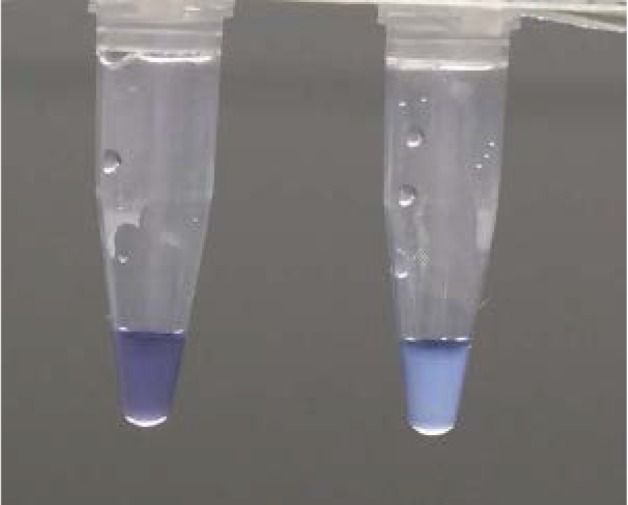
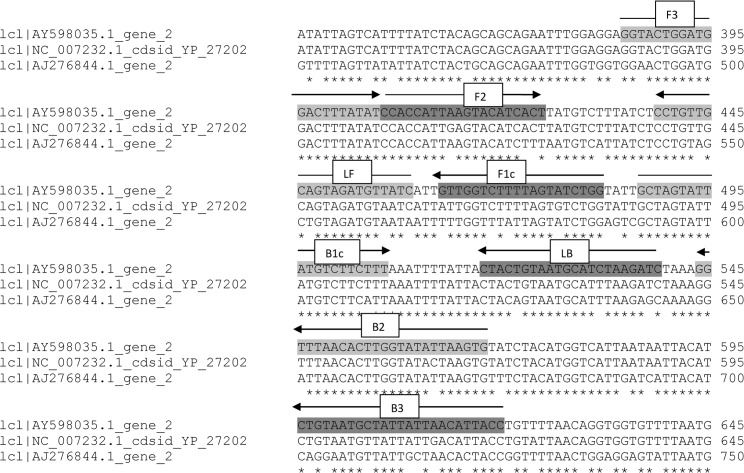
A high-throughput LAMP assay targeting a P. vivax mitochondrial gene and deploying colorimetric detection in a 96-well plate format was developed and evaluated in the laboratory. Diagnostic accuracy was compared against microscopy, antigen detection tests and PCR and validated in samples from malaria patients and community controls in a district hospital setting in Sabah, Malaysia.
The high throughput LAMP-P. vivax assay (HtLAMP-Pv) performed with an estimated limit of detection of 1.4 parasites/ μL. Assay primers demonstrated cross-reactivity with P. knowlesi but not with other Plasmodium spp. Field testing of HtLAMP-Pv was conducted using 149 samples from symptomatic malaria patients (64 P. vivax, 17 P. falciparum, 56 P. knowlesi, 7 P. malariae, 1 mixed P. knowlesi/P. vivax, with 4 excluded). When compared against multiplex PCR, HtLAMP-Pv demonstrated a sensitivity for P. vivax of 95% (95% CI 87-99%); 61/64), and specificity of 100% (95% CI 86-100%); 25/25) when P. knowlesi samples were excluded. HtLAMP-Pv testing of 112 samples from asymptomatic community controls, 7 of which had submicroscopic P. vivax infections by PCR, showed a sensitivity of 71% (95% CI 29-96%; 5/7) and specificity of 93% (95% CI87-97%; 98/105).
This novel HtLAMP-P. vivax assay has the potential to be a useful field applicable molecular diagnostic test for P. vivax infection in elimination settings.
间日疟原虫疟疾分布广泛,给疟疾消除工作带来了挑战,这些挑战可能比恶性疟原虫带来的挑战更大。在非参考实验室环境中,用于检测间日疟原虫感染的诊断工具仅限于显微镜检查和快速诊断测试,但在低疟原虫血症时这些方法并不可靠。开发并验证一种高通量且灵敏的间日疟原虫检测方法是当务之急。
开发了一种针对间日疟原虫线粒体基因的高通量环介导等温扩增(LAMP)检测方法,并采用比色法在96孔板中进行检测,在实验室中对其进行了评估。将诊断准确性与显微镜检查、抗原检测试验和聚合酶链反应(PCR)进行比较,并在马来西亚沙巴州一家 district 医院的疟疾患者和社区对照样本中进行了验证。
高通量间日疟原虫LAMP检测方法(HtLAMP-Pv)的估计检测限为1.4个寄生虫/μL。检测引物与诺氏疟原虫有交叉反应,但与其他疟原虫属无交叉反应。使用来自有症状疟疾患者的149份样本(64份间日疟原虫、17份恶性疟原虫、56份诺氏疟原虫、7份三日疟原虫、1份诺氏疟原虫/间日疟原虫混合感染,4份排除)对HtLAMP-Pv进行了现场测试。与多重PCR相比,排除诺氏疟原虫样本后,HtLAMP-Pv对间日疟原虫的敏感性为95%(95%CI 87-99%;61/64),特异性为100%(95%CI 86-100%;25/25)。对112份无症状社区对照样本进行HtLAMP-Pv检测,其中7份经PCR检测为亚显微间日疟原虫感染,敏感性为71%(95%CI 29-96%;5/7),特异性为93%(95%CI 87-97%;98/105)。
这种新型的HtLAMP-间日疟原虫检测方法有可能成为在消除疟疾环境中用于间日疟原虫感染的一种有用的现场适用分子诊断测试。