Fouts Derrick E, Matthias Michael A, Adhikarla Haritha, Adler Ben, Amorim-Santos Luciane, Berg Douglas E, Bulach Dieter, Buschiazzo Alejandro, Chang Yung-Fu, Galloway Renee L, Haake David A, Haft Daniel H, Hartskeerl Rudy, Ko Albert I, Levett Paul N, Matsunaga James, Mechaly Ariel E, Monk Jonathan M, Nascimento Ana L T, Nelson Karen E, Palsson Bernhard, Peacock Sharon J, Picardeau Mathieu, Ricaldi Jessica N, Thaipandungpanit Janjira, Wunder Elsio A, Yang X Frank, Zhang Jun-Jie, Vinetz Joseph M
J. Craig Venter Institute, Rockville, Maryland, United States of America.
Division of Infectious Diseases, Department of Medicine, University of California San Diego School of Medicine, La Jolla, California, United States of America.
PLoS Negl Trop Dis. 2016 Feb 18;10(2):e0004403. doi: 10.1371/journal.pntd.0004403. eCollection 2016 Feb.
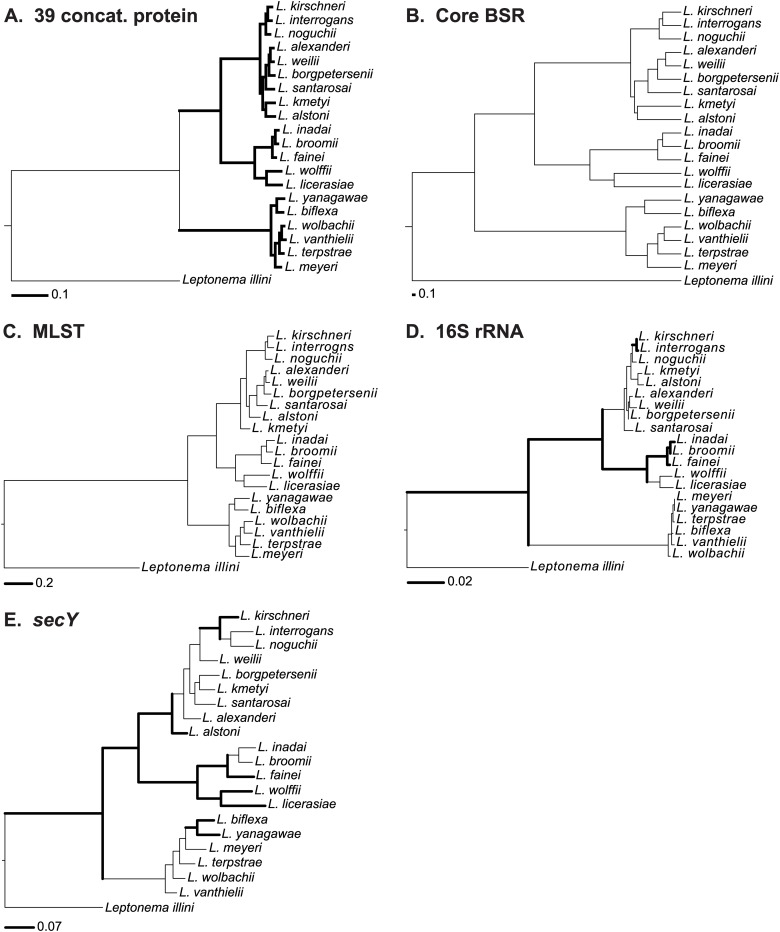
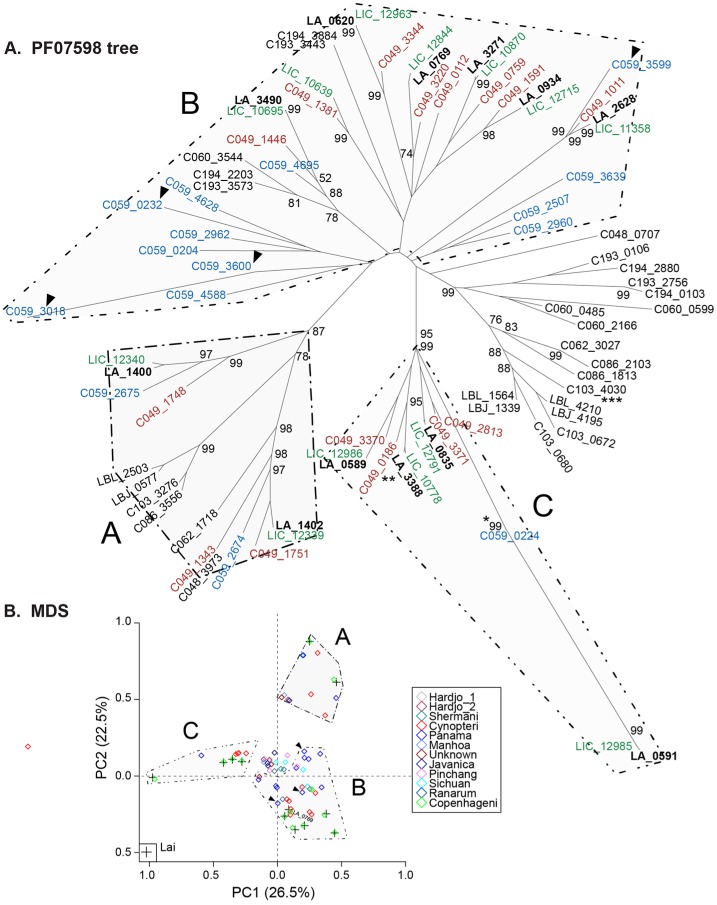
Leptospirosis, caused by spirochetes of the genus Leptospira, is a globally widespread, neglected and emerging zoonotic disease. While whole genome analysis of individual pathogenic, intermediately pathogenic and saprophytic Leptospira species has been reported, comprehensive cross-species genomic comparison of all known species of infectious and non-infectious Leptospira, with the goal of identifying genes related to pathogenesis and mammalian host adaptation, remains a key gap in the field. Infectious Leptospira, comprised of pathogenic and intermediately pathogenic Leptospira, evolutionarily diverged from non-infectious, saprophytic Leptospira, as demonstrated by the following computational biology analyses: 1) the definitive taxonomy and evolutionary relatedness among all known Leptospira species; 2) genomically-predicted metabolic reconstructions that indicate novel adaptation of infectious Leptospira to mammals, including sialic acid biosynthesis, pathogen-specific porphyrin metabolism and the first-time demonstration of cobalamin (B12) autotrophy as a bacterial virulence factor; 3) CRISPR/Cas systems demonstrated only to be present in pathogenic Leptospira, suggesting a potential mechanism for this clade's refractoriness to gene targeting; 4) finding Leptospira pathogen-specific specialized protein secretion systems; 5) novel virulence-related genes/gene families such as the Virulence Modifying (VM) (PF07598 paralogs) proteins and pathogen-specific adhesins; 6) discovery of novel, pathogen-specific protein modification and secretion mechanisms including unique lipoprotein signal peptide motifs, Sec-independent twin arginine protein secretion motifs, and the absence of certain canonical signal recognition particle proteins from all Leptospira; and 7) and demonstration of infectious Leptospira-specific signal-responsive gene expression, motility and chemotaxis systems. By identifying large scale changes in infectious (pathogenic and intermediately pathogenic) vs. non-infectious Leptospira, this work provides new insights into the evolution of a genus of bacterial pathogens. This work will be a comprehensive roadmap for understanding leptospirosis pathogenesis. More generally, it provides new insights into mechanisms by which bacterial pathogens adapt to mammalian hosts.
钩端螺旋体病由钩端螺旋体属的螺旋体引起,是一种在全球广泛传播、被忽视且正在出现的人畜共患病。虽然已经报道了对个别致病性、中间致病性和腐生性钩端螺旋体物种的全基因组分析,但为了识别与发病机制和哺乳动物宿主适应性相关的基因,对所有已知感染性和非感染性钩端螺旋体物种进行全面的跨物种基因组比较,仍然是该领域的一个关键空白。感染性钩端螺旋体由致病性和中间致病性钩端螺旋体组成,在进化上与非感染性、腐生性钩端螺旋体不同,以下计算生物学分析表明了这一点:1)所有已知钩端螺旋体物种之间明确的分类学和进化相关性;2)基因组预测的代谢重建,表明感染性钩端螺旋体对哺乳动物的新适应性,包括唾液酸生物合成、病原体特异性卟啉代谢以及首次证明钴胺素(维生素B12)自养作为一种细菌毒力因子;3)CRISPR/Cas系统仅在致病性钩端螺旋体中存在,表明该进化枝对基因靶向具有抗性的潜在机制;4)发现钩端螺旋体病原体特异性的专门蛋白质分泌系统;5)新的毒力相关基因/基因家族,如毒力修饰(VM)(PF07598旁系同源物)蛋白和病原体特异性粘附素;6)发现新的、病原体特异性的蛋白质修饰和分泌机制,包括独特的脂蛋白信号肽基序、不依赖Sec的双精氨酸蛋白质分泌基序,以及所有钩端螺旋体中某些典型信号识别颗粒蛋白的缺失;7)以及证明感染性钩端螺旋体特异性信号响应基因表达、运动性和趋化性系统。通过识别感染性(致病性和中间致病性)与非感染性钩端螺旋体之间的大规模变化,这项工作为细菌病原体属的进化提供了新的见解。这项工作将成为理解钩端螺旋体病发病机制的全面路线图。更普遍地说,它为细菌病原体适应哺乳动物宿主的机制提供了新的见解。