Korolev Igor O, Symonds Laura L, Bozoki Andrea C
Neuroscience Program, Michigan State University, East Lansing, Michigan, United States of America.
College of Osteopathic Medicine, Michigan State University, East Lansing, Michigan, United States of America.
PLoS One. 2016 Feb 22;11(2):e0138866. doi: 10.1371/journal.pone.0138866. eCollection 2016.
Individuals with mild cognitive impairment (MCI) have a substantially increased risk of developing dementia due to Alzheimer's disease (AD). In this study, we developed a multivariate prognostic model for predicting MCI-to-dementia progression at the individual patient level.
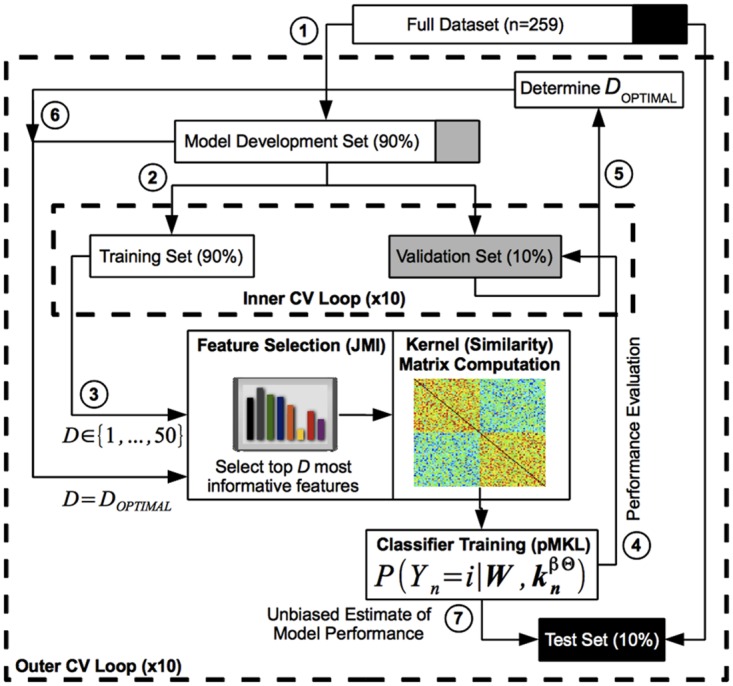
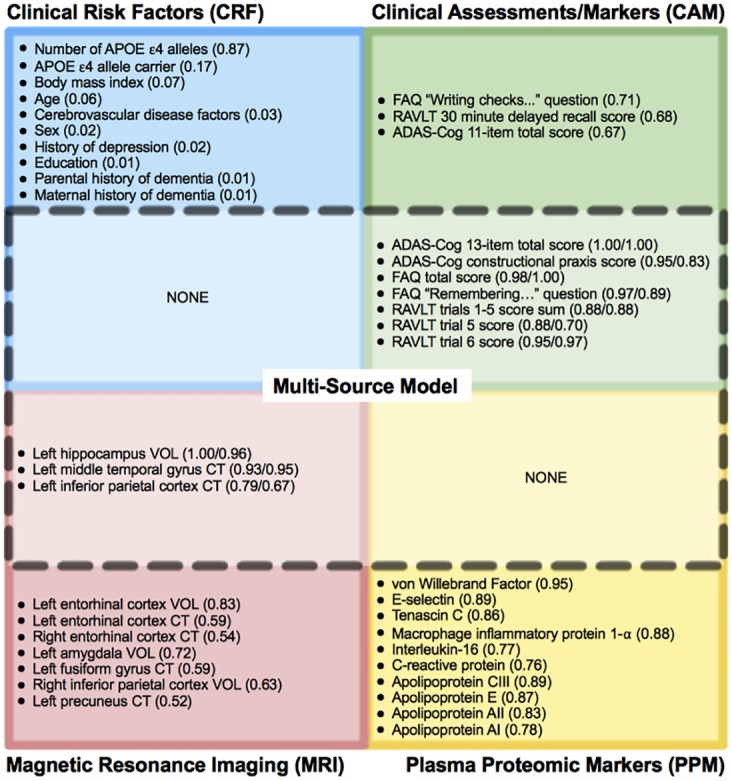
Using baseline data from 259 MCI patients and a probabilistic, kernel-based pattern classification approach, we trained a classifier to distinguish between patients who progressed to AD-type dementia (n = 139) and those who did not (n = 120) during a three-year follow-up period. More than 750 variables across four data sources were considered as potential predictors of progression. These data sources included risk factors, cognitive and functional assessments, structural magnetic resonance imaging (MRI) data, and plasma proteomic data. Predictive utility was assessed using a rigorous cross-validation framework.
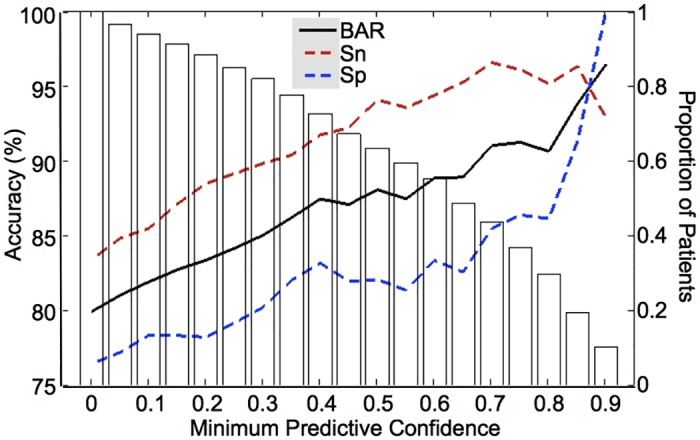
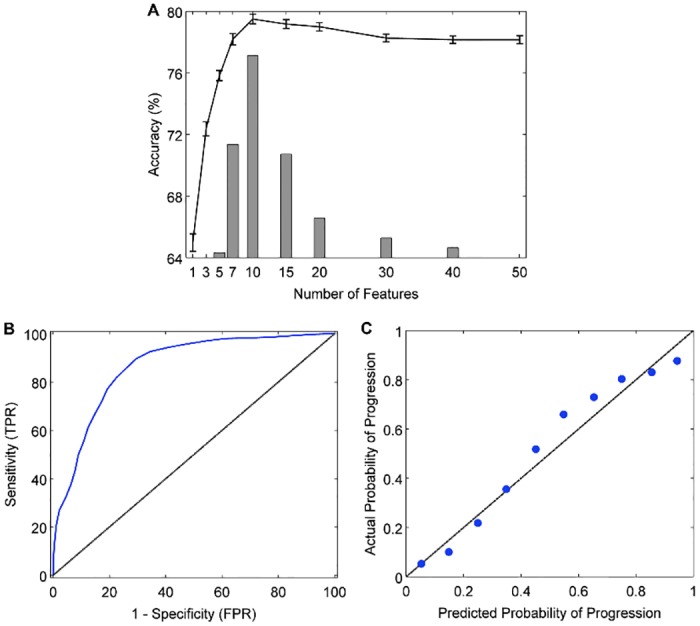
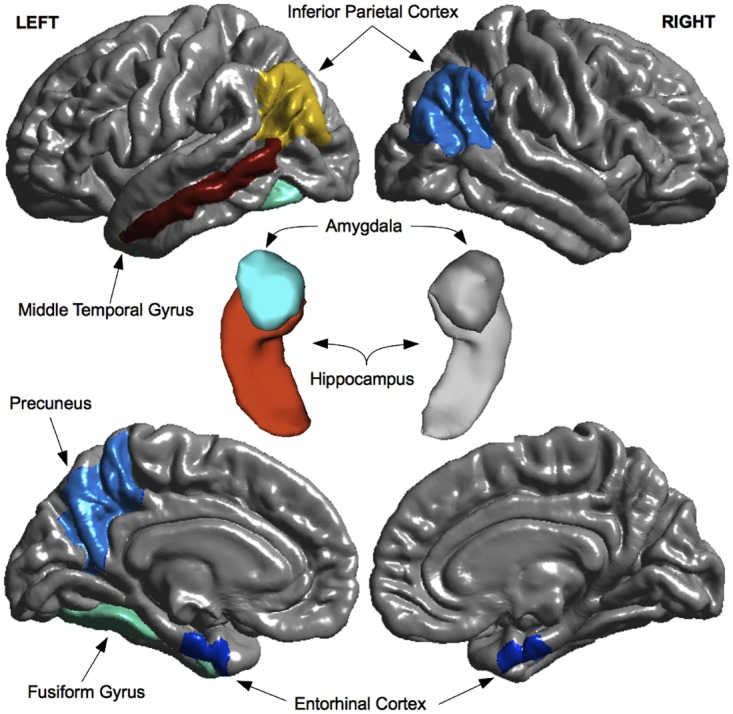
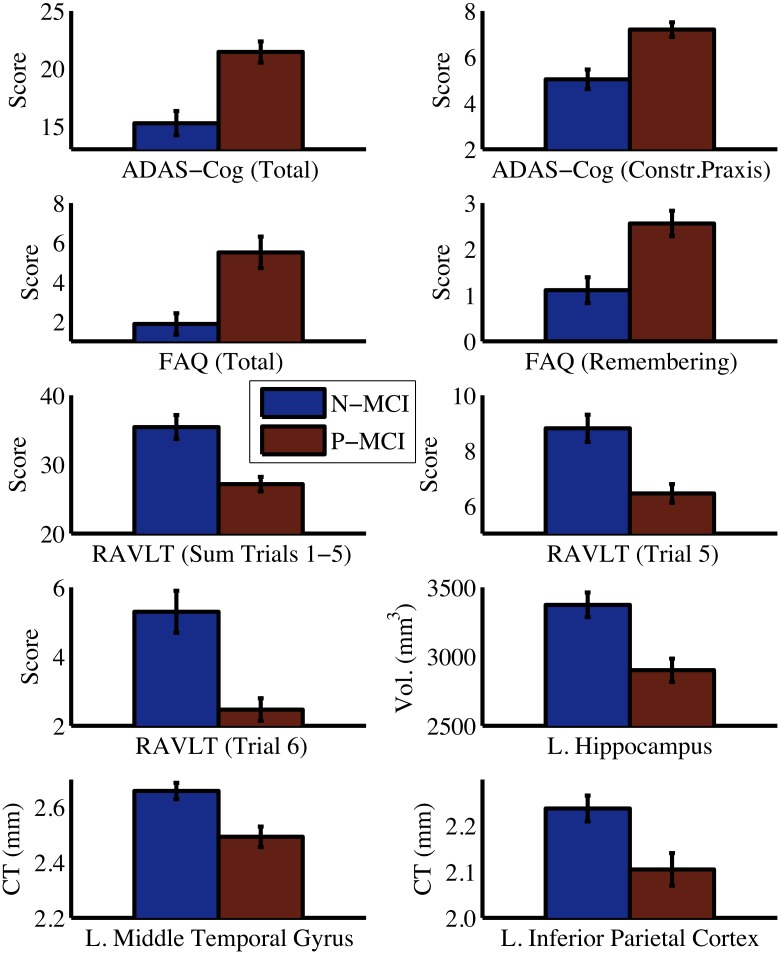
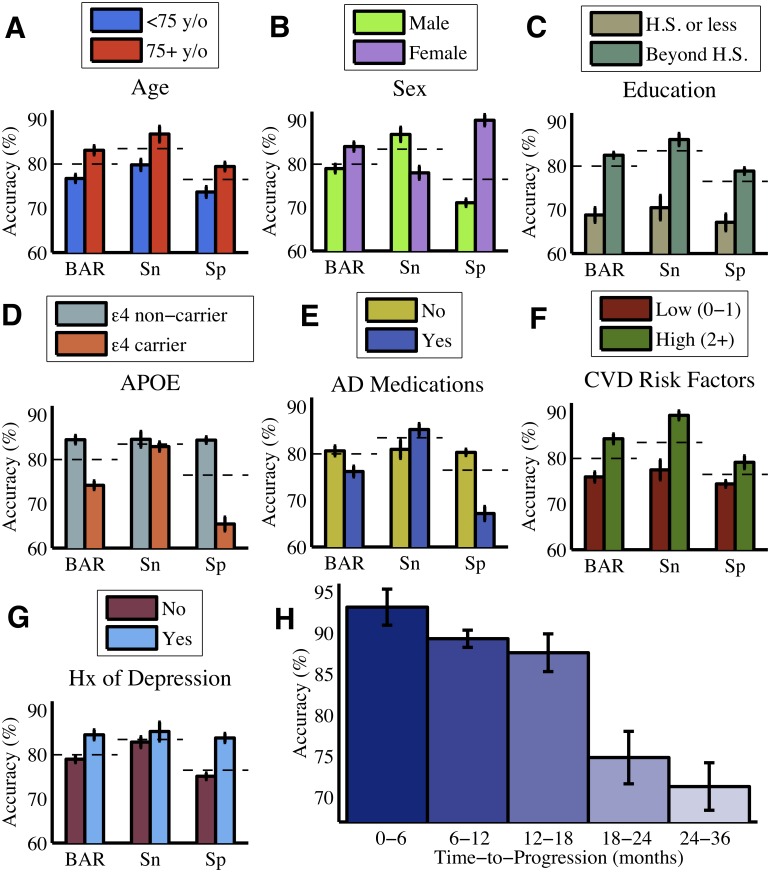
Cognitive and functional markers were most predictive of progression, while plasma proteomic markers had limited predictive utility. The best performing model incorporated a combination of cognitive/functional markers and morphometric MRI measures and predicted progression with 80% accuracy (83% sensitivity, 76% specificity, AUC = 0.87). Predictors of progression included scores on the Alzheimer's Disease Assessment Scale, Rey Auditory Verbal Learning Test, and Functional Activities Questionnaire, as well as volume/cortical thickness of three brain regions (left hippocampus, middle temporal gyrus, and inferior parietal cortex). Calibration analysis revealed that the model is capable of generating probabilistic predictions that reliably reflect the actual risk of progression. Finally, we found that the predictive accuracy of the model varied with patient demographic, genetic, and clinical characteristics and could be further improved by taking into account the confidence of the predictions.
We developed an accurate prognostic model for predicting MCI-to-dementia progression over a three-year period. The model utilizes widely available, cost-effective, non-invasive markers and can be used to improve patient selection in clinical trials and identify high-risk MCI patients for early treatment.
轻度认知障碍(MCI)患者患阿尔茨海默病(AD)所致痴呆的风险大幅增加。在本研究中,我们开发了一种多变量预测模型,用于在个体患者层面预测MCI向痴呆的进展。
利用259例MCI患者的基线数据和基于概率核的模式分类方法,我们训练了一个分类器,以区分在三年随访期内进展为AD型痴呆的患者(n = 139)和未进展的患者(n = 120)。来自四个数据源的750多个变量被视为进展的潜在预测因子。这些数据源包括风险因素、认知和功能评估、结构磁共振成像(MRI)数据以及血浆蛋白质组学数据。使用严格的交叉验证框架评估预测效用。
认知和功能标志物对进展的预测性最强,而血浆蛋白质组学标志物的预测效用有限。表现最佳的模型结合了认知/功能标志物和形态学MRI测量指标,预测进展的准确率为80%(敏感性83%,特异性76%,AUC = 0.87)。进展的预测因子包括阿尔茨海默病评估量表、雷伊听觉词语学习测验和功能活动问卷的得分,以及三个脑区(左侧海马体、颞中回和顶下小叶)的体积/皮质厚度。校准分析表明,该模型能够生成可靠反映实际进展风险的概率预测。最后,我们发现该模型的预测准确性因患者的人口统计学、遗传和临床特征而异,并且通过考虑预测的置信度可以进一步提高。
我们开发了一种准确的预测模型,用于预测三年内MCI向痴呆的进展。该模型利用广泛可用、具有成本效益的非侵入性标志物,可用于改善临床试验中的患者选择,并识别高危MCI患者以便早期治疗。