Rovner Alexis J, Haimovich Adrian D, Katz Spencer R, Li Zhe, Grome Michael W, Gassaway Brandon M, Amiram Miriam, Patel Jaymin R, Gallagher Ryan R, Rinehart Jesse, Isaacs Farren J
1] Department of Molecular, Cellular and Developmental Biology, Yale University, New Haven, Connecticut 06520, USA [2] Systems Biology Institute, Yale University, West Haven, Connecticut 06516, USA.
1] Systems Biology Institute, Yale University, West Haven, Connecticut 06516, USA [2] Department of Cellular and Molecular Physiology, Yale University, New Haven, Connecticut 06520, USA.
Nature. 2015 Feb 5;518(7537):89-93. doi: 10.1038/nature14095. Epub 2015 Jan 21.
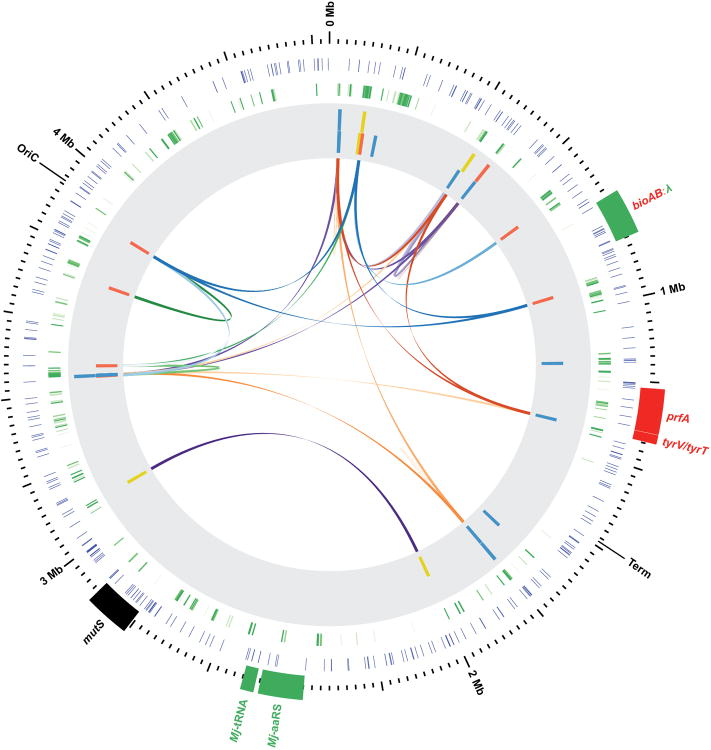
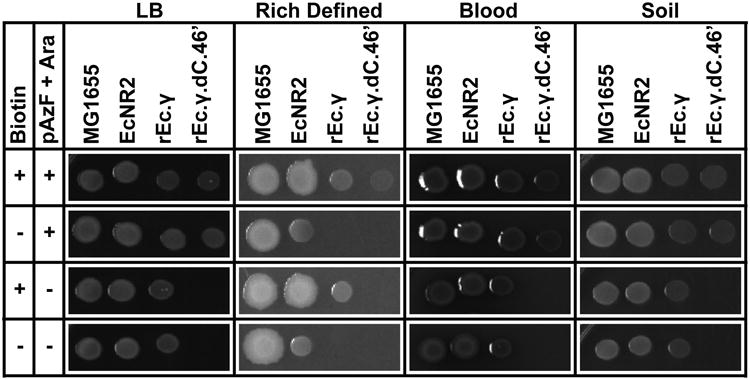
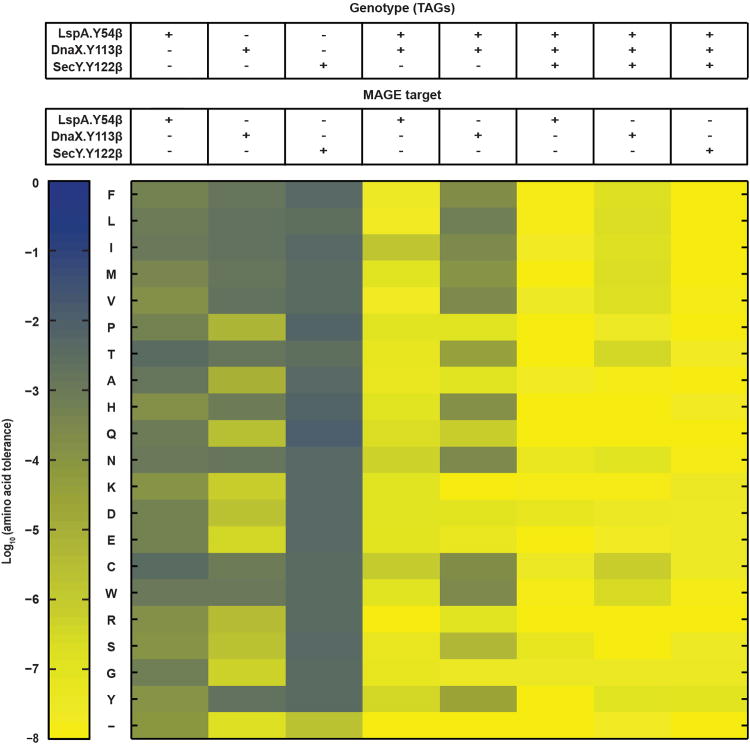
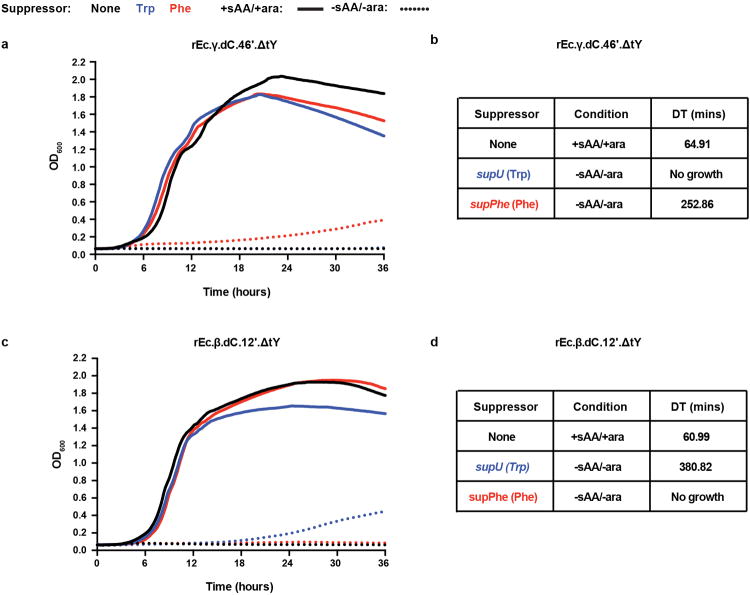
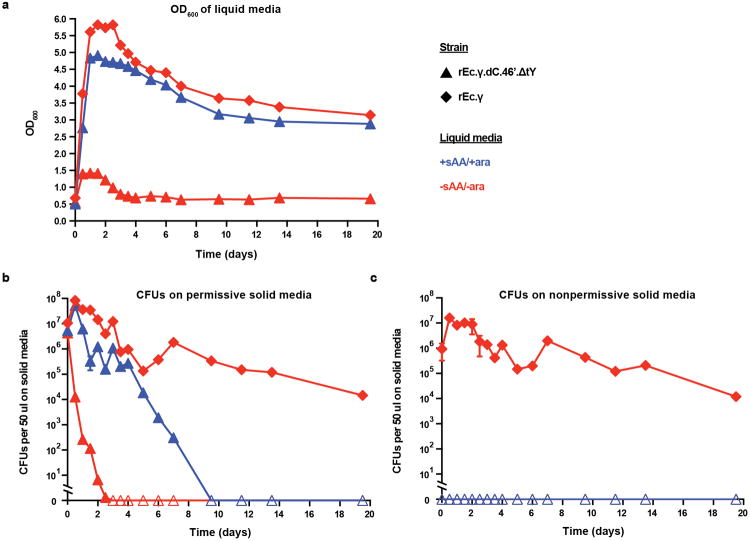
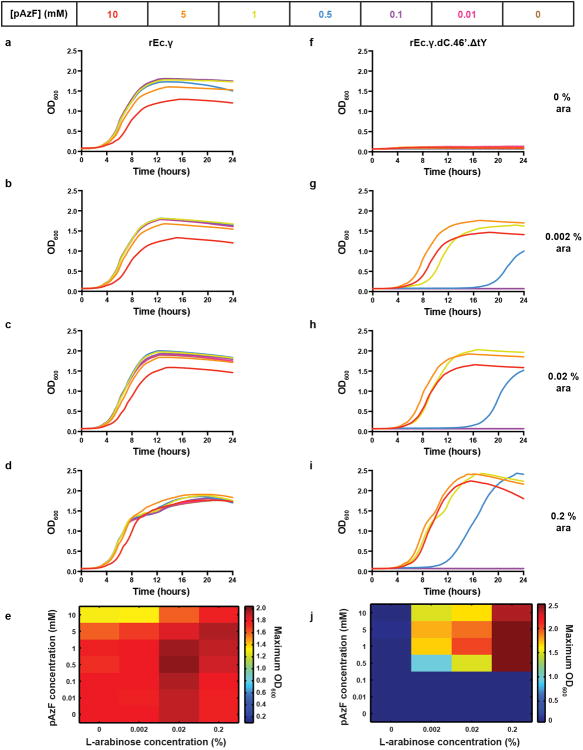
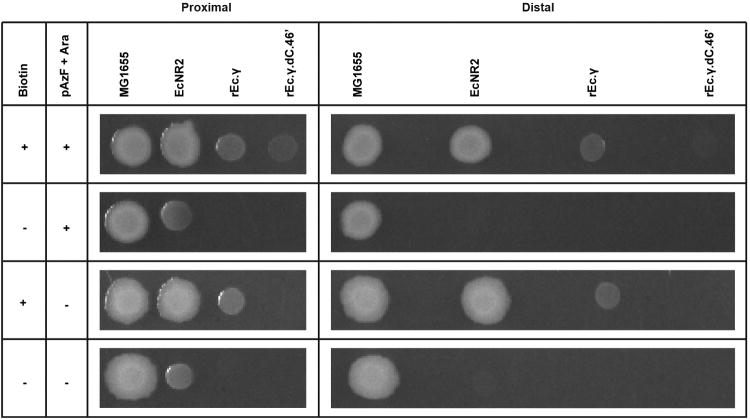
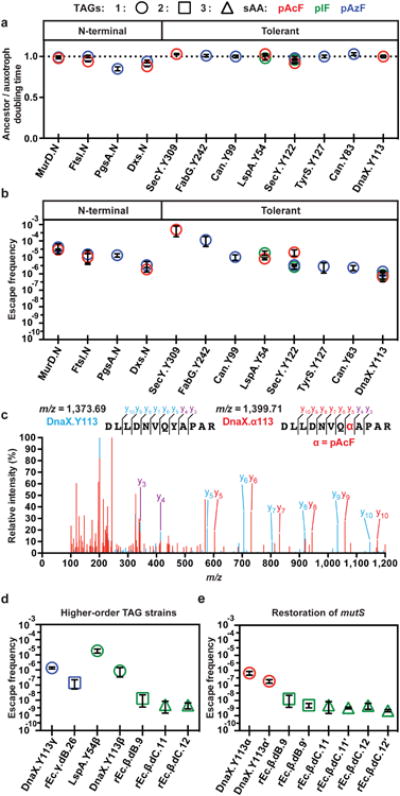
Genetically modified organisms (GMOs) are increasingly used in research and industrial systems to produce high-value pharmaceuticals, fuels and chemicals. Genetic isolation and intrinsic biocontainment would provide essential biosafety measures to secure these closed systems and enable safe applications of GMOs in open systems, which include bioremediation and probiotics. Although safeguards have been designed to control cell growth by essential gene regulation, inducible toxin switches and engineered auxotrophies, these approaches are compromised by cross-feeding of essential metabolites, leaked expression of essential genes, or genetic mutations. Here we describe the construction of a series of genomically recoded organisms (GROs) whose growth is restricted by the expression of multiple essential genes that depend on exogenously supplied synthetic amino acids (sAAs). We introduced a Methanocaldococcus jannaschii tRNA:aminoacyl-tRNA synthetase pair into the chromosome of a GRO derived from Escherichia coli that lacks all TAG codons and release factor 1, endowing this organism with the orthogonal translational components to convert TAG into a dedicated sense codon for sAAs. Using multiplex automated genome engineering, we introduced in-frame TAG codons into 22 essential genes, linking their expression to the incorporation of synthetic phenylalanine-derived amino acids. Of the 60 sAA-dependent variants isolated, a notable strain harbouring three TAG codons in conserved functional residues of MurG, DnaA and SerS and containing targeted tRNA deletions maintained robust growth and exhibited undetectable escape frequencies upon culturing ∼10(11) cells on solid media for 7 days or in liquid media for 20 days. This is a significant improvement over existing biocontainment approaches. We constructed synthetic auxotrophs dependent on sAAs that were not rescued by cross-feeding in environmental growth assays. These auxotrophic GROs possess alternative genetic codes that impart genetic isolation by impeding horizontal gene transfer and now depend on the use of synthetic biochemical building blocks, advancing orthogonal barriers between engineered organisms and the environment.
转基因生物(GMOs)越来越多地用于研究和工业系统,以生产高价值的药物、燃料和化学品。基因隔离和内在生物遏制将提供必要的生物安全措施,以确保这些封闭系统的安全,并使转基因生物能够在开放系统中安全应用,包括生物修复和益生菌。尽管已经设计了保障措施,通过必需基因调控、诱导毒素开关和工程化营养缺陷型来控制细胞生长,但这些方法会因必需代谢物的交叉喂养、必需基因的泄漏表达或基因突变而受到影响。在这里,我们描述了一系列基因组重编码生物(GROs)的构建,其生长受到多个必需基因表达的限制,这些必需基因依赖于外源供应的合成氨基酸(sAAs)。我们将一个詹氏甲烷球菌tRNA:氨酰-tRNA合成酶对引入到一个源自大肠杆菌的GRO的染色体中,该GRO缺乏所有TAG密码子和释放因子1,赋予该生物体正交翻译组件,将TAG转化为sAAs的专用有义密码子。使用多重自动化基因组工程,我们将框内TAG密码子引入22个必需基因中,将它们的表达与合成苯丙氨酸衍生氨基酸的掺入联系起来。在分离出的60个依赖sAA的变体中,一个显著的菌株在MurG、DnaA和SerS的保守功能残基中含有三个TAG密码子,并含有靶向tRNA缺失,在固体培养基上培养约10^11个细胞7天或在液体培养基中培养20天时,保持强劲生长且逃逸频率不可检测。这比现有的生物遏制方法有了显著改进。我们构建了依赖sAAs的合成营养缺陷型,在环境生长试验中,这些营养缺陷型不会因交叉喂养而得到挽救。这些营养缺陷型GROs拥有替代遗传密码,通过阻碍水平基因转移赋予基因隔离,现在依赖于合成生化构件的使用,推进了工程生物与环境之间的正交屏障。