Cuthbert Bonnie J, Hayes Christopher S, Goulding Celia W
Molecular Biology and Biochemistry, University of California, Irvine, Irvine, CA, United States.
Molecular, Cellular and Developmental Biology, University of California, Santa Barbara, Santa Barbara, CA, United States.
Front Mol Biosci. 2022 Apr 26;9:866854. doi: 10.3389/fmolb.2022.866854. eCollection 2022.
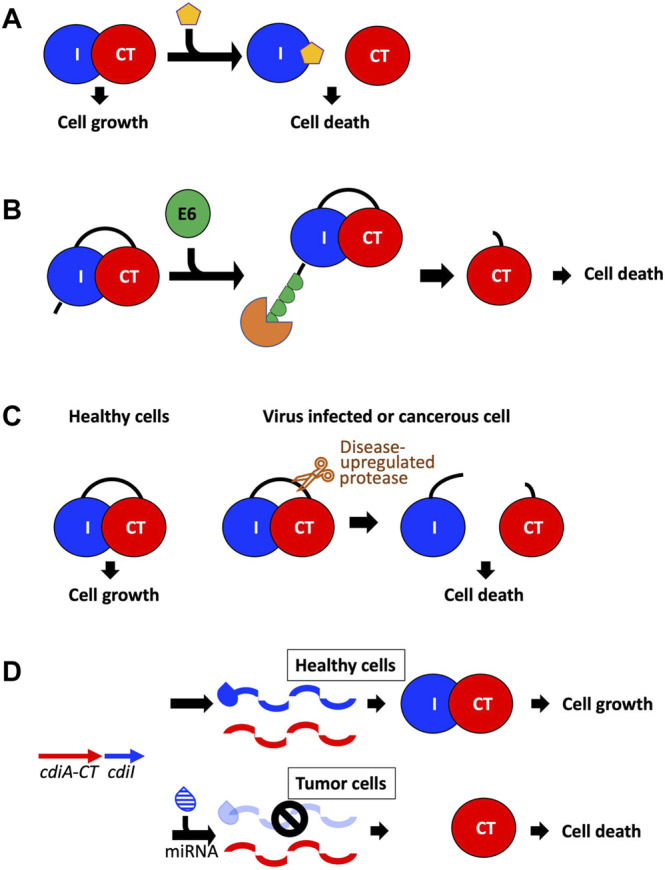
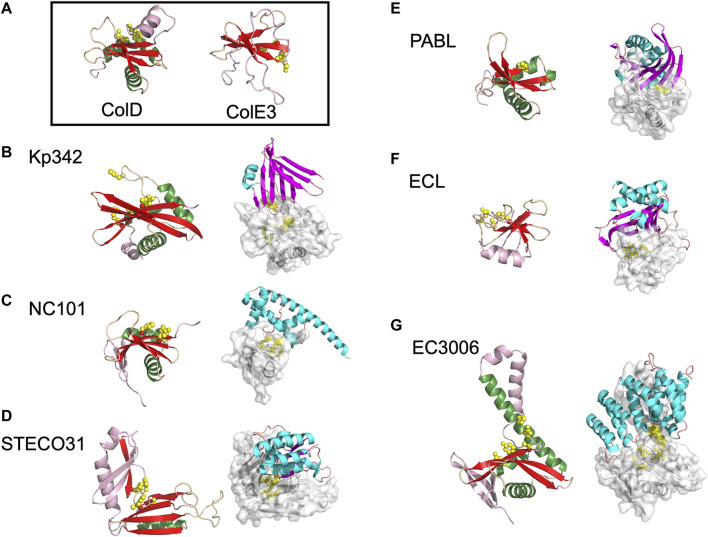
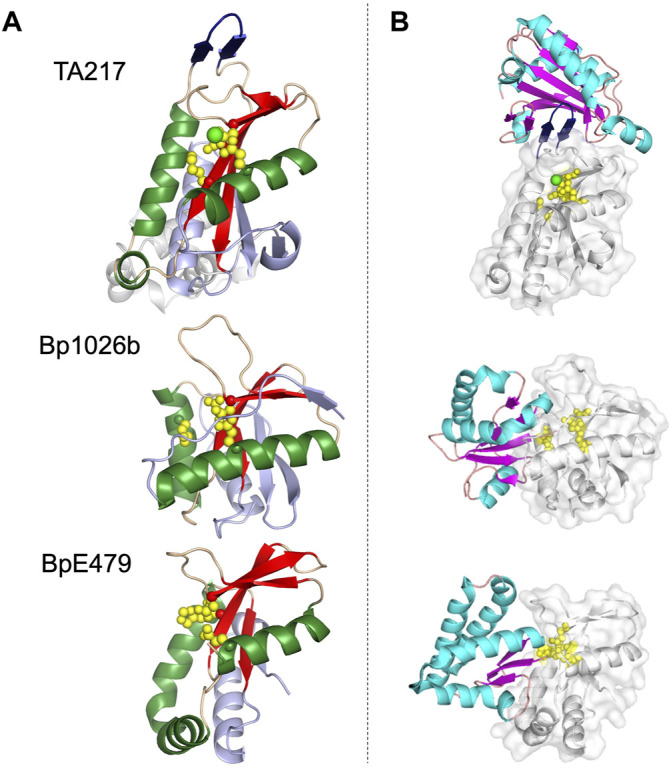
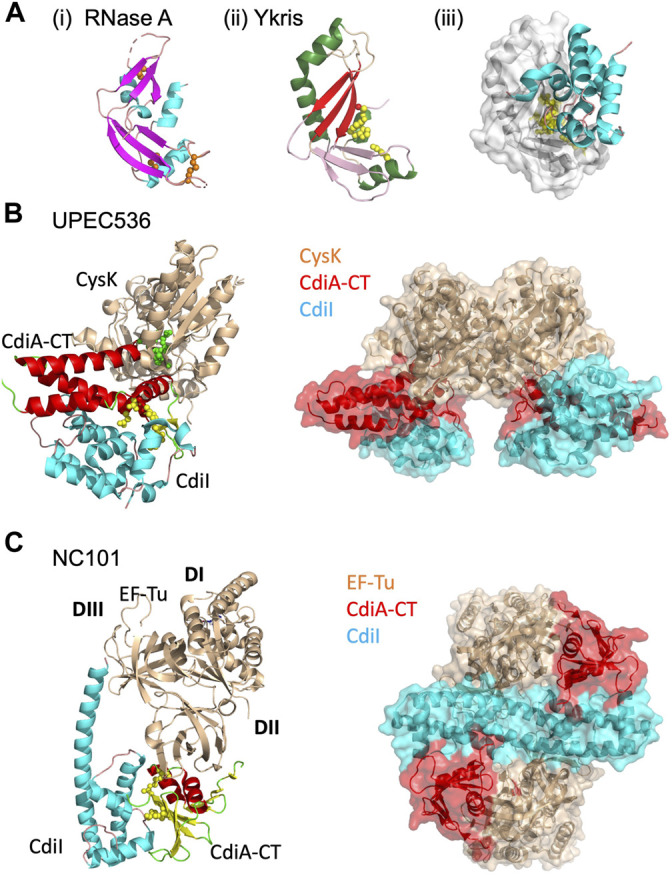
Bacteria live in complex communities and environments, competing for space and nutrients. Within their niche habitats, bacteria have developed various inter-bacterial mechanisms to compete and communicate. One such mechanism is contact-dependent growth inhibition (CDI). CDI is found in many Gram-negative bacteria, including several pathogens. These CDI bacteria encode a CdiB/CdiA two-partner secretion system that delivers inhibitory toxins into neighboring cells upon contact. Toxin translocation results in the growth inhibition of closely related strains and provides a competitive advantage to the CDI bacteria. CdiB, an outer-membrane protein, secretes CdiA onto the surface of the CDI bacteria. When CdiA interacts with specific target-cell receptors, CdiA delivers its C-terminal toxin region (CdiA-CT) into the target-cell. CdiA-CT toxin proteins display a diverse range of toxic functions, such as DNase, RNase, or pore-forming toxin activity. CDI bacteria also encode an immunity protein, CdiI, that specifically binds and neutralizes its cognate CdiA-CT, protecting the CDI bacteria from auto-inhibition. In Gram-negative bacteria, toxin/immunity (CdiA-CT/CdiI) pairs have highly variable sequences and functions, with over 130 predicted divergent toxin/immunity complex families. In this review, we will discuss biochemical and structural advances made in the characterization of CDI. This review will focus on the diverse array of CDI toxin/immunity complex structures together with their distinct toxin functions. Additionally, we will discuss the most recent studies on target-cell recognition and toxin entry, along with the discovery of a new member of the CDI loci. Finally, we will offer insights into how these diverse toxin/immunity complexes could be harnessed to fight human diseases.
细菌生活在复杂的群落和环境中,争夺空间和营养物质。在其生态位栖息地内,细菌已发展出各种细菌间机制来进行竞争和交流。其中一种机制是接触依赖性生长抑制(CDI)。CDI存在于许多革兰氏阴性菌中,包括几种病原体。这些CDI细菌编码一种CdiB/CdiA双组分分泌系统,该系统在接触时将抑制性毒素传递到邻近细胞中。毒素易位导致密切相关菌株的生长受到抑制,并为CDI细菌提供竞争优势。CdiB是一种外膜蛋白,将CdiA分泌到CDI细菌的表面。当CdiA与特定的靶细胞受体相互作用时,CdiA将其C末端毒素区域(CdiA-CT)传递到靶细胞中。CdiA-CT毒素蛋白具有多种毒性功能,如DNA酶、RNA酶或成孔毒素活性。CDI细菌还编码一种免疫蛋白CdiI,它能特异性结合并中和其同源的CdiA-CT,保护CDI细菌免受自身抑制。在革兰氏阴性菌中,毒素/免疫(CdiA-CT/CdiI)对具有高度可变的序列和功能,预测有超过130个不同的毒素/免疫复合物家族。在本综述中,我们将讨论在CDI表征方面取得的生化和结构进展。本综述将重点关注各种CDI毒素/免疫复合物结构及其独特的毒素功能。此外,我们将讨论关于靶细胞识别和毒素进入的最新研究,以及CDI基因座新成员 的发现。最后,我们将深入探讨如何利用这些多样的毒素/免疫复合物来对抗人类疾病。