Wang Shunqiang, Thomas Antony, Lee Elaine, Yang Shu, Cheng Xuanhong, Liu Yaling
Department of Mechanical Engineering and Mechanics, Lehigh University, Bethlehem, PA 18015, USA.
Bioengineering Program, Lehigh University, Bethlehem, PA 18015, USA.
Analyst. 2016 Apr 7;141(7):2228-37. doi: 10.1039/c6an00236f.
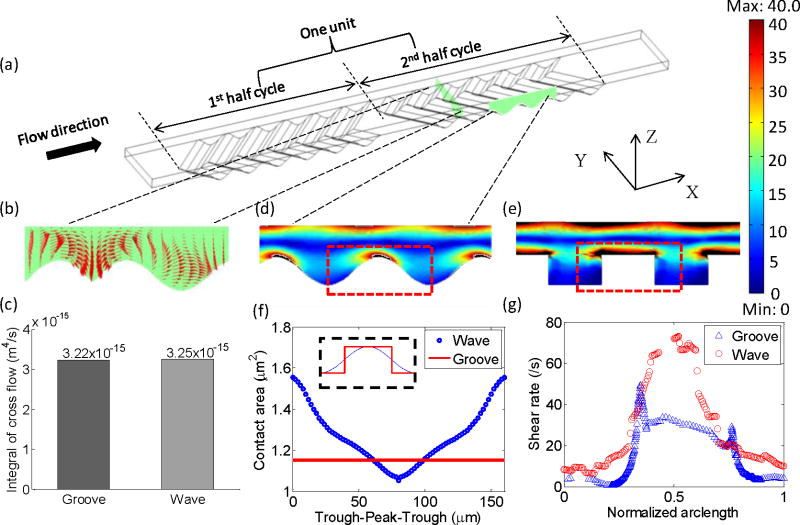
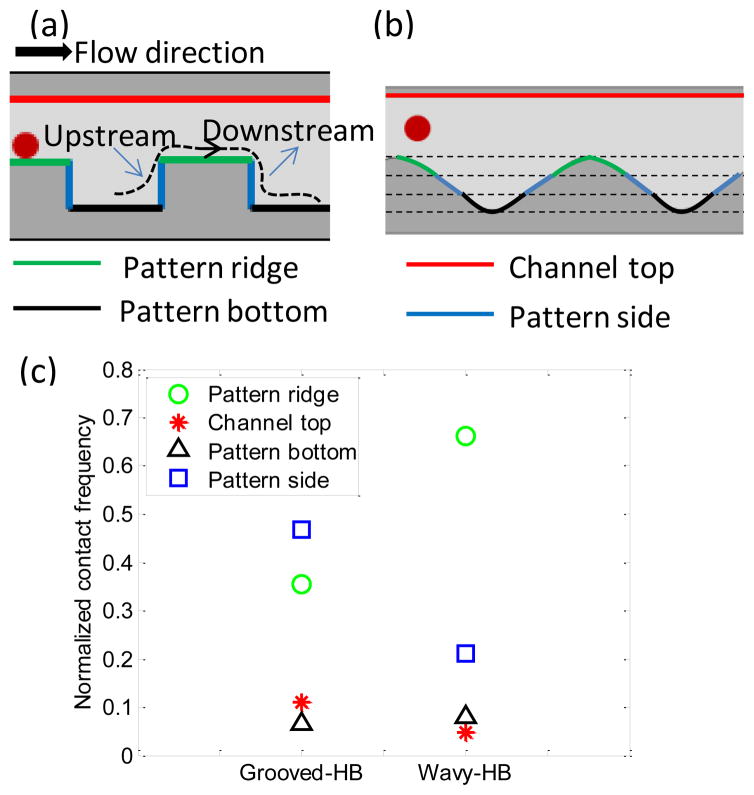
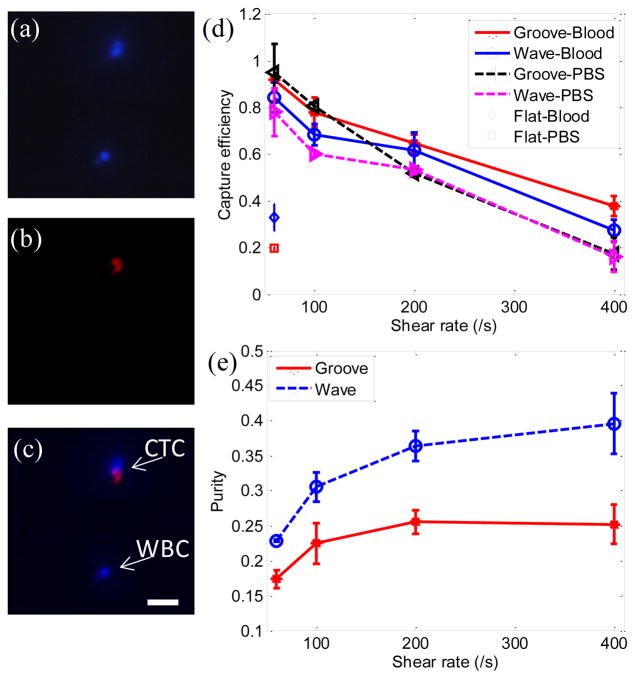
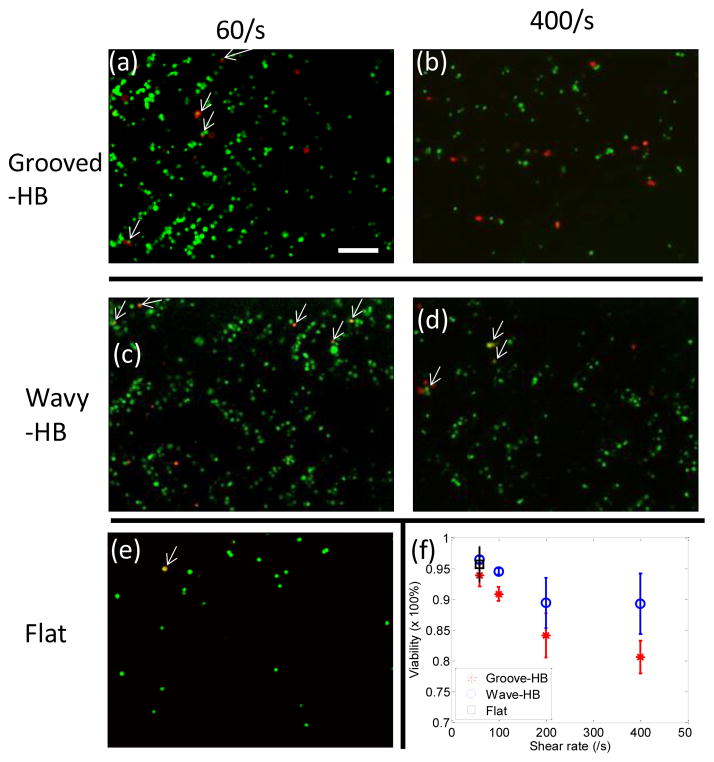
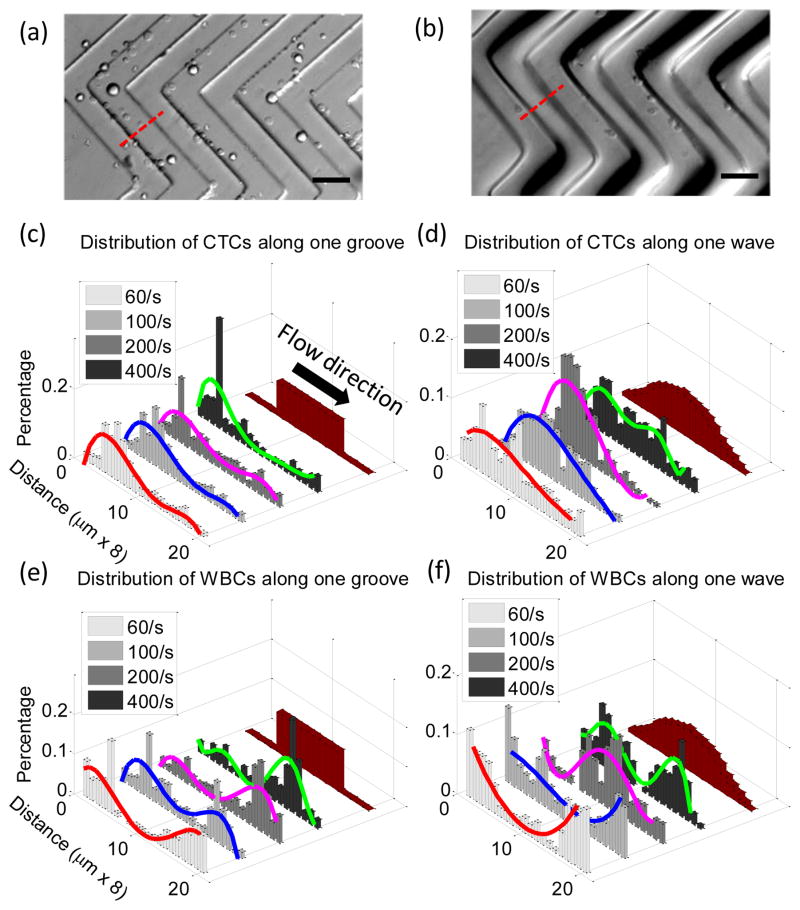
Circulating tumor cells (CTCs) in peripheral blood have been recognized as a general biomarker for diagnosing cancer and providing guidance for personalized treatments. Yet due to their rarity, the challenge for their clinical utility lies in the efficient isolation while avoiding the capture of other non-targeted white blood cells (WBCs). In this paper, a wavy-herringbone (HB) microfluidic chip coated with antibody directly against epithelial cell adhesion molecule (anti-EpCAM) was developed for highly efficient and selective isolation of tumor cells from tumor cell-spiked whole blood samples. By extending the concept of the hallmark HB-Chip in the literature, the wavy-HB chip not only achieves high capture efficiency (up to 85.0%) by micro-vortexes induced by HB structures, but also achieves high purity (up to 39.4%) due to the smooth wavy microstructures. These smooth wavy-HB structures eliminate the ultra-low shear rate regions in the traditional grooved-HB structures that lead to non-specific trapping of cells. Compared with the grooved-HB chip with sharp corners, the wavy-HB chip shows significantly higher purity while maintaining similarly high capture efficiency. Furthermore, the wavy-HB chip has up to 11% higher captured cell viability over the grooved-HB chip. The distributions of tumor cells and WBCs along the grooves and waves are investigated to help understand the mechanisms behind the better performance of the wavy-HB chip. The wavy-HB chip may serve as a promising platform for CTC capture and cancer diagnosis.
外周血中的循环肿瘤细胞(CTCs)已被公认为是一种用于癌症诊断和提供个性化治疗指导的通用生物标志物。然而,由于其数量稀少,其临床应用面临的挑战在于如何高效分离,同时避免捕获其他非靶向白细胞(WBCs)。在本文中,开发了一种直接包被抗上皮细胞粘附分子抗体(抗-EpCAM)的波浪形人字纹(HB)微流控芯片,用于从添加肿瘤细胞的全血样本中高效、选择性地分离肿瘤细胞。通过扩展文献中标志性HB芯片的概念,波浪形HB芯片不仅通过HB结构诱导的微涡旋实现了高捕获效率(高达85.0%),而且由于其光滑的波浪形微结构实现了高纯度(高达39.4%)。这些光滑的波浪形HB结构消除了传统带槽HB结构中导致细胞非特异性捕获的超低剪切率区域。与带有尖角的带槽HB芯片相比,波浪形HB芯片在保持相似高捕获效率的同时,显示出显著更高的纯度。此外,波浪形HB芯片捕获的细胞活力比带槽HB芯片高11%。研究了肿瘤细胞和白细胞沿凹槽和波浪的分布情况,以帮助理解波浪形HB芯片性能更好背后的机制。波浪形HB芯片可能成为CTC捕获和癌症诊断的一个有前景的平台。