Zhong V W, Lamichhane A P, Crandell J L, Couch S C, Liese A D, The N S, Tzeel B A, Dabelea D, Lawrence J M, Marcovina S M, Kim G, Mayer-Davis E J
Department of Nutrition, University of North Carolina, Chapel Hill, NC, USA.
School of Nursing and Department of Biostatistics, University of North Carolina, Chapel Hill, NC, USA.
Eur J Clin Nutr. 2016 Jul;70(7):802-7. doi: 10.1038/ejcn.2016.8. Epub 2016 Feb 24.
BACKGROUND/OBJECTIVES: This study aimed to determine the association between a Mediterranean diet and glycemic control and other cardiovascular risk factors among youth with type I diabetes (TID).
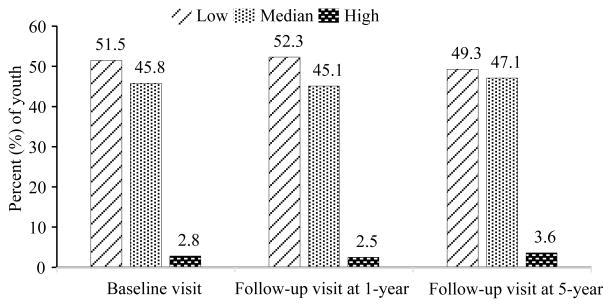
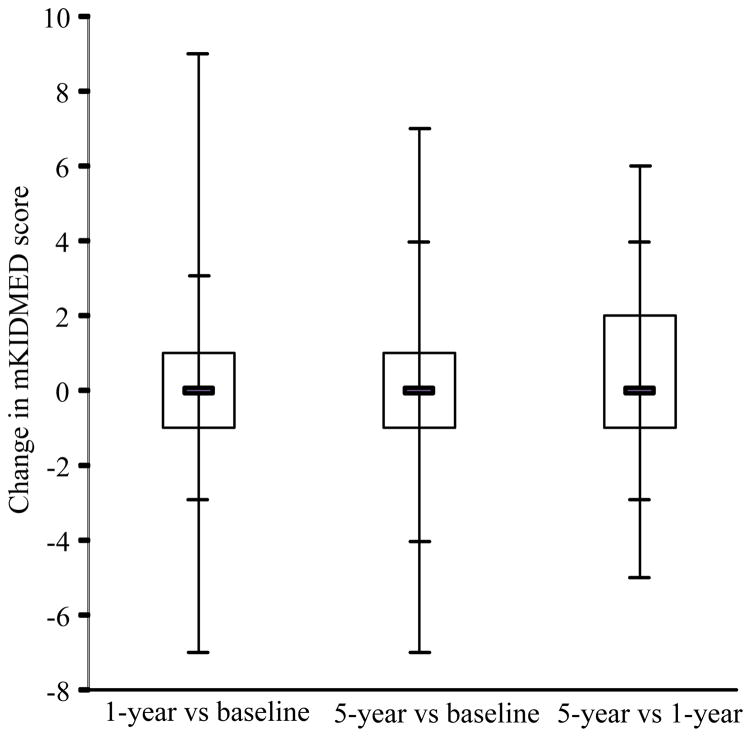
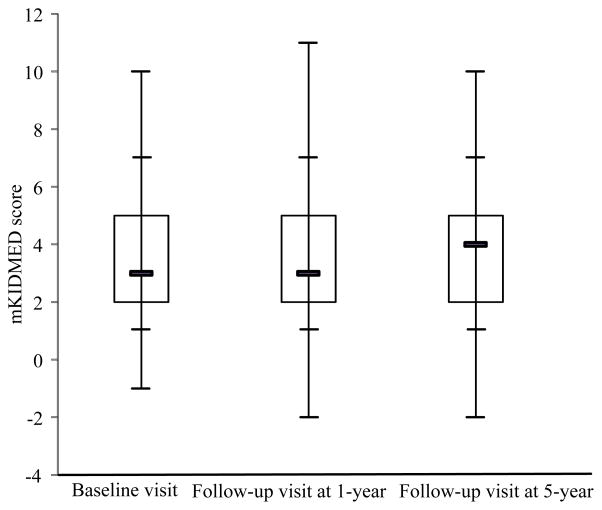
SUBJECTS/METHODS: Incident TID cases aged <20 years at diagnosis between 2002 and 2005 were included. Participants were seen at baseline (N=793), 1-year (N=512) and 5-year follow-up visits (N=501). Mediterranean diet score was assessed using a modified KIDMED index (mKIDMED). Multivariate linear regression and longitudinal mixed model were applied to determine the association between mKIDMED score and log-HbA1c, lipids, blood pressure (BP) and obesity.
In cross-sectional analyses using baseline data, for individuals with the hemoglobin A1c (HbA1c) of 7.5%, a two-point higher mKIDMED score (1 s.d.) was associated with 0.15% lower HbA1c (P=0.02). A two-point higher mKIDMED score was associated with 4.0 mg/dl lower total cholesterol (TC) (P=0.006), 3.4 mg/dl lower low-density lipoprotein cholesterol (LDL-C) (P=0.004), 3.9 mg/dl lower non-high-density lipoprotein cholesterol (non-HDL-C) (P=0.004) and 0.07 lower LDL-C/HDL-C ratio (P=0.02). Using longitudinal data, a two-point increase in mKIDMED score was associated with 0.01% lower log-HbA1c (P=0.07), 1.8 mg/dl lower TC (P=0.05), 1.6 mg/dl lower LDL-C (P=0.03) and 1.8 mg/dl lower non-HDL-C (P=0.03) than would otherwise have been expected. HbA1c mediated ∼20% of the association for lipids in both cross-sectional and longitudinal models. An unexpected positive association between mKIDMED score and systolic BP was found among non-Hispanic white youth in cross-sectional analyses (P=0.009). Mediterranean diet was not associated with obesity.
Mediterranean diet may improve glycemic control and cardiovascular health in TID youth.
背景/目的:本研究旨在确定地中海饮食与1型糖尿病(TID)青少年的血糖控制及其他心血管危险因素之间的关联。
受试者/方法:纳入2002年至2005年诊断时年龄小于20岁的新发病例。在基线(N = 793)、1年随访(N = 512)和5年随访(N = 501)时对参与者进行观察。使用改良的KIDMED指数(mKIDMED)评估地中海饮食得分。应用多变量线性回归和纵向混合模型来确定mKIDMED得分与糖化血红蛋白(HbA1c)对数、血脂、血压(BP)和肥胖之间的关联。
在使用基线数据的横断面分析中,对于糖化血红蛋白(HbA1c)为7.5%的个体,mKIDMED得分高两点(1个标准差)与HbA1c降低0.15%相关(P = 0.02)。mKIDMED得分高两点与总胆固醇(TC)降低4.0mg/dl(P = 0.006)、低密度脂蛋白胆固醇(LDL-C)降低3.4mg/dl(P = 0.004)、非高密度脂蛋白胆固醇(non-HDL-C)降低3.9mg/dl(P = 0.004)以及LDL-C/HDL-C比值降低0.07相关(P = 0.02)。使用纵向数据,mKIDMED得分增加两点与糖化血红蛋白(HbA1c)对数降低0.01%(P = 0.07)、总胆固醇(TC)降低1.8mg/dl(P = 0.05)、低密度脂蛋白胆固醇(LDL-C)降低1.6mg/dl(P = 0.03)和非高密度脂蛋白胆固醇(non-HDL-C)降低1.8mg/dl(P = 0.03)相关,高于预期。在横断面和纵向模型中,HbA1c介导了约20%的血脂关联。在横断面分析中,非西班牙裔白人青少年中发现mKIDMED得分与收缩压之间存在意外的正相关(P = 0.009)。地中海饮食与肥胖无关。
地中海饮食可能改善TID青少年的血糖控制和心血管健康。