Department of Clinical Medicine and Surgery, Federico II University of Naples, 80131 Naples, Italy.
Division of Endocrinology, Diabetes and Metabolism, University and Hospital Trust of Verona, 37134 Verona, Italy.
Nutrients. 2018 Aug 10;10(8):1067. doi: 10.3390/nu10081067.
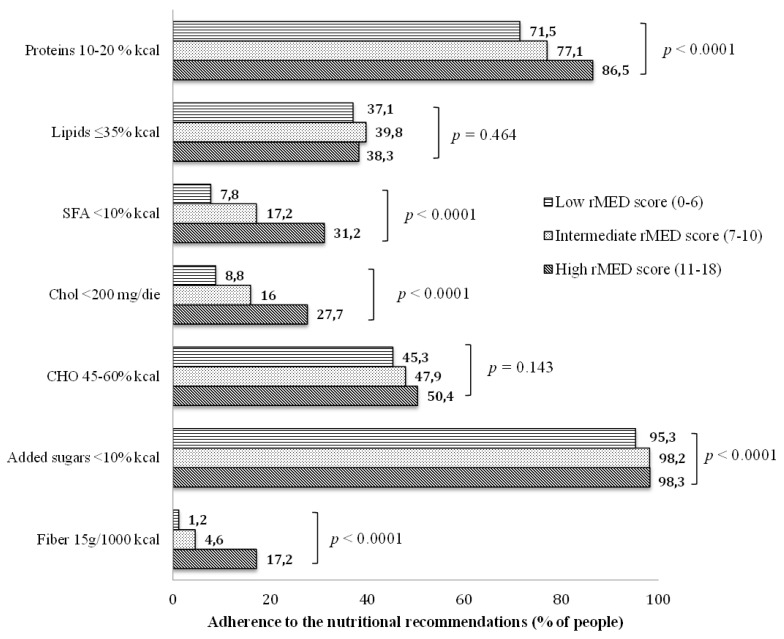
This study evaluates the relation of a Mediterranean dietary pattern and its individual components with the cardiovascular risk factors profile, plasma glucose and body mass index (BMI) in people with type 2 diabetes. We studied 2568 participants at 57 diabetes clinics. Diet was assessed with the EPIC (European Prospective Investigation into Cancer and Nutrition) questionnaire, adherence to the Mediterranean diet was evaluated with the relative Mediterranean diet score (rMED). A high compared to a low score was associated with a better quality of diet and a greater adherence to the nutritional recommendations for diabetes. However, even in the group achieving a high score, only a small proportion of participants met the recommendations for fiber and saturated fat (respectively 17% and 30%). Nonetheless, a high score was associated with lower values of plasma lipids, blood pressure, glycated hemoglobin, and BMI. The relationship of the single food items components of the rMED score with the achievement of treatment targets for plasma lipids, blood pressure, glucose, and BMI were also explored. The study findings support the Mediterranean dietary model as a suitable model for type 2 diabetes and the concept that the beneficial health effects of the Mediterranean diet lie primarily in its synergy among various nutrients and foods rather than on any individual component.
本研究评估了地中海饮食模式及其各个组成部分与 2 型糖尿病患者心血管危险因素谱、血糖和体重指数(BMI)之间的关系。我们在 57 家糖尿病诊所研究了 2568 名参与者。饮食评估采用 EPIC(欧洲癌症前瞻性调查和营养)问卷,地中海饮食的依从性用相对地中海饮食评分(rMED)来评估。与低评分相比,高评分与更好的饮食质量和更遵守糖尿病营养建议相关。然而,即使在达到高评分的组中,只有一小部分参与者符合纤维和饱和脂肪的建议摄入量(分别为 17%和 30%)。尽管如此,高评分与较低的血脂、血压、糖化血红蛋白和 BMI 值相关。还探讨了 rMED 评分的单个食物成分与实现血脂、血压、血糖和 BMI 治疗目标的关系。研究结果支持地中海饮食模式作为 2 型糖尿病的合适模式,以及地中海饮食的有益健康效果主要在于其各种营养素和食物之间的协同作用,而不是任何单个成分的概念。