Vaz Rui G, Mkanda Pascal, Banda Richard, Komkech William, Ekundare-Famiyesin Olubowale O, Onyibe Rosemary, Abidoye Sunday, Nsubuga Peter, Maleghemi Sylvester, Hannah-Murele Bolatito, Tegegne Sisay G
World Health Organization, Country Representative Office, Abuja, Nigeria.
World Health Organization, Regional Office for Africa, Brazzaville, Congo.
J Infect Dis. 2016 May 1;213 Suppl 3(Suppl 3):S140-6. doi: 10.1093/infdis/jiv581. Epub 2016 Feb 16.
The current West African outbreak of the Ebola virus disease (EVD) began in Guinea in December 2013 and rapidly spread to Liberia and Sierra Leone. On 20 July 2014, a sick individual flew into Lagos, Nigeria, from Monrovia, Liberia, setting off an outbreak in Lagos and later in Port Harcourt city. The government of Nigeria, supported by the World Health Organization and other partners, mounted a response to the outbreak relying on the polio program experiences and infrastructure. On 20 October 2014, the country was declared free of EVD.
We examined the organization and operations of the response to the 2014 EVD outbreak in Nigeria and how experiences and support from the country's polio program infrastructure accelerated the outbreak response.
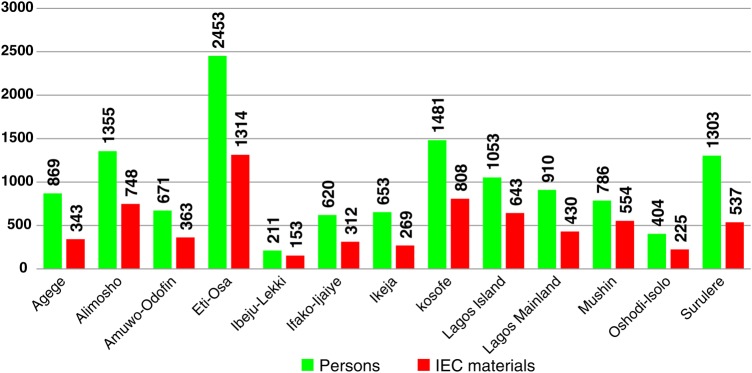
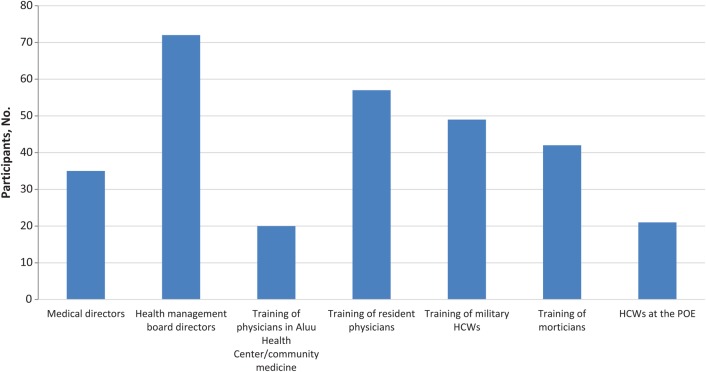
The deputy incident manager of the National Polio Emergency Operations Centre was appointed the incident manager of the Ebola Emergency Operations Centre (EEOC), the body that coordinated and directed the response to the EVD outbreak in the country. A total of 892 contacts were followed up, and blood specimens were collected from 61 persons with suspected EVD and tested in designated laboratories. Of these, 19 (31%) were positive for Ebola, and 11 (58%) of the case patients were healthcare workers. The overall case-fatality rate was 40%. EVD sensitization and training were conducted during the outbreak and for 2 months after the outbreak ended. The World Health Organization deployed its surveillance and logistics personnel from non-Ebola-infected states to support response activities in Lagos and Rivers states.
The support from the polio program infrastructure, particularly the coordination mechanism adopted (the EEOC), the availability of skilled personnel in the polio program, and lessons learned from managing the polio eradication program greatly contributed to the speedy containment of the 2014 EVD outbreak in Nigeria.
当前西非埃博拉病毒病(EVD)疫情于2013年12月在几内亚爆发,并迅速蔓延至利比里亚和塞拉利昂。2014年7月20日,一名患病人员从利比里亚蒙罗维亚飞抵尼日利亚拉各斯,引发了拉各斯及随后哈科特港市的疫情。在世界卫生组织及其他合作伙伴的支持下,尼日利亚政府依托脊髓灰质炎项目的经验和基础设施应对此次疫情。2014年10月20日,该国宣布埃博拉病毒病疫情结束。
我们研究了尼日利亚应对2014年埃博拉病毒病疫情的组织与运作情况,以及该国脊髓灰质炎项目基础设施的经验和支持如何加速了疫情应对。
国家脊髓灰质炎应急行动中心的副事件经理被任命为埃博拉应急行动中心(EEOC)的事件经理,该中心负责协调和指导该国埃博拉病毒病疫情应对工作。共追踪了892名接触者,采集了61名埃博拉病毒病疑似患者的血样并在指定实验室进行检测。其中,19人(31%)埃博拉检测呈阳性,11名病例患者(58%)为医护人员。总体病死率为40%。在疫情期间及疫情结束后的两个月内开展了埃博拉病毒病宣传和培训。世界卫生组织从非埃博拉感染州调派了监测和后勤人员,以支持拉各斯州和河流州的应对活动。
脊髓灰质炎项目基础设施的支持,特别是所采用的协调机制(埃博拉应急行动中心)、脊髓灰质炎项目中技术人员的可用性,以及从脊髓灰质炎根除项目管理中吸取的经验教训,对尼日利亚迅速控制2014年埃博拉病毒病疫情起到了极大作用。