Gurkok Tugba, Ozhuner Esma, Parmaksiz Iskender, Özcan Sebahattin, Turktas Mine, İpek Arif, Demirtas Ibrahim, Okay Sezer, Unver Turgay
Eldivan SHMYO, Department of Anesthesia, Cankiri Karatekin University Cankiri, Turkey.
Department of Biology, Faculty of Science, Cankiri Karatekin University Cankiri, Turkey.
Front Plant Sci. 2016 Feb 16;7:98. doi: 10.3389/fpls.2016.00098. eCollection 2016.
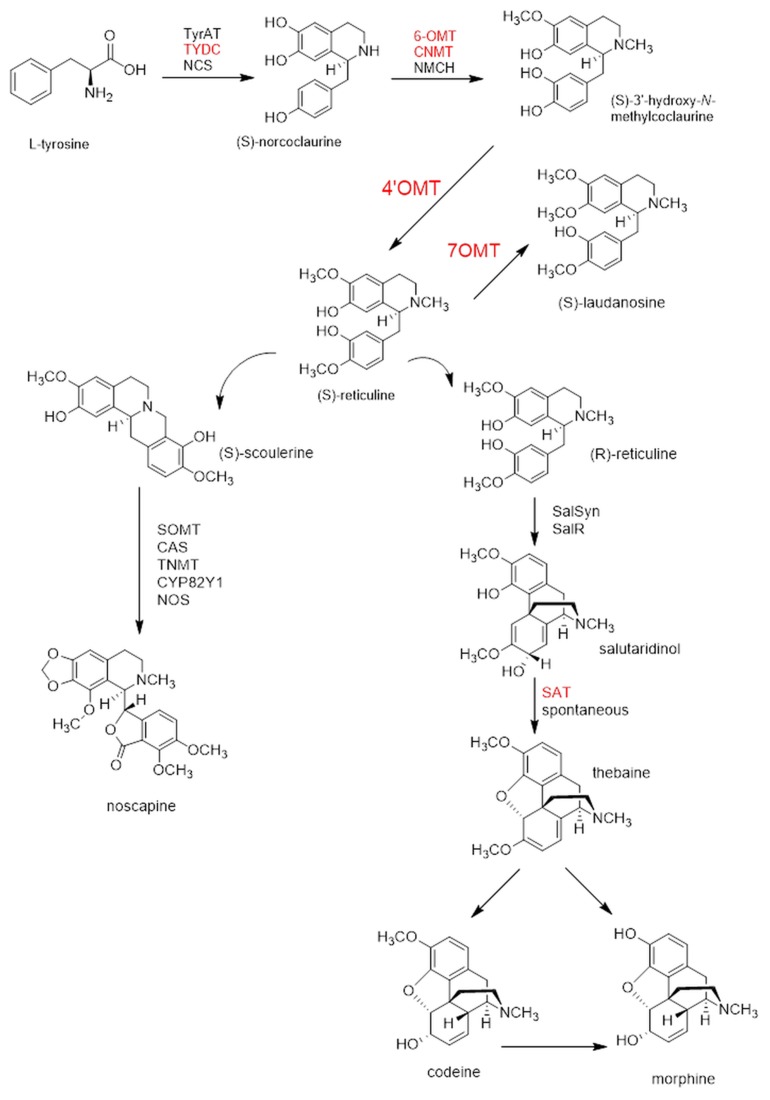
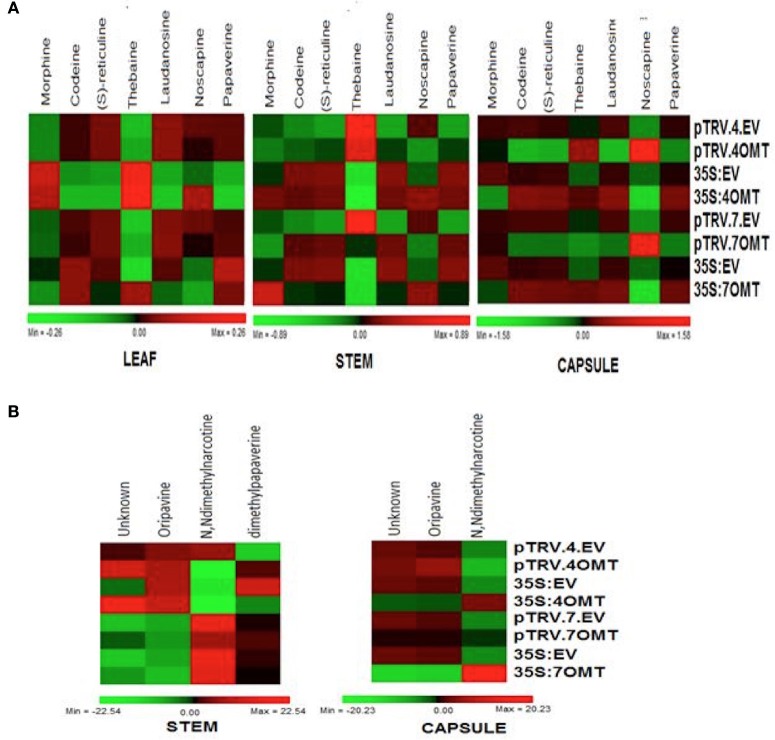
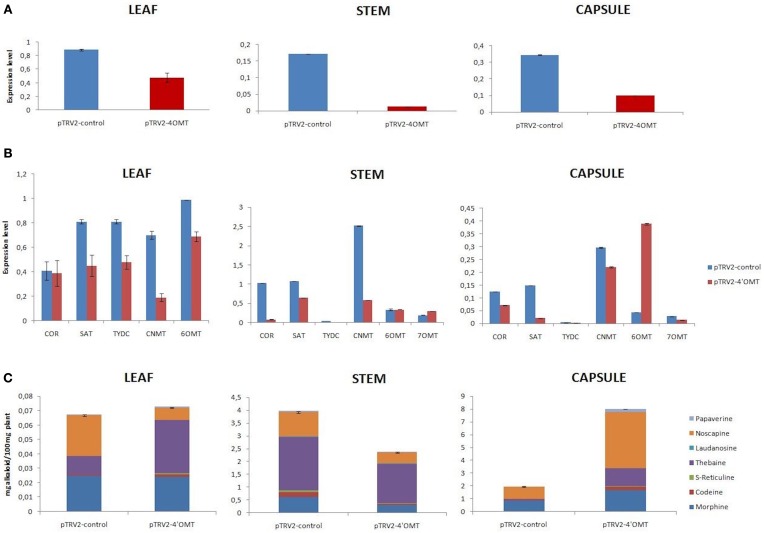
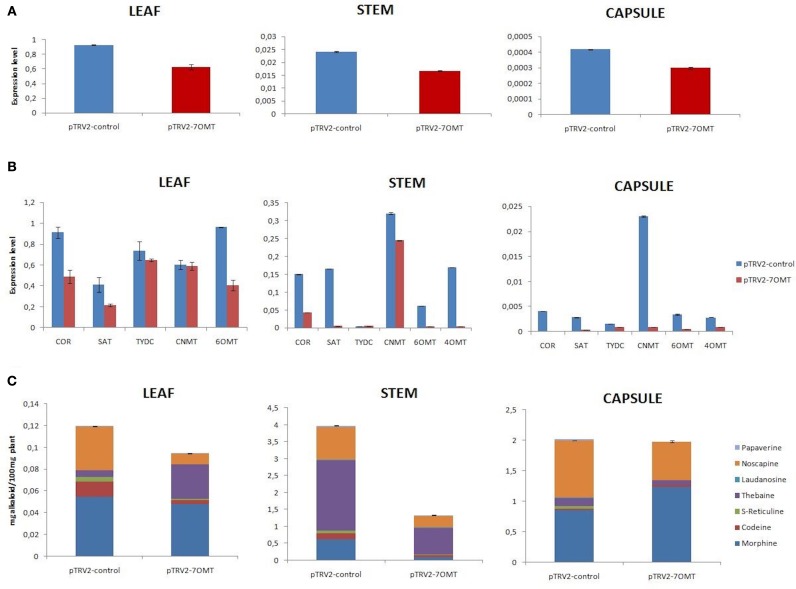
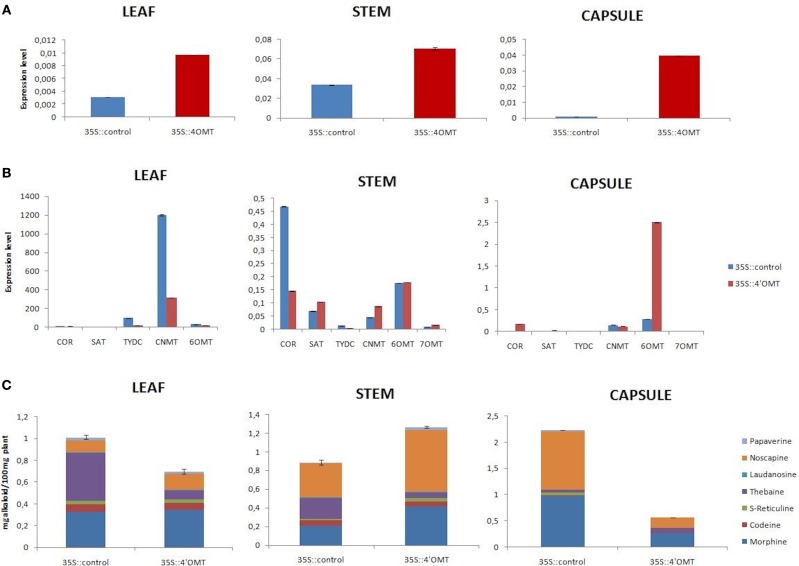
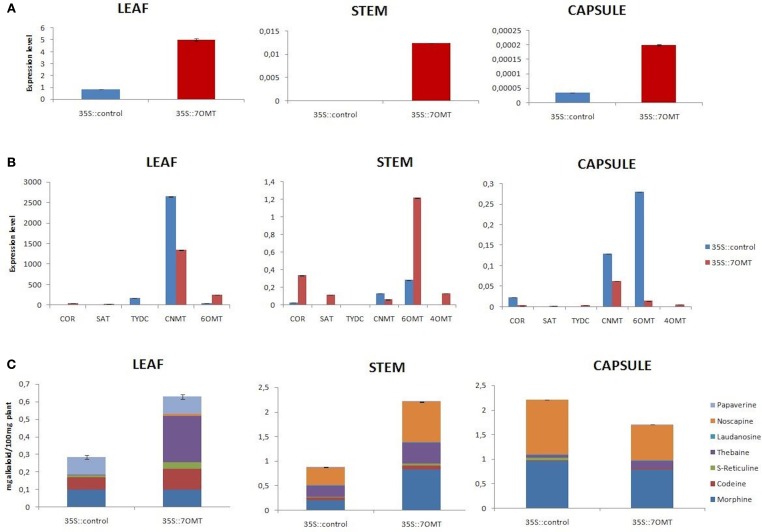
Alkaloids are diverse group of secondary metabolites generally found in plants. Opium poppy (Papaver somniferum L.), the only commercial source of morphinan alkaloids, has been used as a medicinal plant since ancient times. It produces benzylisoquinoline alkaloids (BIA) including the narcotic analgesic morphine, the muscle relaxant papaverine, and the anti-cancer agent noscapine. Though BIAs play crucial roles in many biological mechanisms their steps in biosynthesis and the responsible genes remain to be revealed. In this study, expressions of 3-hydroxy-N-methylcoclaurine 4'-methyltransferase (4'OMT) and reticuline 7-O-methyltransferase (7OMT) genes were subjected to manipulation to functionally characterize their roles in BIA biosynthesis. Measurements of alkaloid accumulation were performed in leaf, stem, and capsule tissues accordingly. Suppression of 4'OMT expression caused reduction in the total alkaloid content in stem tissue whereas total alkaloid content was significantly induced in the capsule. Silencing of the 7OMT gene also caused repression in total alkaloid content in the stem. On the other hand, over-expression of 4'OMT and 7OMT resulted in higher morphine accumulation in the stem but suppressed amount in the capsule. Moreover, differential expression in several BIA synthesis genes (CNMT, TYDC, 6OMT, SAT, COR, 4'OMT, and 7OMT) were observed upon manipulation of 4'OMT and 7OMT expression. Upon silencing and overexpression applications, tissue specific effects of these genes were identified. Manipulation of 4'OMT and 7OMT genes caused differentiated accumulation of BIAs including morphine and noscapine in capsule and stem tissues.
生物碱是一类多样的次生代谢产物,通常存在于植物中。罂粟(Papaver somniferum L.)是吗啡烷类生物碱的唯一商业来源,自古以来就被用作药用植物。它能产生苄基异喹啉生物碱(BIA),包括麻醉性镇痛药吗啡、肌肉松弛剂罂粟碱和抗癌药那可丁。尽管BIA在许多生物学机制中发挥着关键作用,但其生物合成步骤和相关基因仍有待揭示。在本研究中,对3-羟基-N-甲基去甲乌药碱4'-甲基转移酶(4'OMT)和网状番荔枝碱7-O-甲基转移酶(7OMT)基因的表达进行了调控,以从功能上表征它们在BIA生物合成中的作用。相应地在叶、茎和蒴果组织中进行了生物碱积累的测量。抑制4'OMT表达导致茎组织中总生物碱含量降低,而蒴果中的总生物碱含量则显著增加。7OMT基因的沉默也导致茎中总生物碱含量的降低。另一方面,4'OMT和7OMT的过表达导致茎中吗啡积累量增加,但蒴果中的含量受到抑制。此外,在调控4'OMT和7OMT表达后,观察到几个BIA合成基因(CNMT、TYDC、6OMT、SAT、COR、4'OMT和7OMT)的差异表达。通过沉默和过表达应用,确定了这些基因的组织特异性效应。对4'OMT和7OMT基因的调控导致了包括吗啡和那可丁在内的BIA在蒴果和茎组织中的差异积累。