Munilla Ignacio, Genovart Meritxell, Paiva Vitor H, Velando Alberto
Departamento de Botánica, Facultade de Bioloxía, Universidade de Santiago de Compostela, Santiago de Compostela, Galicia, Spain.
Marine and Environmental Sciences Centre, Department of Life Sciences, University of Coimbra, Coimbra, Portugal.
PLoS One. 2016 Feb 24;11(2):e0147222. doi: 10.1371/journal.pone.0147222. eCollection 2016.
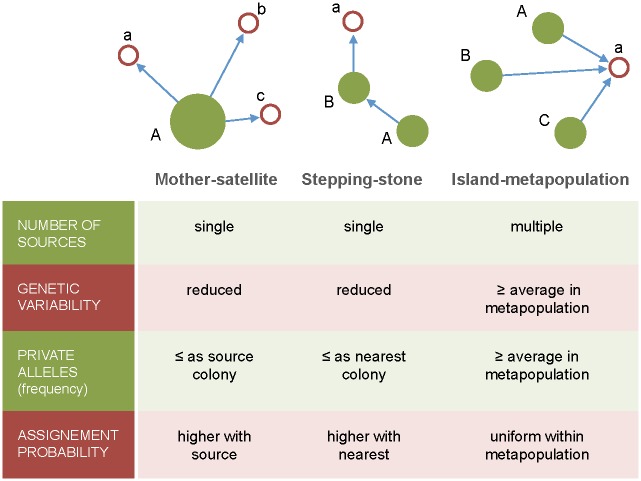
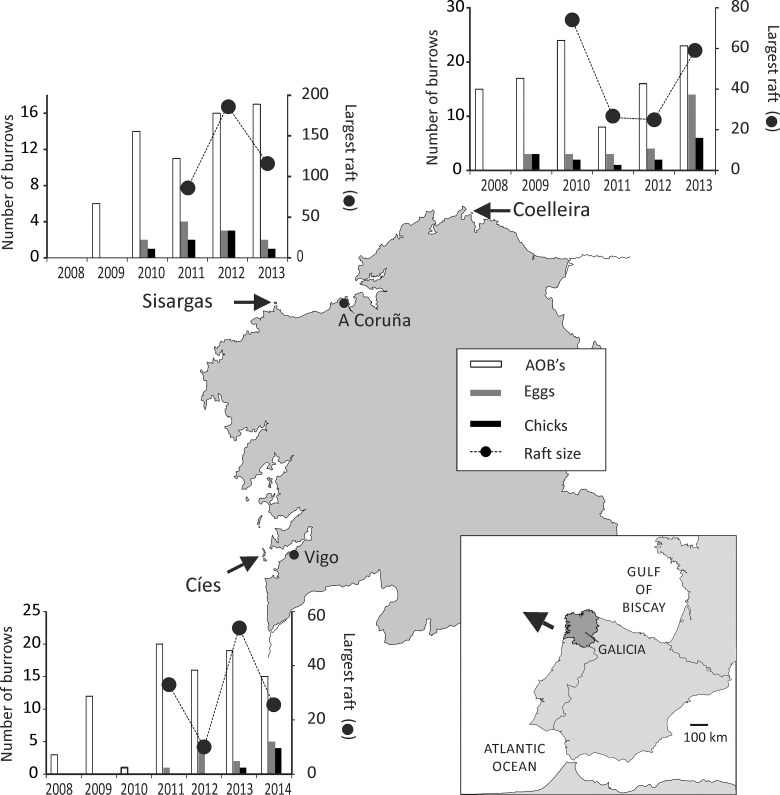
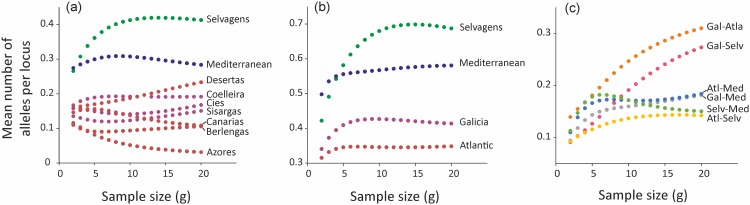
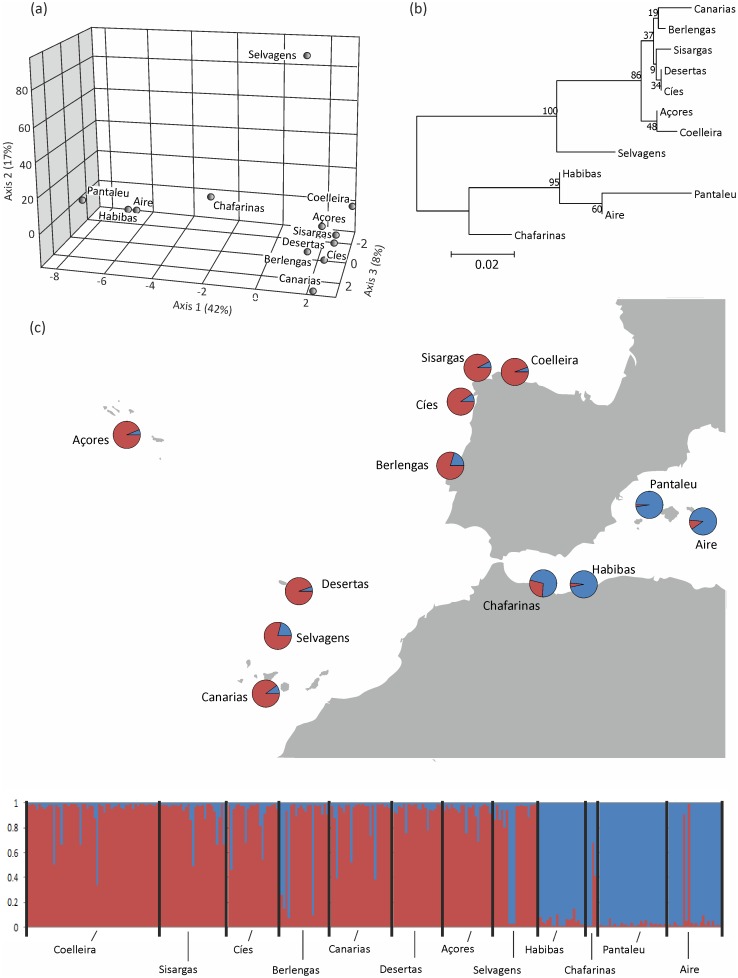
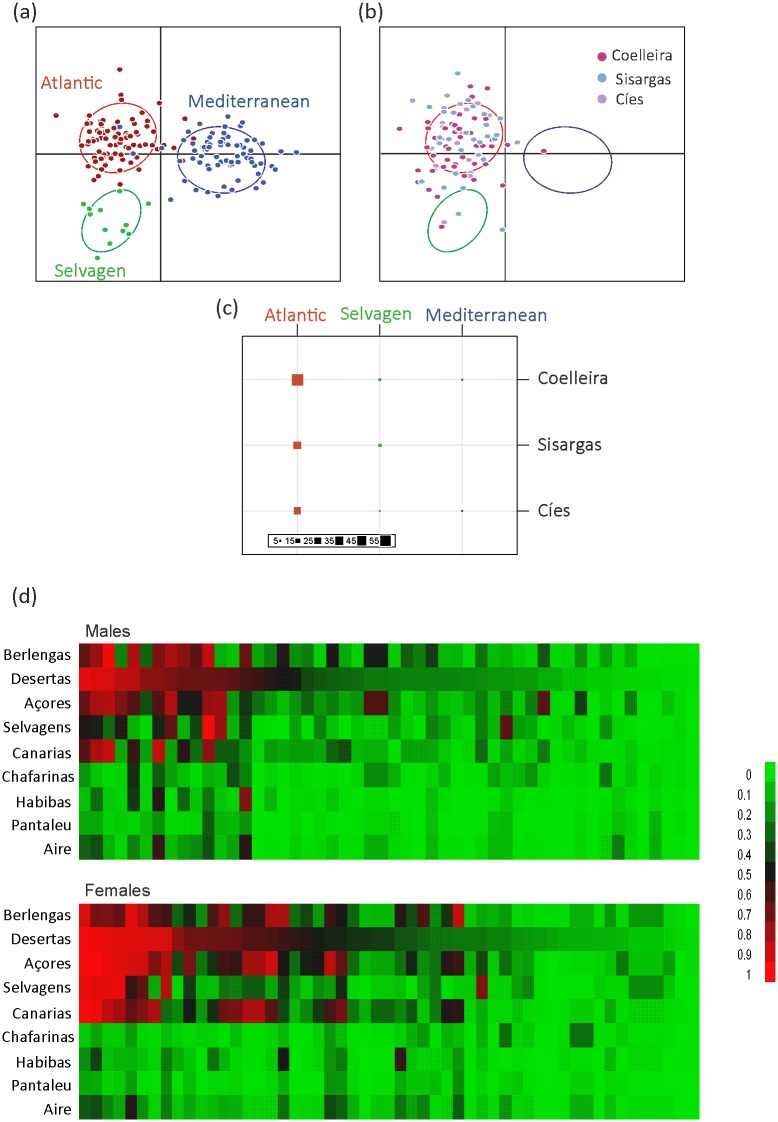
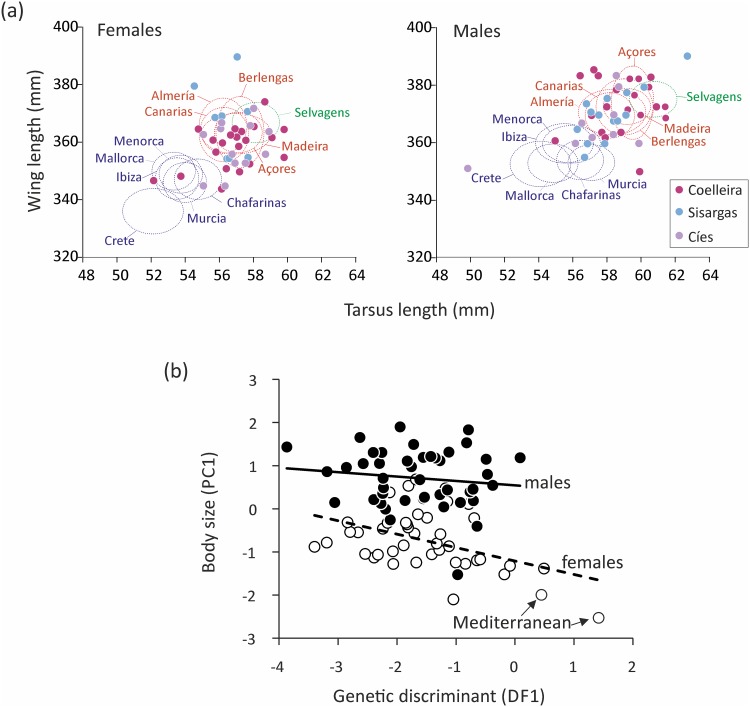
Seabirds are colonial vertebrates that despite their great potential for long-range dispersal and colonization are reluctant to establish in novel locations, often recruiting close to their natal colony. The foundation of colonies is therefore a rare event in most seabird species and little is known about the colonization process in this group. The Cory's shearwater (Calonectris diomedea) is a pelagic seabird that has recently established three new colonies in Galicia (NE Atlantic) thus expanding its distribution range 500 km northwards. This study aimed to describe the establishment and early progress of the new Galician populations and to determine the genetic and morphometric characteristics of the individuals participating in these foundation events. Using 10 microsatellite loci, we tested the predictions supported by different seabird colonization models. Possibly three groups of non-breeders, adding up to around 200 birds, started visiting the Galician colonies in the mid 2000's and some of them eventually laid eggs and reproduced, thus establishing new breeding colonies. The Galician populations showed a high genetic diversity and a frequency of private alleles similar to or even higher than some of the large historical populations. Most individuals were assigned to several Atlantic populations and a few (if any) to Mediterranean colonies. Our study suggests that a large and admixed population is settling in Galicia, in agreement with predictions from island metapopulation models of colonization. Multiple source colonies imply that some birds colonizing Galicia were dispersing from very distant colonies (> 1500 km). Long-distance colonizations undertaken by relatively large and admixed groups of colonizers can help to explain the low levels of genetic structure over vast areas that are characteristic of most oceanic seabird species.
海鸟是群居性脊椎动物,尽管它们具有远距离扩散和殖民的巨大潜力,但却不愿意在新的地点建立栖息地,往往会在靠近其出生群体的地方聚集。因此,在大多数海鸟物种中,群体的建立是一个罕见的事件,人们对该群体的殖民过程知之甚少。角嘴海雀(Calonectris diomedea)是一种远洋海鸟,最近在加利西亚(东北大西洋)建立了三个新的群体,从而将其分布范围向北扩展了500公里。本研究旨在描述新的加利西亚种群的建立和早期发展情况,并确定参与这些奠基事件的个体的遗传和形态特征。我们使用10个微卫星位点,检验了不同海鸟殖民模型所支持的预测。可能有三组非繁殖者,总数约200只鸟,在21世纪中期开始访问加利西亚群体,其中一些最终产卵并繁殖,从而建立了新的繁殖群体。加利西亚种群表现出高度的遗传多样性,私有等位基因的频率与一些大型历史种群相似甚至更高。大多数个体被分配到几个大西洋种群,只有少数(如果有的话)被分配到地中海群体。我们的研究表明,一个大型的混合种群正在加利西亚定居,这与岛屿复合种群殖民模型的预测一致。多个源群体意味着一些在加利西亚殖民的鸟类是从非常遥远的群体(>1500公里)扩散而来的。相对较大的混合殖民者群体进行的远距离殖民有助于解释大多数海洋海鸟物种在广大区域内遗传结构水平较低的现象。