Brennan Sarah C, Wilkinson William J, Tseng Hsiu-Er, Finney Brenda, Monk Bethan, Dibble Holly, Quilliam Samantha, Warburton David, Galietta Luis J, Kemp Paul J, Riccardi Daniela
School of Biosciences, Cardiff University, CF10 3AX, United Kingdom.
The Saban Research Institute, Children Hospital Los Angeles, 4650 Sunset Blvd # 83, Los Angeles, CA 90027, +1 323-362-5422, USA.
Sci Rep. 2016 Feb 25;6:21975. doi: 10.1038/srep21975.
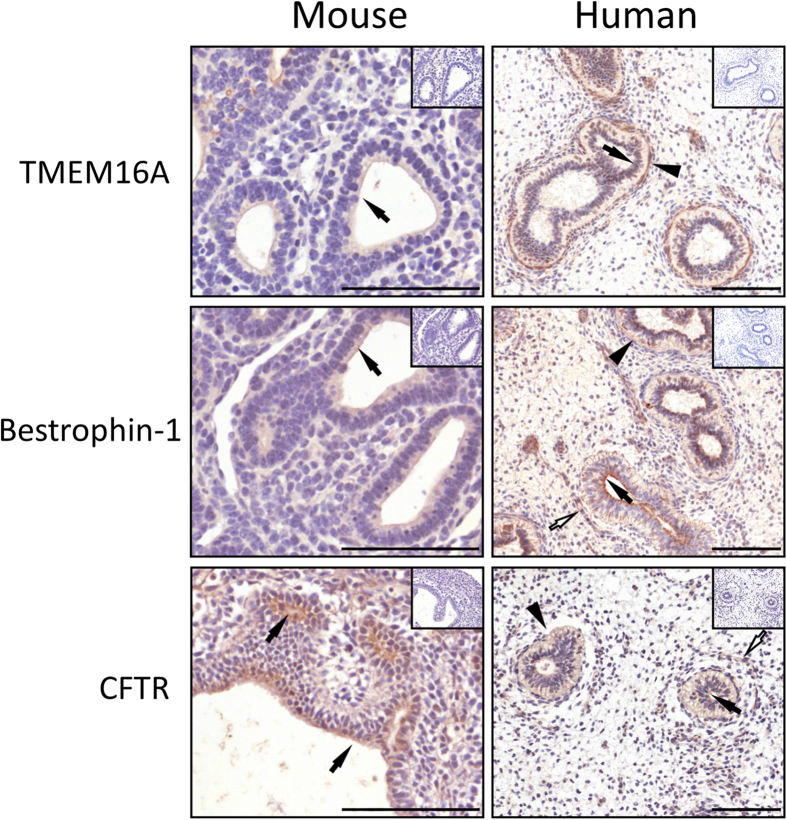
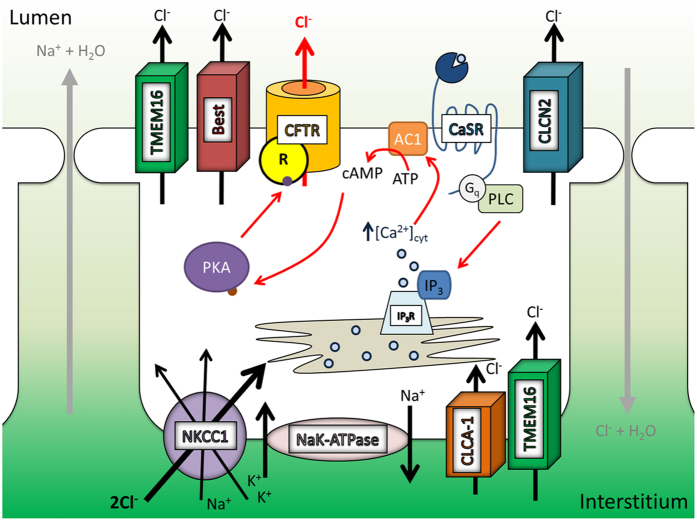
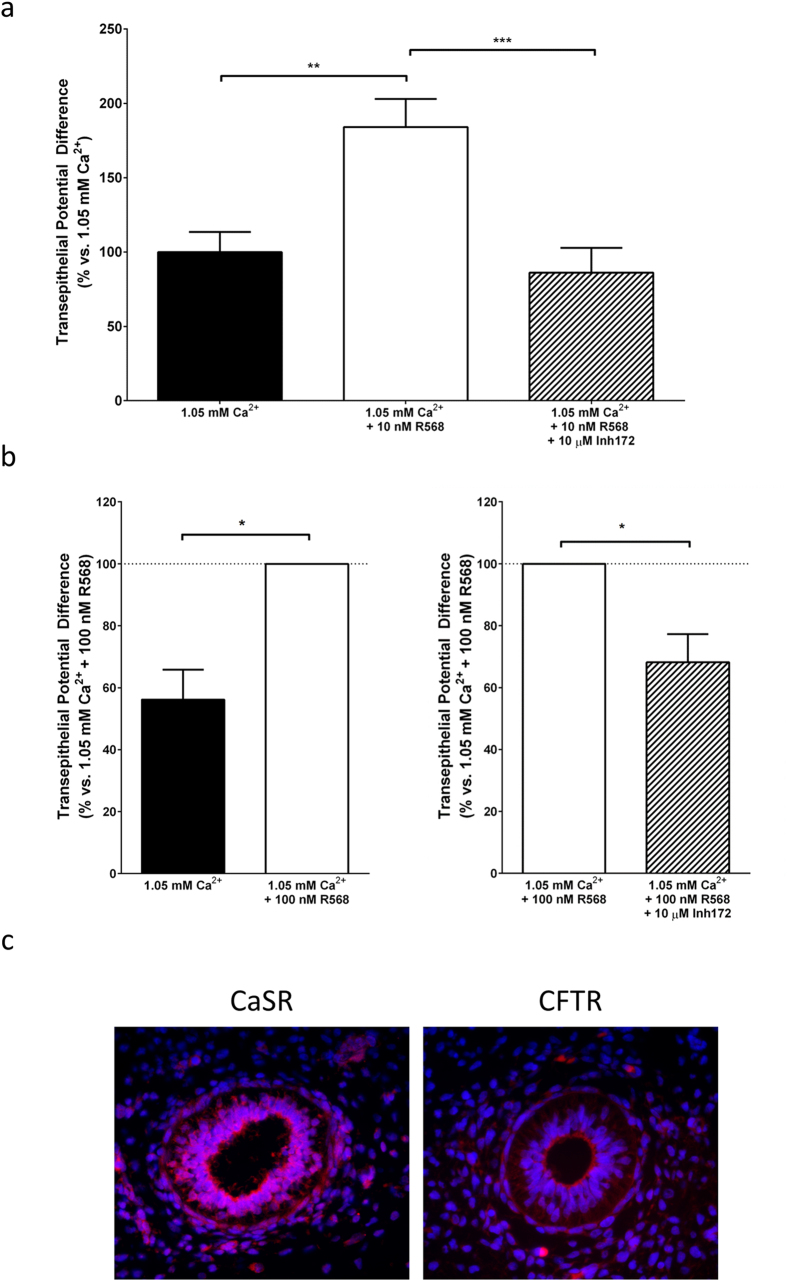
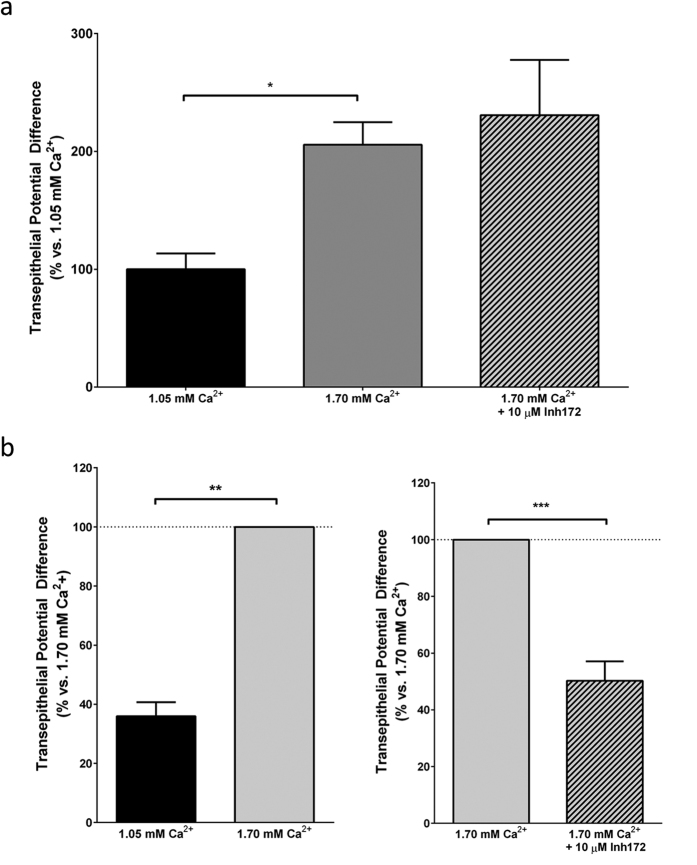
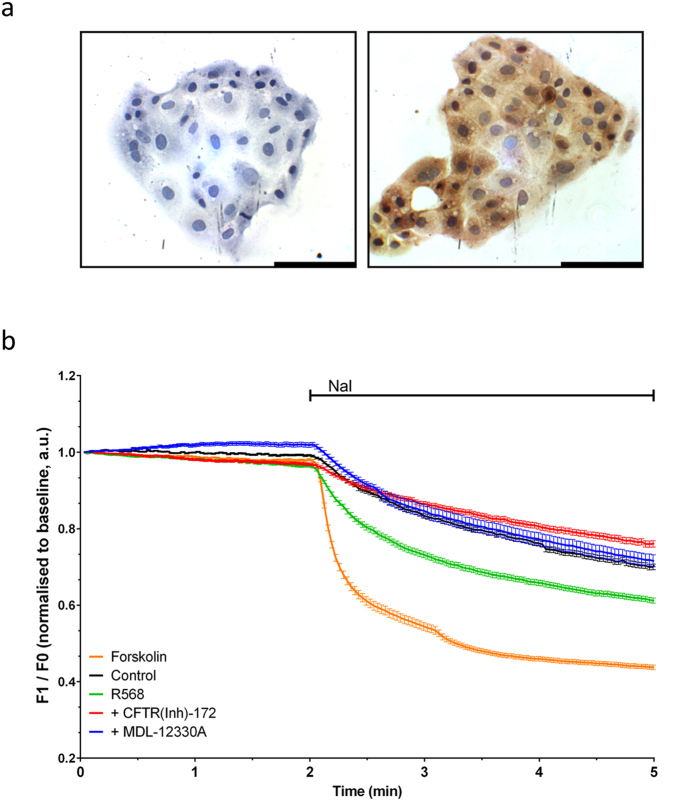
Optimal fetal lung growth requires anion-driven fluid secretion into the lumen of the developing organ. The fetus is hypercalcemic compared to the mother and here we show that in the developing human lung this hypercalcaemia acts on the extracellular calcium-sensing receptor, CaSR, to promote fluid-driven lung expansion through activation of the cystic fibrosis transmembrane conductance regulator, CFTR. Several chloride channels including TMEM16, bestrophin, CFTR, CLCN2 and CLCA1, are also expressed in the developing human fetal lung at gestational stages when CaSR expression is maximal. Measurements of Cl(-)-driven fluid secretion in organ explant cultures show that pharmacological CaSR activation by calcimimetics stimulates lung fluid secretion through CFTR, an effect which in humans, but not mice, was also mimicked by fetal hypercalcemic conditions, demonstrating that the physiological relevance of such a mechanism appears to be species-specific. Calcimimetics promote CFTR opening by activating adenylate cyclase and we show that Ca(2+)-stimulated type I adenylate cyclase is expressed in the developing human lung. Together, these observations suggest that physiological fetal hypercalcemia, acting on the CaSR, promotes human fetal lung development via cAMP-dependent opening of CFTR. Disturbances in this process would be expected to permanently impact lung structure and might predispose to certain postnatal respiratory diseases.
最佳的胎儿肺生长需要阴离子驱动的液体分泌到发育中器官的管腔中。与母亲相比,胎儿处于高钙血症状态,我们在此表明,在发育中的人类肺中,这种高钙血症作用于细胞外钙敏感受体(CaSR),通过激活囊性纤维化跨膜传导调节因子(CFTR)来促进液体驱动的肺扩张。包括TMEM16、贝斯特罗芬、CFTR、CLCN2和CLCA1在内的几种氯离子通道,在CaSR表达最高的妊娠阶段的发育中的人类胎儿肺中也有表达。器官外植体培养物中氯离子驱动的液体分泌测量表明,拟钙剂对CaSR的药理学激活通过CFTR刺激肺液体分泌,在人类而非小鼠中,胎儿高钙血症状态也模拟了这种效应,这表明这种机制的生理相关性似乎具有物种特异性。拟钙剂通过激活腺苷酸环化酶促进CFTR开放,我们表明钙刺激的I型腺苷酸环化酶在发育中的人类肺中表达。总之,这些观察结果表明,作用于CaSR的生理性胎儿高钙血症通过CFTR的cAMP依赖性开放促进人类胎儿肺发育。预计这一过程中的干扰会永久性地影响肺结构,并可能易患某些产后呼吸系统疾病。