Xiao Hua, Zhang Yan, Kim Yong, Kim Sung, Kim Jae Joon, Kim Kyoung Mee, Yoshizawa Janice, Fan Liu-Yin, Cao Cheng-Xi, Wong David T W
State Key Laboratory of Microbial Metabolism, Laboratory of Bioseparation and Analytical Biochemistry, School of Life Sciences and Biotechnology, Shanghai Jiao Tong University, Shanghai, 200240, China.
School of Pharmacy, Shanghai Jiao Tong University, Shanghai, 200240, China.
Sci Rep. 2016 Feb 25;6:22165. doi: 10.1038/srep22165.
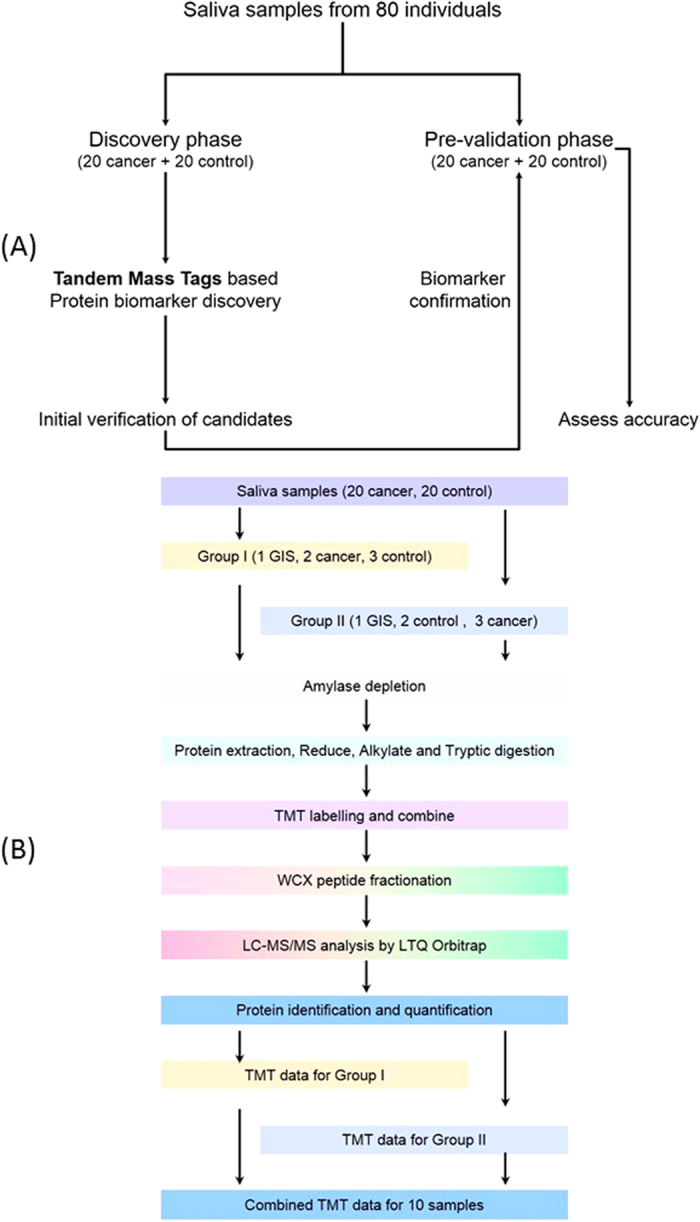
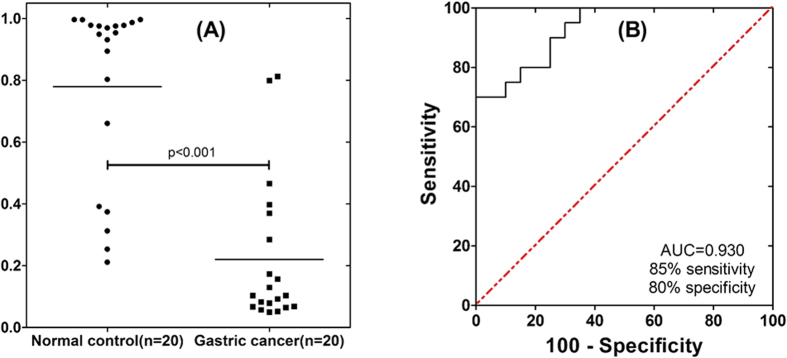
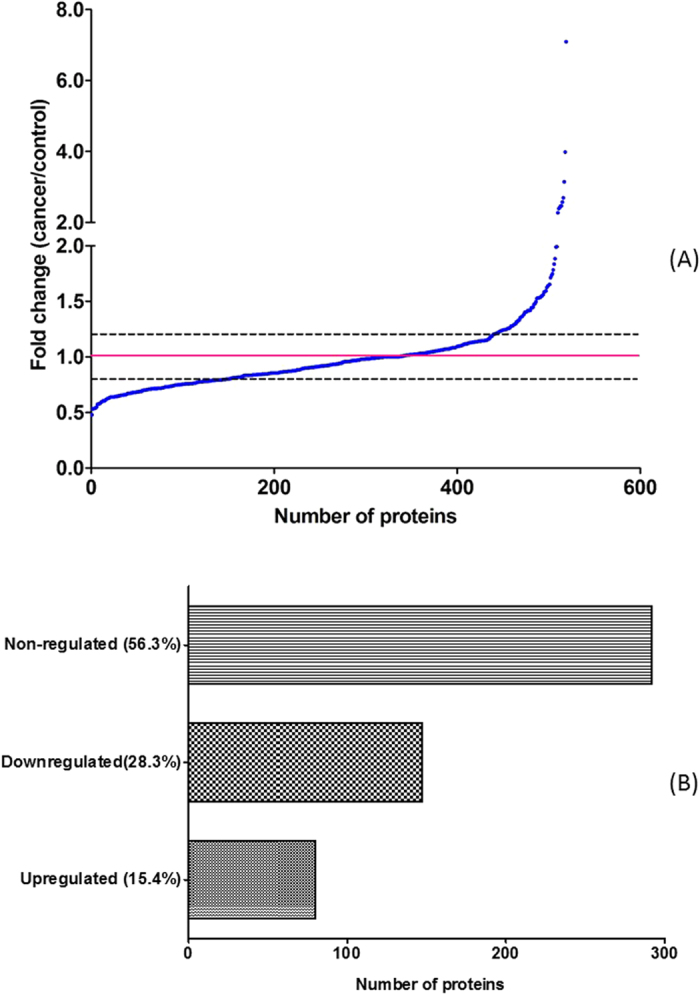
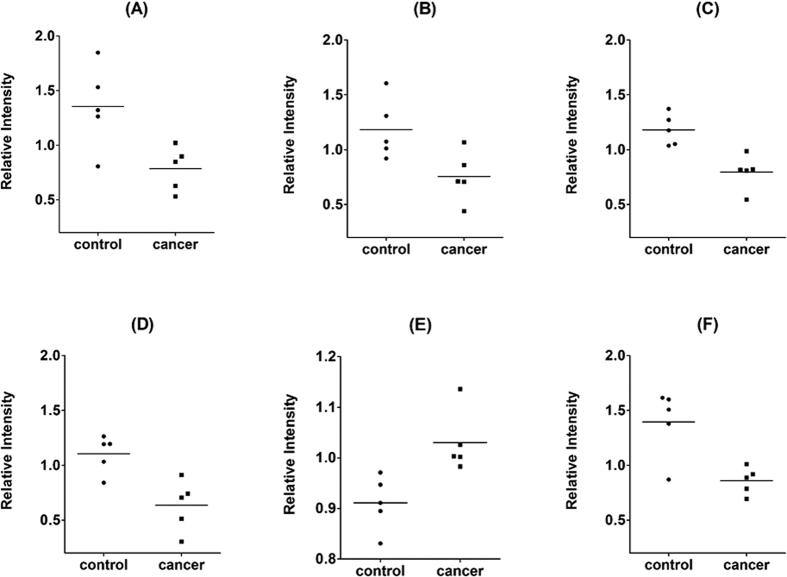
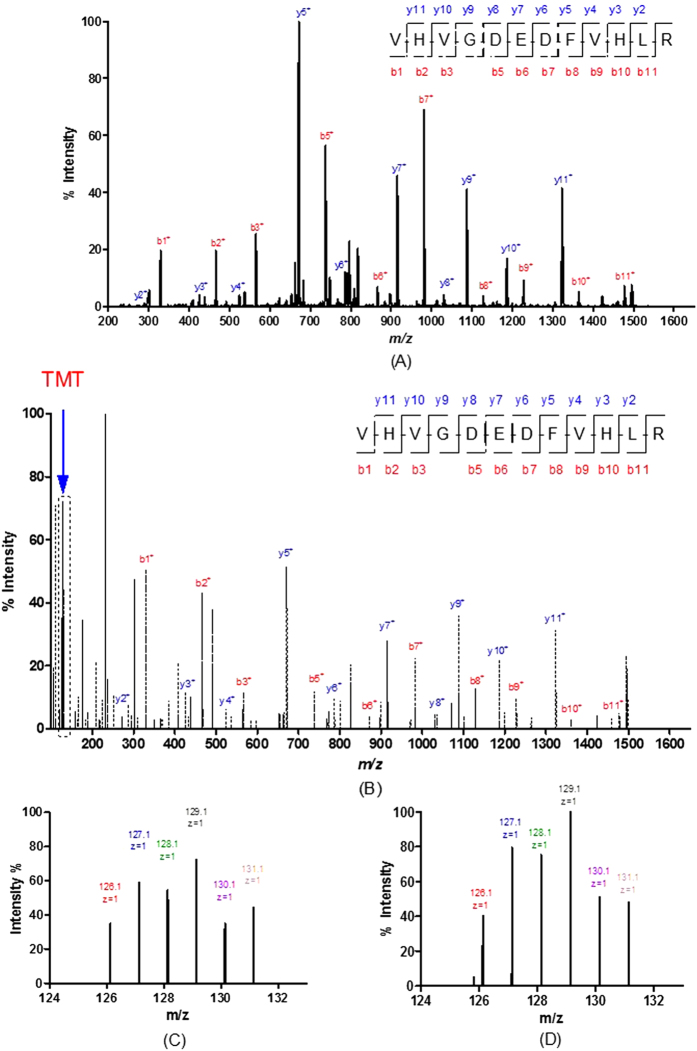
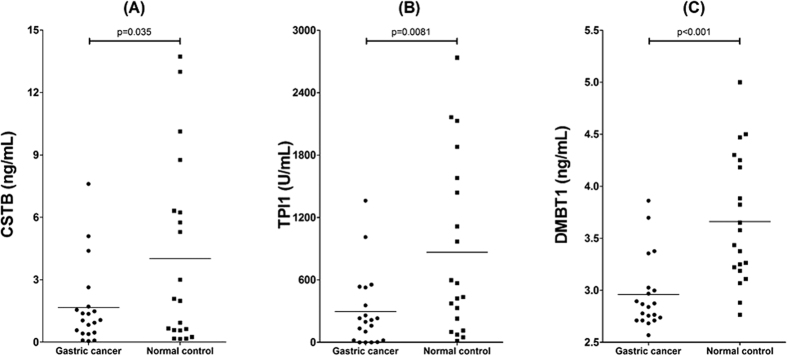
Novel biomarkers and non-invasive diagnostic methods are urgently needed for the screening of gastric cancer to reduce its high mortality. We employed quantitative proteomics approach to develop discriminatory biomarker signatures from human saliva for the detection of gastric cancer. Salivary proteins were analyzed and compared between gastric cancer patients and matched control subjects by using tandem mass tags (TMT) technology. More than 500 proteins were identified with quantification, and 48 of them showed significant difference expression (p < 0.05) between normal controls and gastric cancer patients, including 7 up-regulated proteins and 41 down-regulated proteins. Five proteins were selected for initial verification by ELISA and three were successfully verified, namely cystatin B (CSTB), triosephosphate isomerase (TPI1), and deleted in malignant brain tumors 1 protein (DMBT1). All three proteins could differentiate gastric cancer patients from normal control subjects, dramatically (p < 0.05). The combination of these three biomarkers could reach 85% sensitivity and 80% specificity for the detection of gastric cancer with accuracy of 0.93. This study provides the proof of concept of salivary biomarkers for the non-invasive detection of gastric cancer. It is highly encouraging to turn these biomarkers into an applicable clinical test after large scale validation.
为降低胃癌的高死亡率,迫切需要新型生物标志物和非侵入性诊断方法用于胃癌筛查。我们采用定量蛋白质组学方法从人唾液中开发用于检测胃癌的鉴别生物标志物特征。通过串联质量标签(TMT)技术分析并比较了胃癌患者和匹配对照受试者的唾液蛋白质。定量鉴定出500多种蛋白质,其中48种在正常对照和胃癌患者之间表现出显著差异表达(p <0.05),包括7种上调蛋白和41种下调蛋白。选择5种蛋白质通过酶联免疫吸附测定(ELISA)进行初步验证,3种成功得到验证,即胱抑素B(CSTB)、磷酸丙糖异构酶(TPI1)和恶性脑肿瘤缺失1蛋白(DMBT1)。所有这三种蛋白质均可显著区分胃癌患者和正常对照受试者(p <0.05)。这三种生物标志物的组合对胃癌检测的敏感性可达85%,特异性可达80%,准确性为0.93。本研究为唾液生物标志物用于胃癌的非侵入性检测提供了概念验证。在大规模验证后将这些生物标志物转化为适用的临床试验,非常令人鼓舞。