Hoshino Ayuko, Costa-Silva Bruno, Shen Tang-Long, Rodrigues Goncalo, Hashimoto Ayako, Tesic Mark Milica, Molina Henrik, Kohsaka Shinji, Di Giannatale Angela, Ceder Sophia, Singh Swarnima, Williams Caitlin, Soplop Nadine, Uryu Kunihiro, Pharmer Lindsay, King Tari, Bojmar Linda, Davies Alexander E, Ararso Yonathan, Zhang Tuo, Zhang Haiying, Hernandez Jonathan, Weiss Joshua M, Dumont-Cole Vanessa D, Kramer Kimberly, Wexler Leonard H, Narendran Aru, Schwartz Gary K, Healey John H, Sandstrom Per, Labori Knut Jørgen, Kure Elin H, Grandgenett Paul M, Hollingsworth Michael A, de Sousa Maria, Kaur Sukhwinder, Jain Maneesh, Mallya Kavita, Batra Surinder K, Jarnagin William R, Brady Mary S, Fodstad Oystein, Muller Volkmar, Pantel Klaus, Minn Andy J, Bissell Mina J, Garcia Benjamin A, Kang Yibin, Rajasekhar Vinagolu K, Ghajar Cyrus M, Matei Irina, Peinado Hector, Bromberg Jacqueline, Lyden David
Children's Cancer and Blood Foundation Laboratories, Departments of Pediatrics, and Cell and Developmental Biology, Drukier Institute for Children's Health, Meyer Cancer Center, Weill Cornell Medicine, New York, New York 10021, USA.
Department of Plant Pathology and Microbiology and Center for Biotechnology, National Taiwan University, Taipei 10617, Taiwan.
Nature. 2015 Nov 19;527(7578):329-35. doi: 10.1038/nature15756. Epub 2015 Oct 28.
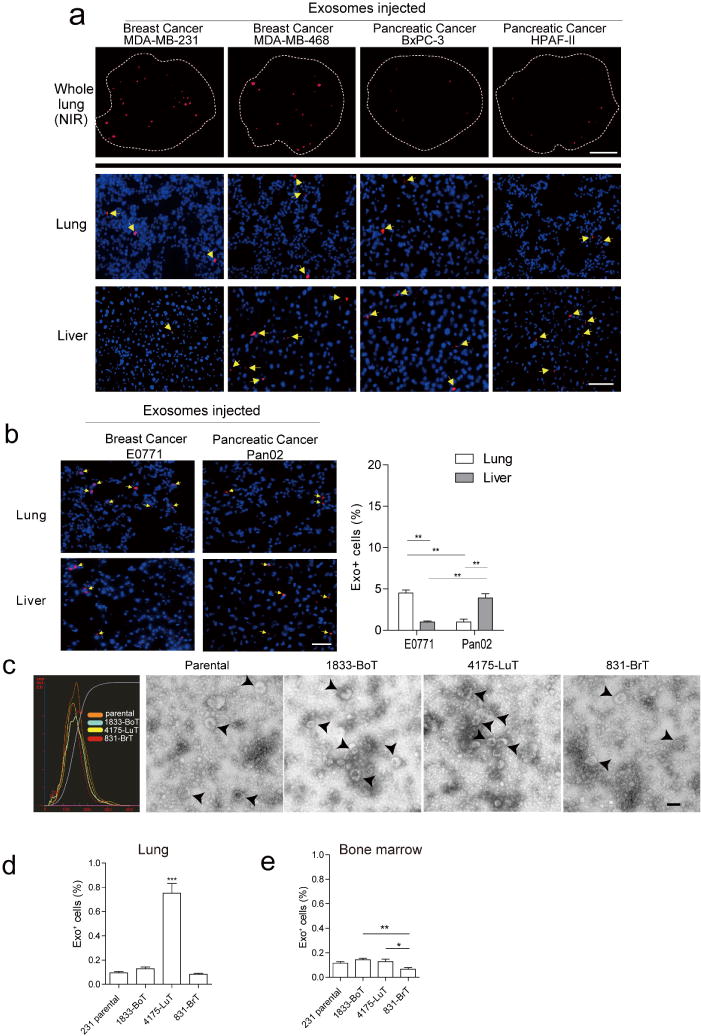
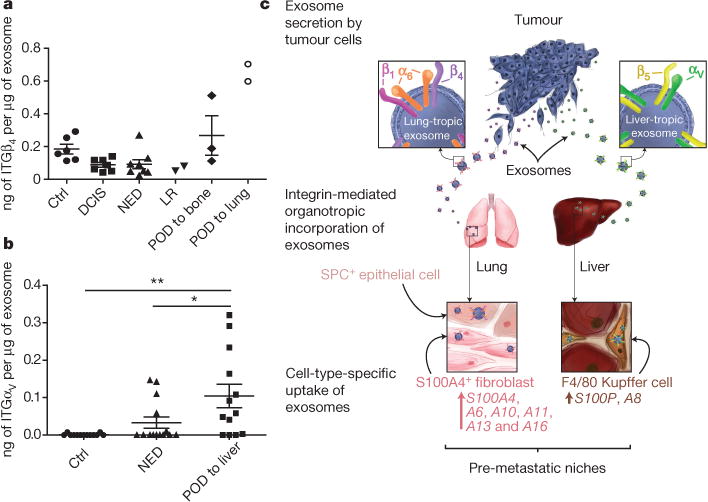
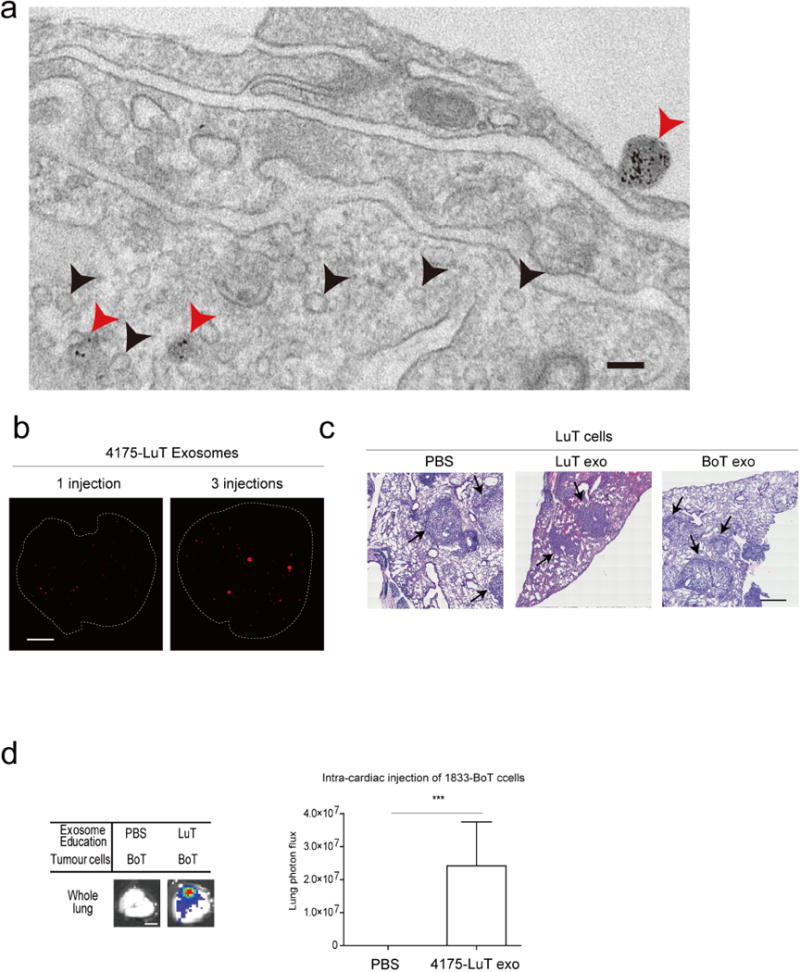
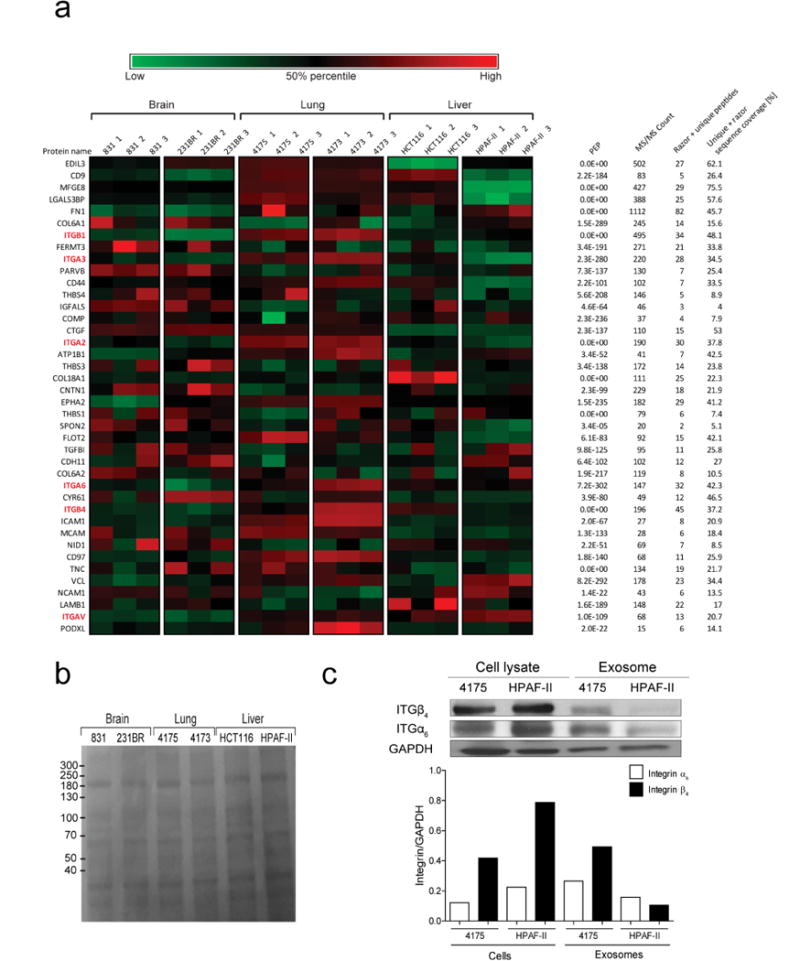
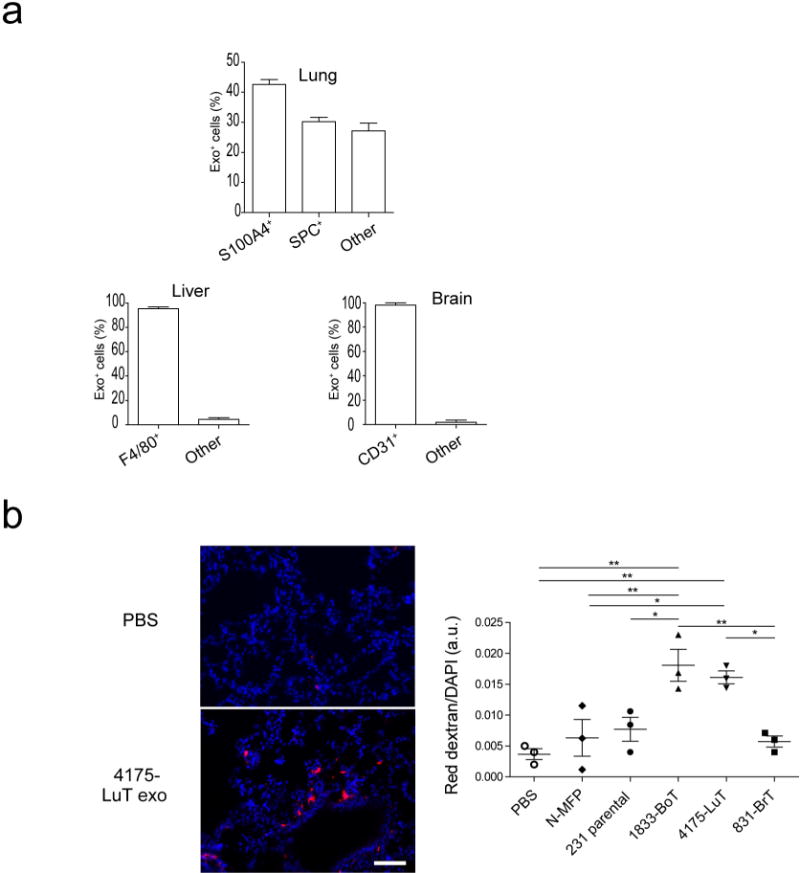
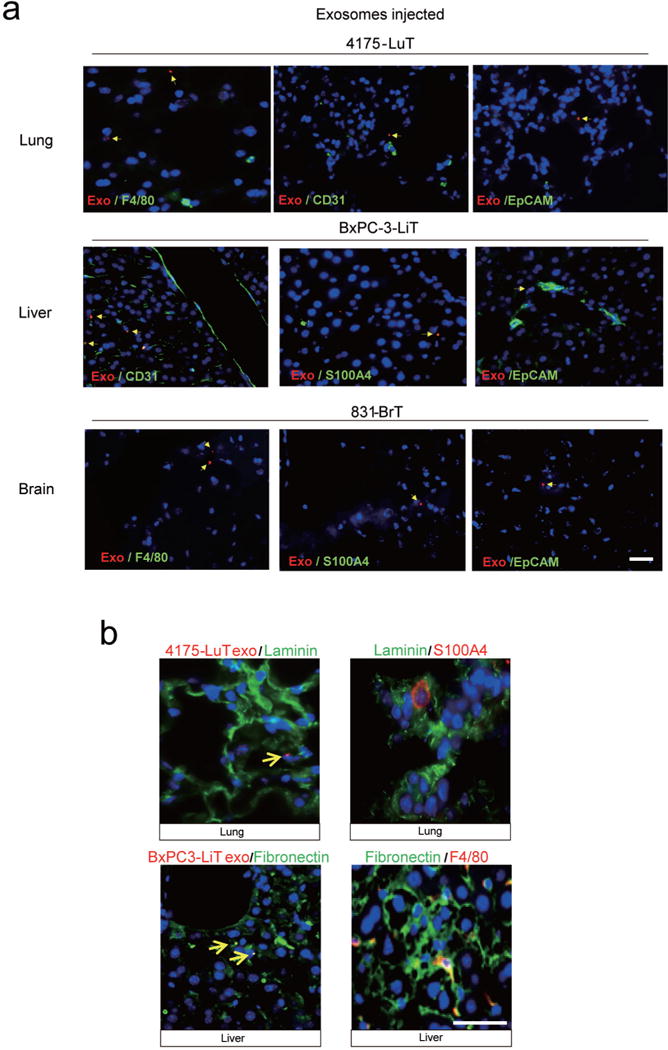
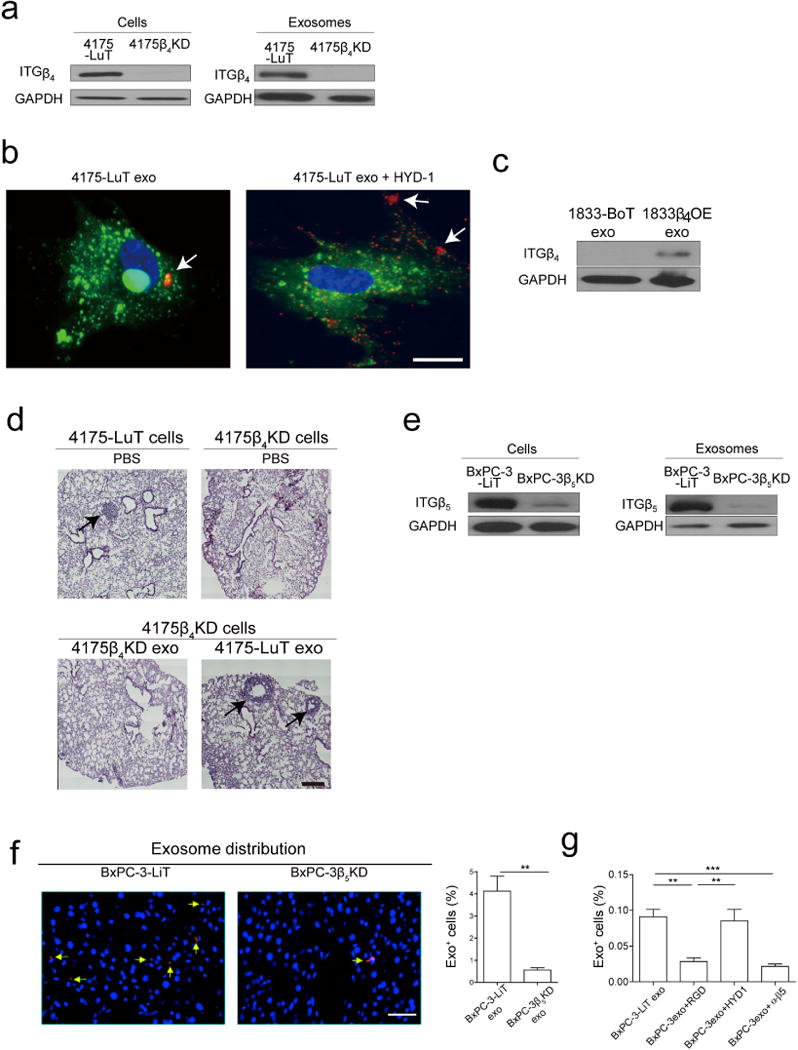
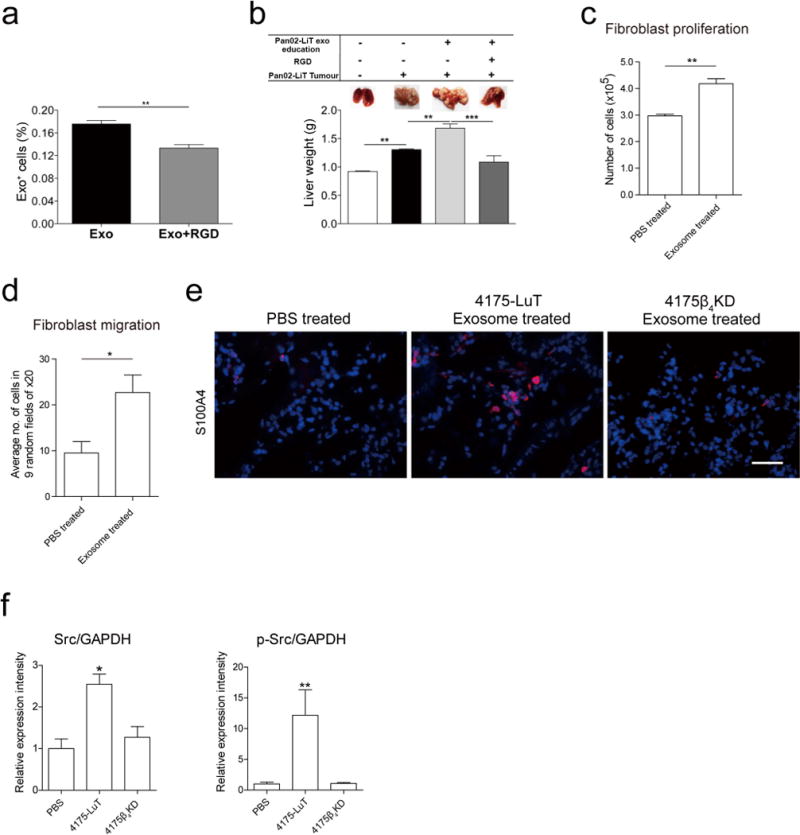
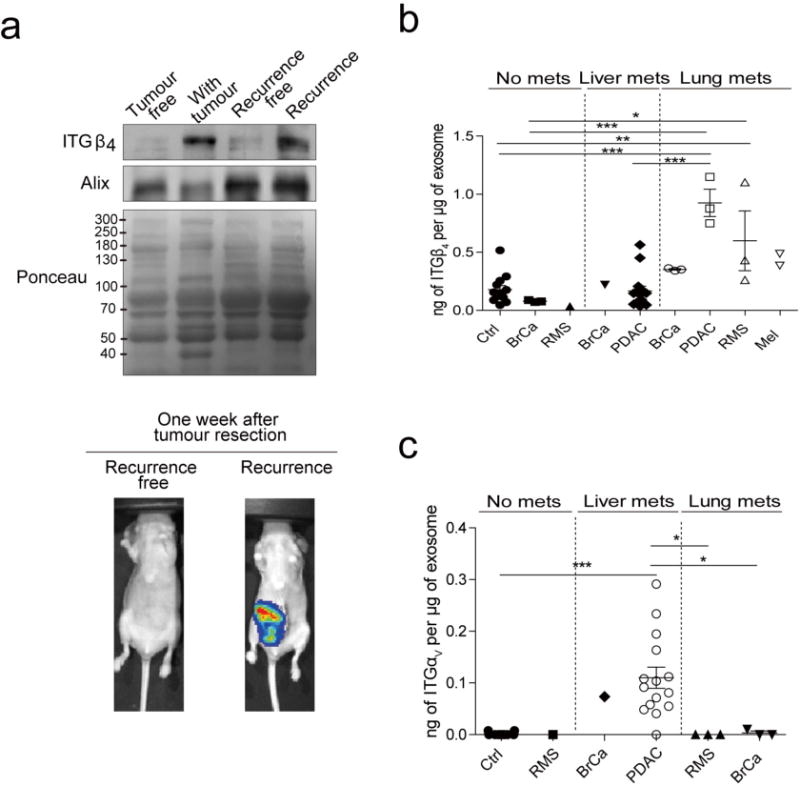
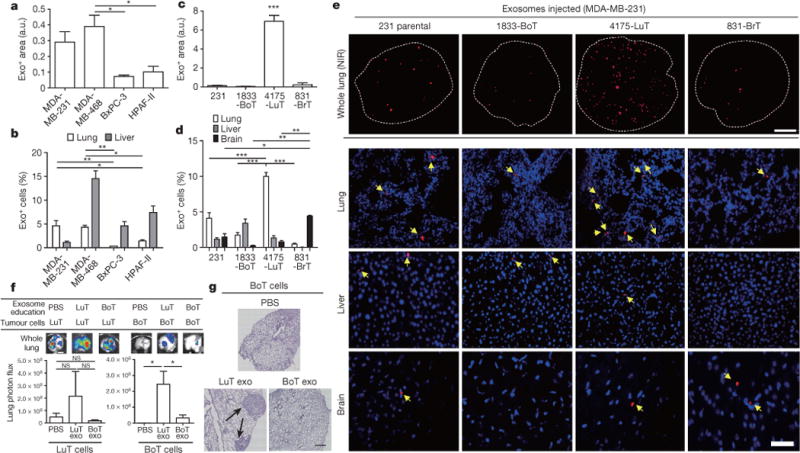
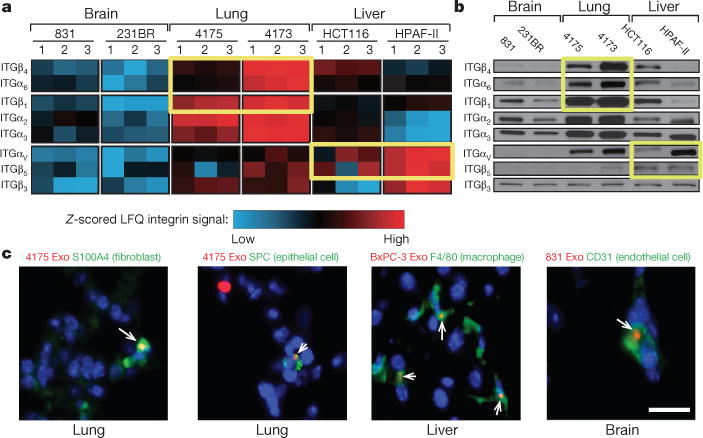
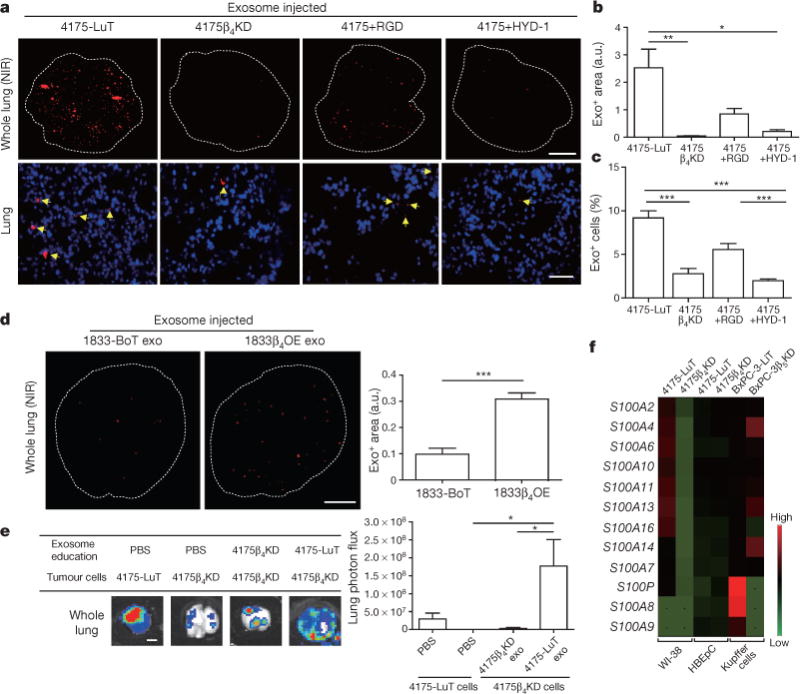
Ever since Stephen Paget's 1889 hypothesis, metastatic organotropism has remained one of cancer's greatest mysteries. Here we demonstrate that exosomes from mouse and human lung-, liver- and brain-tropic tumour cells fuse preferentially with resident cells at their predicted destination, namely lung fibroblasts and epithelial cells, liver Kupffer cells and brain endothelial cells. We show that tumour-derived exosomes uptaken by organ-specific cells prepare the pre-metastatic niche. Treatment with exosomes from lung-tropic models redirected the metastasis of bone-tropic tumour cells. Exosome proteomics revealed distinct integrin expression patterns, in which the exosomal integrins α6β4 and α6β1 were associated with lung metastasis, while exosomal integrin αvβ5 was linked to liver metastasis. Targeting the integrins α6β4 and αvβ5 decreased exosome uptake, as well as lung and liver metastasis, respectively. We demonstrate that exosome integrin uptake by resident cells activates Src phosphorylation and pro-inflammatory S100 gene expression. Finally, our clinical data indicate that exosomal integrins could be used to predict organ-specific metastasis.
自1889年斯蒂芬·佩吉特提出假说以来,转移嗜器官性一直是癌症最大的谜团之一。在此,我们证明,来自小鼠和人类肺、肝、脑嗜性肿瘤细胞的外泌体优先与它们预测目的地的驻留细胞融合,即肺成纤维细胞和上皮细胞、肝库普弗细胞和脑内皮细胞。我们表明,器官特异性细胞摄取的肿瘤来源外泌体可形成前转移微环境。用来自肺嗜性模型的外泌体进行治疗可改变骨嗜性肿瘤细胞的转移方向。外泌体蛋白质组学揭示了不同的整合素表达模式,其中外泌体整合素α6β4和α6β1与肺转移相关,而外泌体整合素αvβ5与肝转移相关。靶向整合素α6β4和αvβ5分别减少了外泌体摄取以及肺和肝转移。我们证明,驻留细胞摄取外泌体整合素会激活Src磷酸化和促炎S100基因表达。最后,我们的临床数据表明,外泌体整合素可用于预测器官特异性转移。