Gowda Naveen Kumar Chandappa, Kaimal Jayasankar Mohanakrishnan, Masser Anna E, Kang Wenjing, Friedländer Marc R, Andréasson Claes
Department of Molecular Biosciences, Stockholm University, S-10691 Stockholm, Sweden.
Science for Life Laboratory, Department of Molecular Biosciences, The Wenner-Gren Institute, Stockholm University, S-10691 Stockholm, Sweden.
Mol Biol Cell. 2016 Apr 15;27(8):1210-9. doi: 10.1091/mbc.E15-10-0697. Epub 2016 Feb 24.
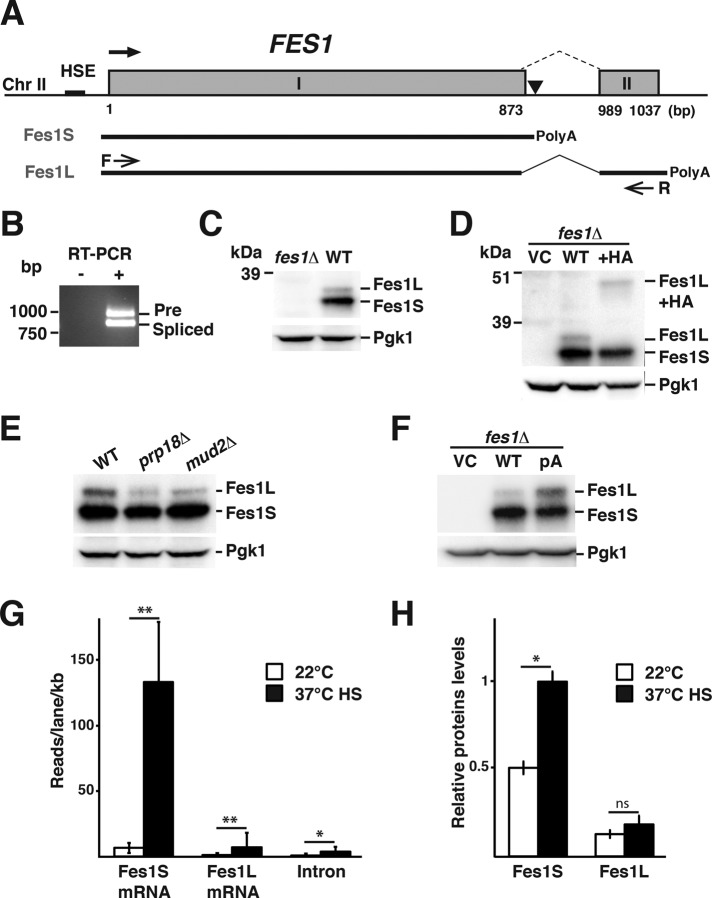
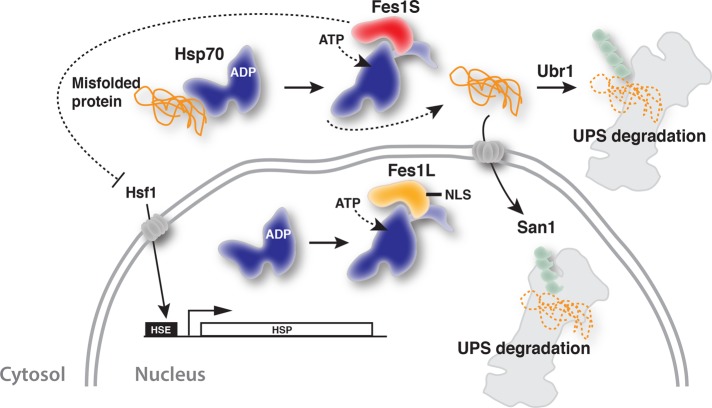
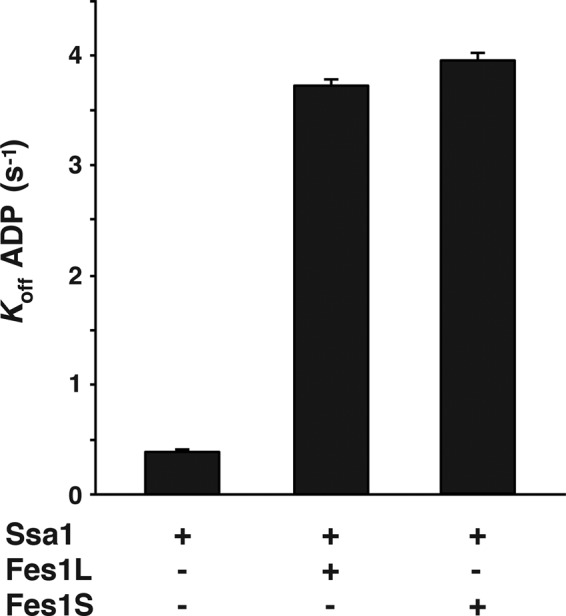
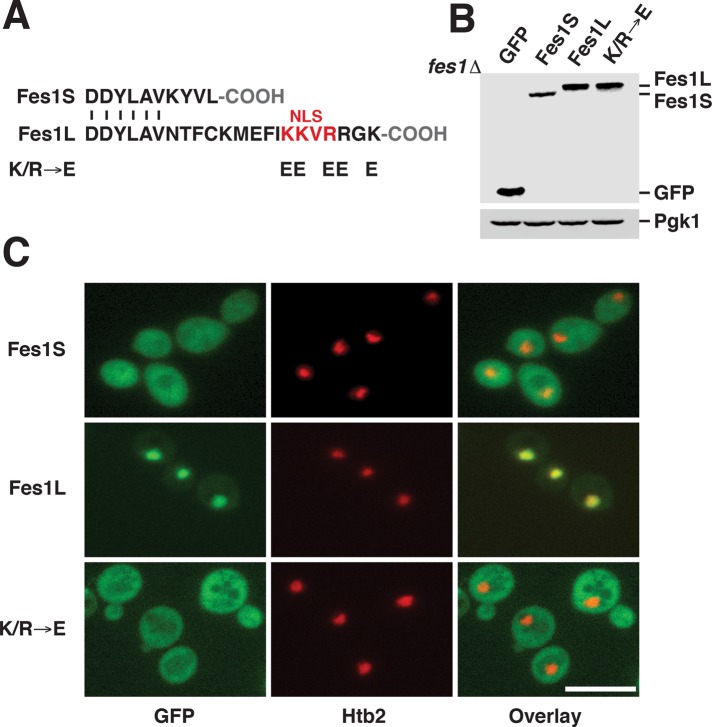
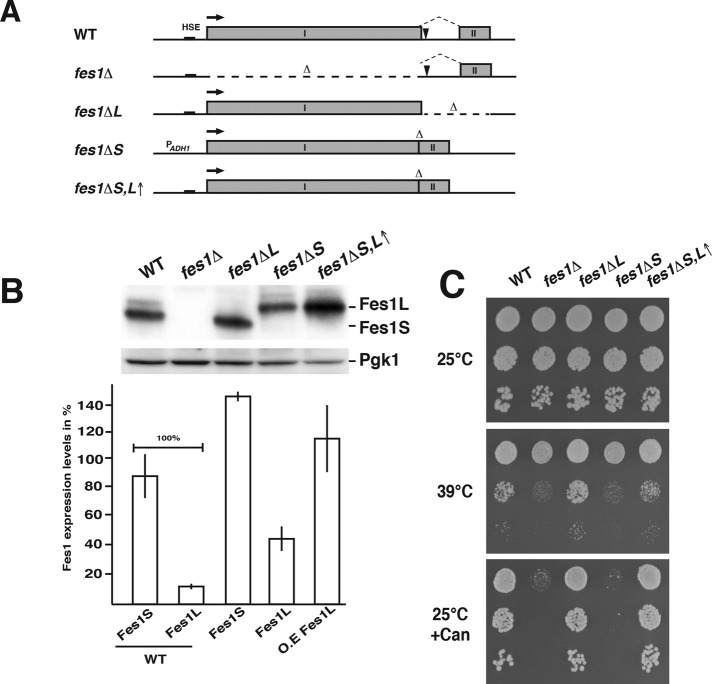
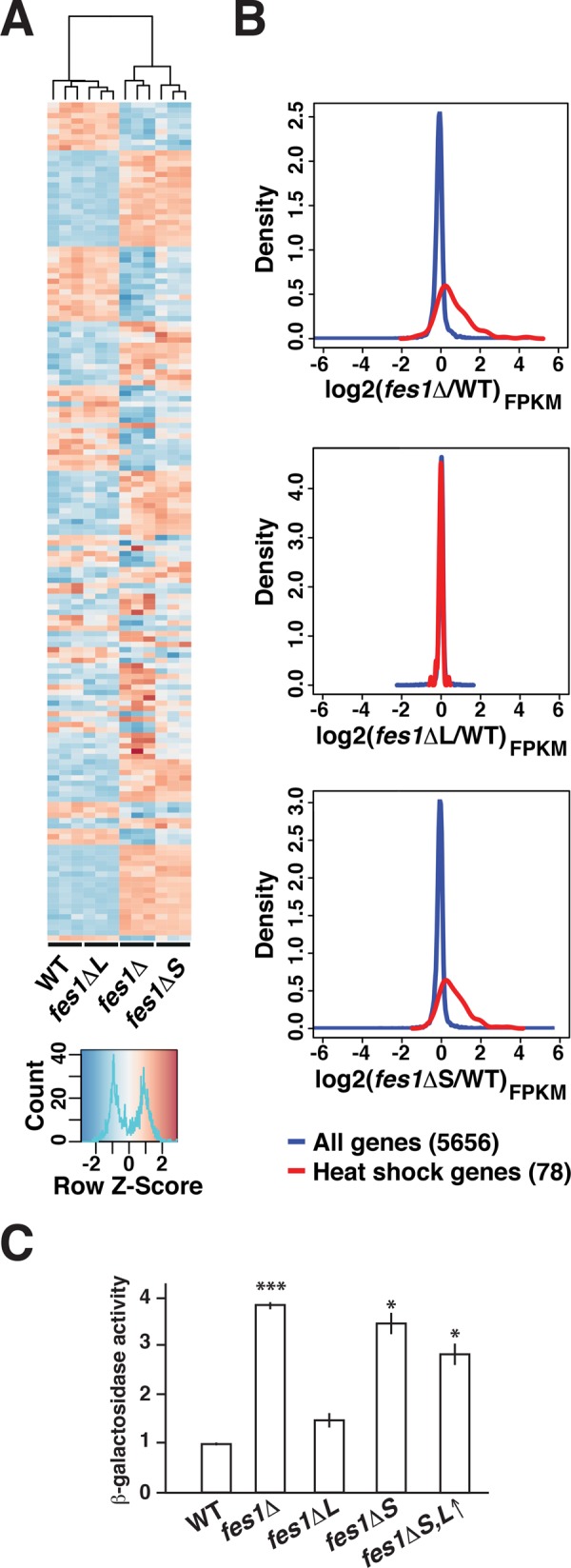
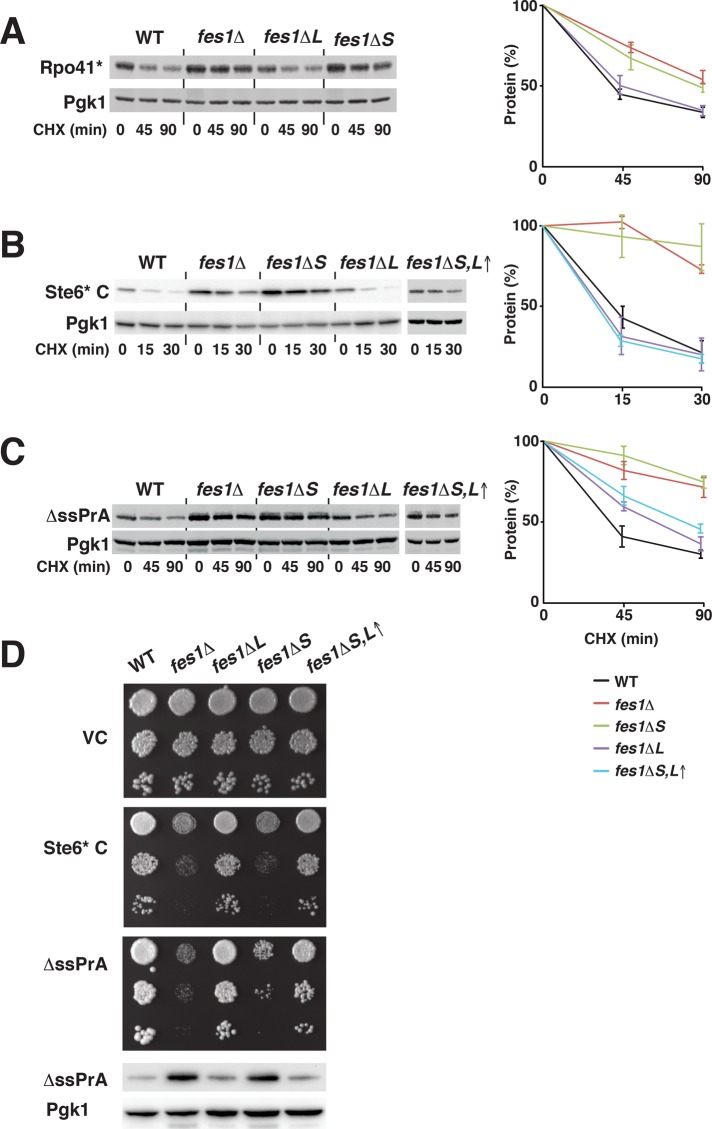
Cells maintain proteostasis by selectively recognizing and targeting misfolded proteins for degradation. InSaccharomyces cerevisiae, the Hsp70 nucleotide exchange factor Fes1 is essential for the degradation of chaperone-associated misfolded proteins by the ubiquitin-proteasome system. Here we show that theFES1transcript undergoes unique 3' alternative splicing that results in two equally active isoforms with alternative C-termini, Fes1L and Fes1S. Fes1L is actively targeted to the nucleus and represents the first identified nuclear Hsp70 nucleotide exchange factor. In contrast, Fes1S localizes to the cytosol and is essential to maintain proteostasis. In the absence of Fes1S, the heat-shock response is constitutively induced at normally nonstressful conditions. Moreover, cells display severe growth defects when elevated temperatures, amino acid analogues, or the ectopic expression of misfolded proteins, induce protein misfolding. Importantly, misfolded proteins are not targeted for degradation by the ubiquitin-proteasome system. These observations support the notion that cytosolic Fes1S maintains proteostasis by supporting the removal of toxic misfolded proteins by proteasomal degradation. This study provides key findings for the understanding of the organization of protein quality control mechanisms in the cytosol and nucleus.
细胞通过选择性识别并靶向错误折叠的蛋白质进行降解来维持蛋白质稳态。在酿酒酵母中,Hsp70核苷酸交换因子Fes1对于泛素-蛋白酶体系统降解伴侣蛋白相关的错误折叠蛋白质至关重要。在此我们表明,FES1转录本经历独特的3'端可变剪接,产生两种具有不同C末端的同等活性的异构体,即Fes1L和Fes1S。Fes1L被主动靶向细胞核,是首个被鉴定出的核Hsp70核苷酸交换因子。相比之下,Fes1S定位于细胞质,对维持蛋白质稳态至关重要。在缺乏Fes1S的情况下,热休克反应在正常非应激条件下持续被诱导。此外,当温度升高、存在氨基酸类似物或错误折叠蛋白的异位表达诱导蛋白质错误折叠时,细胞表现出严重的生长缺陷。重要的是,错误折叠的蛋白质不会被泛素-蛋白酶体系统靶向降解。这些观察结果支持了这样一种观点,即细胞质中的Fes1S通过支持蛋白酶体降解清除有毒的错误折叠蛋白来维持蛋白质稳态。这项研究为理解细胞质和细胞核中蛋白质质量控制机制的组织提供了关键发现。