Chung Suyoun, Kijima Kyoko, Kudo Aiko, Fujisawa Yoshiko, Harada Yosuke, Taira Akiko, Takamatsu Naofumi, Miyamoto Takashi, Matsuo Yo, Nakamura Yusuke
OncoTherapy Science, Inc., Kawasaki, Kanagawa, Japan.
Department of Medicine and Surgery, The University of Chicago, Chicago, IL, USA.
Oncotarget. 2016 Apr 5;7(14):18171-82. doi: 10.18632/oncotarget.7685.
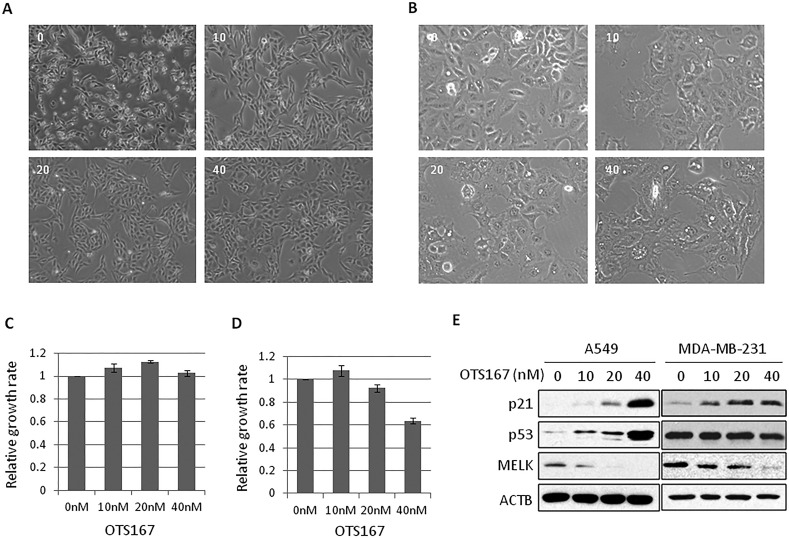
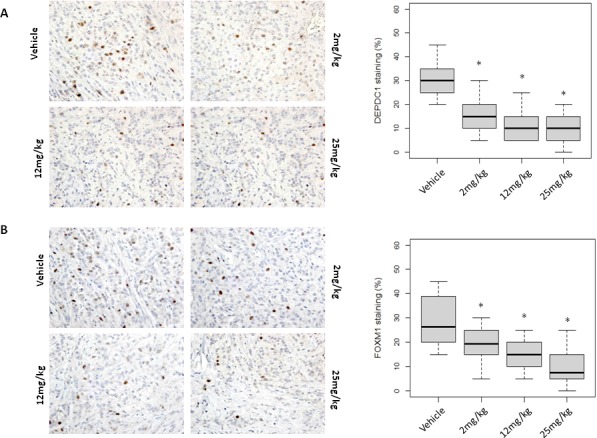
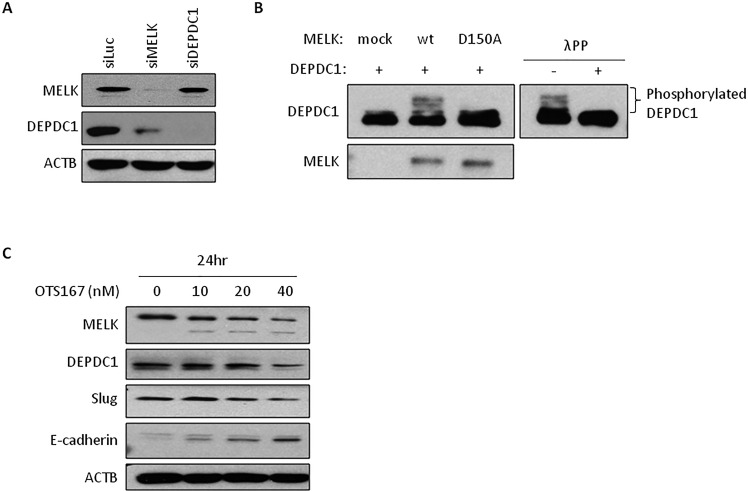
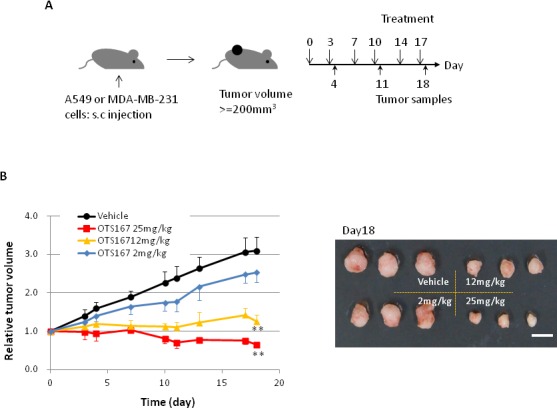
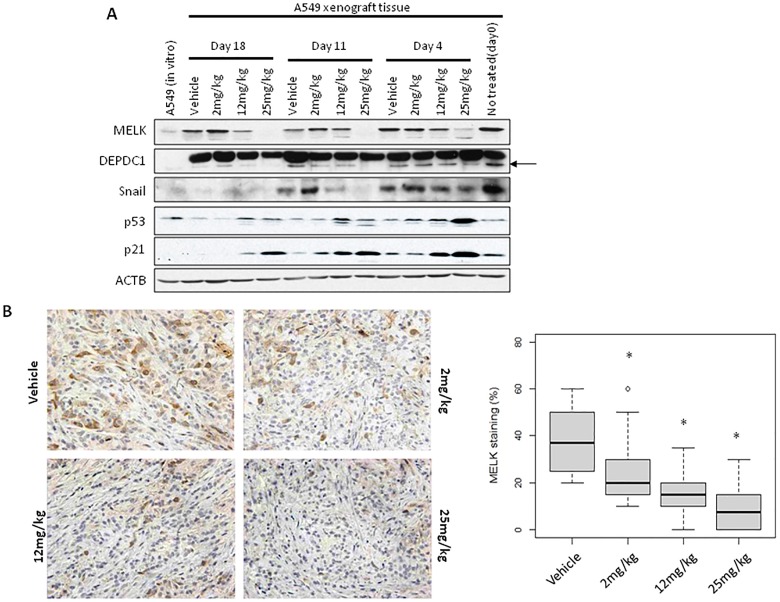
MELK is upregulated in various types of human cancer and is known to be associated with cancer progression, maintenance of stemness, and poor prognosis. OTS167, a MELK kinase inhibitor, shows potent growth-suppressive effect on human tumors in a xenograft model, but the detailed mode of action has not been fully elucidated. In this study, we demonstrate the molecular mechanism of action of MELK inhibitor OTS167 in a preclinical model. OTS167-treated cells caused morphological transformation, induced the differentiation markers, and reduced stem-cell marker expression. Furthermore, we identified DEPDC1, known as an oncogene, as an additional downstream molecule of the MELK signaling pathway. MELK enhanced DEPDC1 phosphorylation and its stability. The expression of MELK and downstream molecules was decreased in OTS167-treated xenograft tumor tissues, which revealed central necrosis and significant growth suppression. Our data should further shed light on the mechanism of action how OTS167 suppresses tumor growth through the inhibition of the MELK signaling pathway and suggest the possibility of biomarkers for the assessment of clinical efficacy.
MELK在多种类型的人类癌症中上调,已知其与癌症进展、干性维持及不良预后相关。OTS167是一种MELK激酶抑制剂,在异种移植模型中对人类肿瘤显示出强大的生长抑制作用,但其详细作用模式尚未完全阐明。在本研究中,我们在临床前模型中证明了MELK抑制剂OTS167的分子作用机制。经OTS167处理的细胞发生形态转化,诱导分化标志物表达,并降低干细胞标志物表达。此外,我们鉴定出作为癌基因的DEPDC1为MELK信号通路的另一个下游分子。MELK增强DEPDC1的磷酸化及其稳定性。在经OTS167处理的异种移植肿瘤组织中,MELK及其下游分子的表达降低,这些组织显示出中央坏死和显著的生长抑制。我们的数据应能进一步阐明OTS167如何通过抑制MELK信号通路来抑制肿瘤生长的作用机制,并提示评估临床疗效的生物标志物的可能性。