Liao Hsin-I, Yoneya Makoto, Kidani Shunsuke, Kashino Makio, Furukawa Shigeto
Human Information Science Laboratory, NTT Communication Science Laboratories, NTT Corporation Atsugi, Japan.
Human Information Science Laboratory, NTT Communication Science Laboratories, NTT CorporationAtsugi, Japan; Department of Information Processing, Interdisciplinary Graduate School of Science and Engineering, Tokyo Institute of TechnologyYokohama, Japan.
Front Neurosci. 2016 Feb 17;10:43. doi: 10.3389/fnins.2016.00043. eCollection 2016.
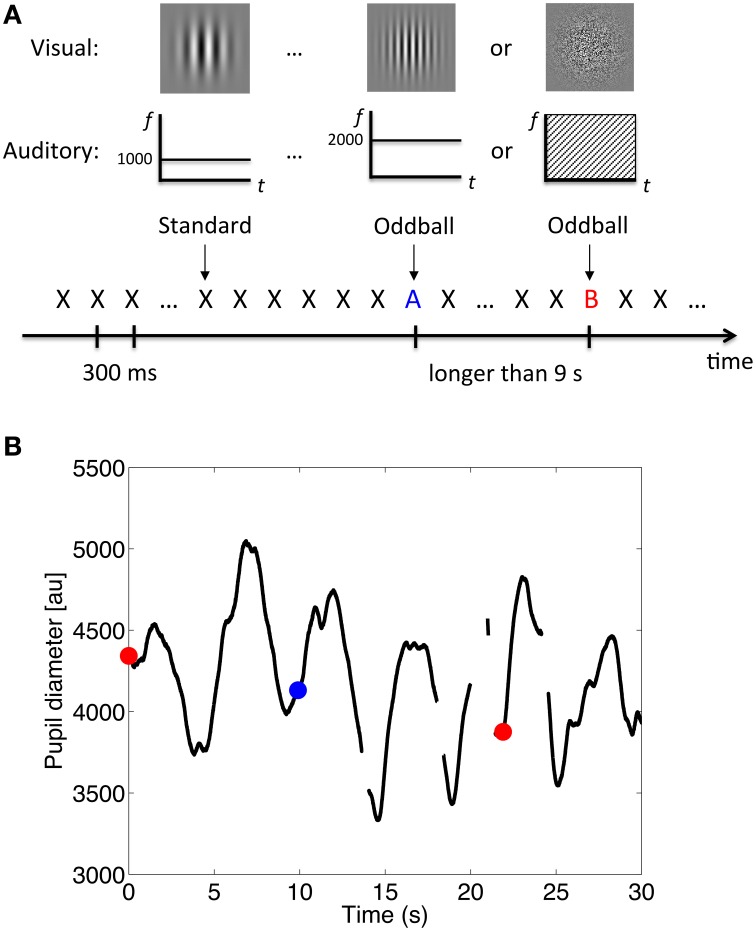
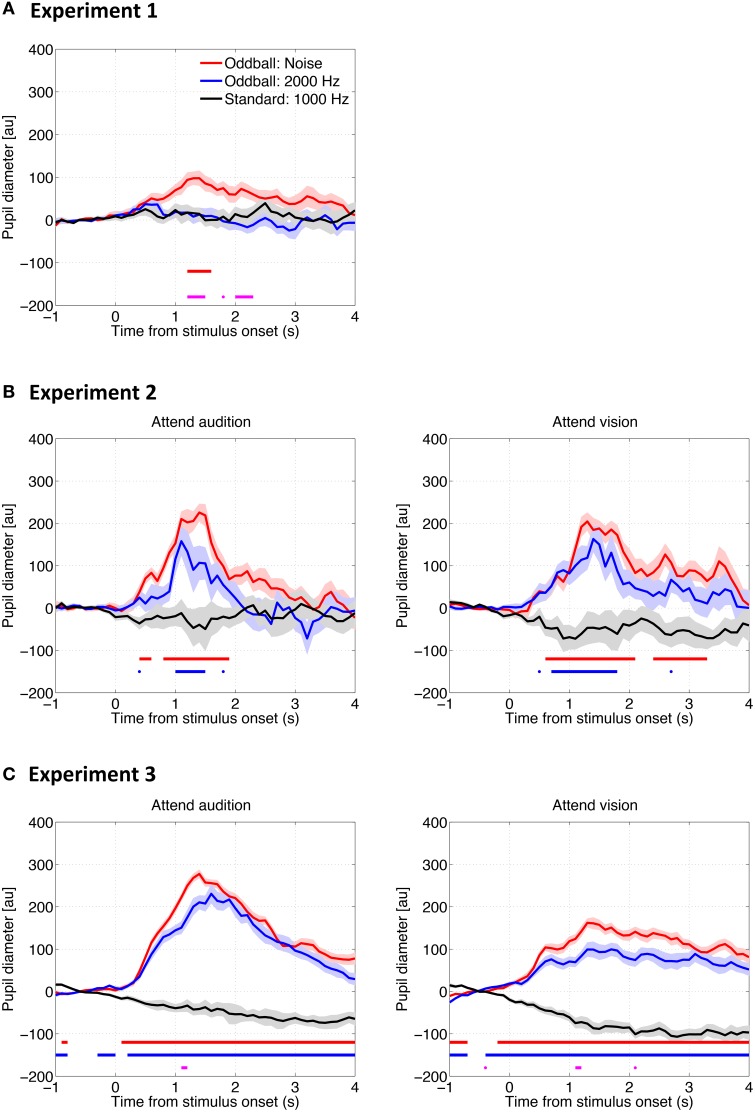
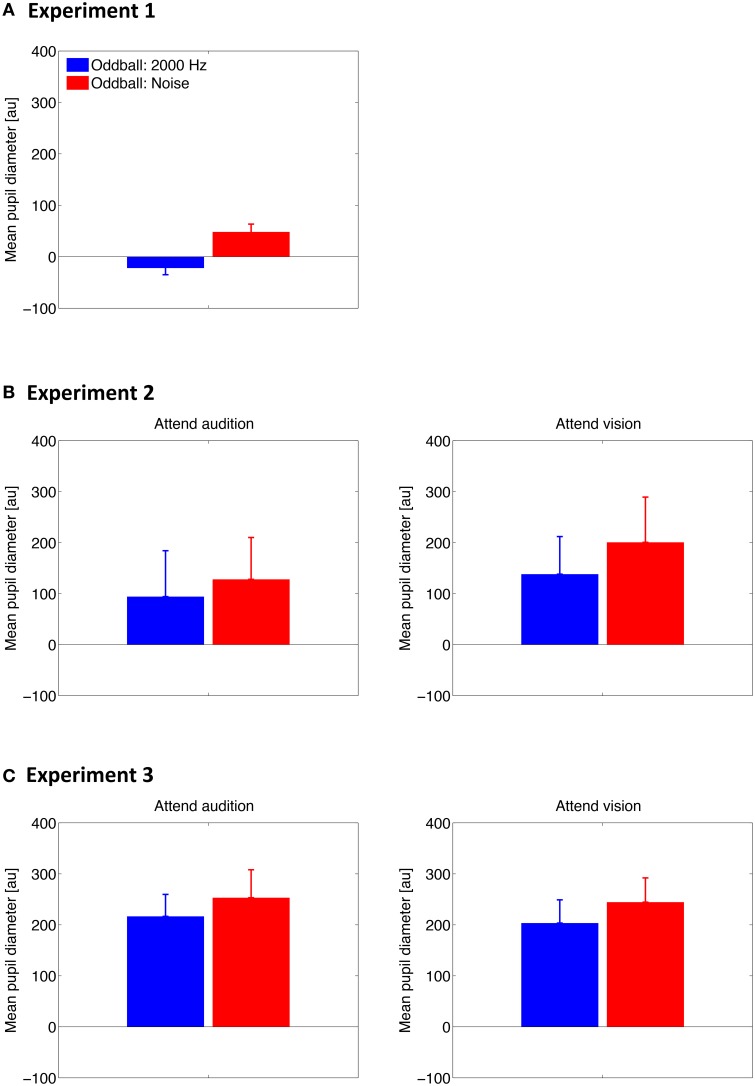
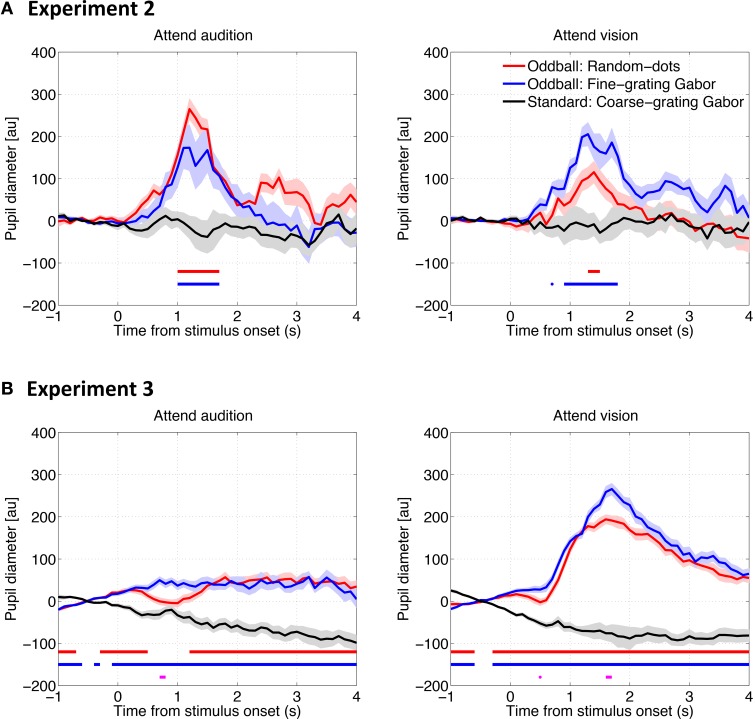
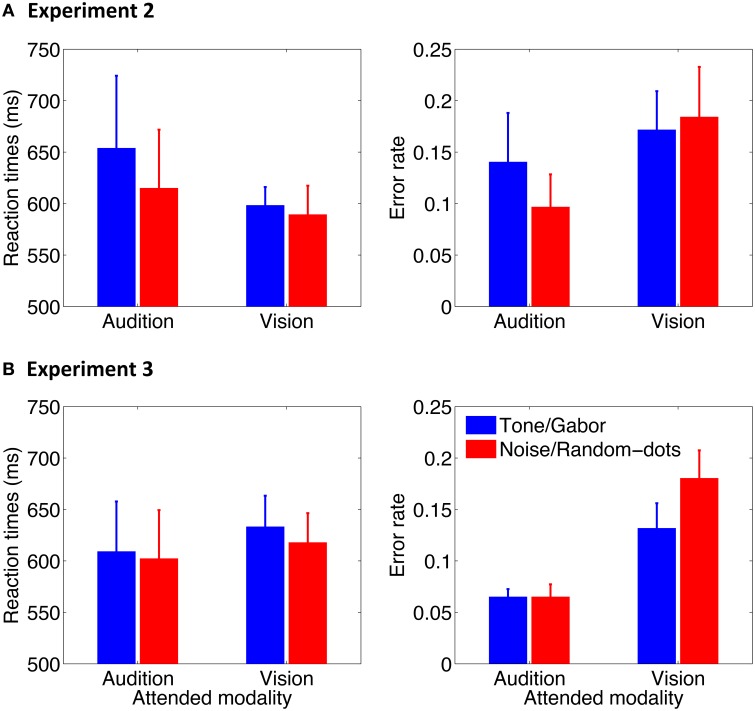
A unique sound that deviates from a repetitive background sound induces signature neural responses, such as mismatch negativity and novelty P3 response in electro-encephalography studies. Here we show that a deviant auditory stimulus induces a human pupillary dilation response (PDR) that is sensitive to the stimulus properties and irrespective whether attention is directed to the sounds or not. In an auditory oddball sequence, we used white noise and 2000-Hz tones as oddballs against repeated 1000-Hz tones. Participants' pupillary responses were recorded while they listened to the auditory oddball sequence. In Experiment 1, they were not involved in any task. Results show that pupils dilated to the noise oddballs for approximately 4 s, but no such PDR was found for the 2000-Hz tone oddballs. In Experiments 2, two types of visual oddballs were presented synchronously with the auditory oddballs. Participants discriminated the auditory or visual oddballs while trying to ignore stimuli from the other modality. The purpose of this manipulation was to direct attention to or away from the auditory sequence. In Experiment 3, the visual oddballs and the auditory oddballs were always presented asynchronously to prevent residuals of attention on to-be-ignored oddballs due to the concurrence with the attended oddballs. Results show that pupils dilated to both the noise and 2000-Hz tone oddballs in all conditions. Most importantly, PDRs to noise were larger than those to the 2000-Hz tone oddballs regardless of the attention condition in both experiments. The overall results suggest that the stimulus-dependent factor of the PDR appears to be independent of attention.
一种不同于重复性背景声音的独特声音会引发标志性的神经反应,比如在脑电图研究中出现的失配负波和新奇P3反应。在此我们表明,一个异常听觉刺激会引发人类瞳孔扩张反应(PDR),该反应对刺激属性敏感,且与注意力是否指向这些声音无关。在一个听觉奇偶数序列中,我们使用白噪声和2000赫兹的音调作为相对于重复出现的1000赫兹音调的奇数刺激。在参与者聆听听觉奇偶数序列时记录他们的瞳孔反应。在实验1中,他们不参与任何任务。结果显示,瞳孔对噪声奇数刺激扩张约4秒,但对2000赫兹音调的奇数刺激未发现此类瞳孔扩张反应。在实验2中,两种视觉奇数刺激与听觉奇数刺激同步呈现。参与者辨别听觉或视觉奇数刺激,同时试图忽略来自另一模态的刺激。这种操作的目的是将注意力引向或远离听觉序列。在实验3中,视觉奇数刺激和听觉奇数刺激总是异步呈现,以防止由于与被关注的奇数刺激同时出现而导致对要被忽略的奇数刺激产生注意力残留。结果显示,在所有条件下,瞳孔对噪声和2000赫兹音调的奇数刺激均会扩张。最重要的是,在两个实验中,无论注意力条件如何,对噪声的瞳孔扩张反应都比对2000赫兹音调的奇数刺激的反应更大。总体结果表明,瞳孔扩张反应的刺激依赖性因素似乎与注意力无关。