Yoshimoto Sanae, Imai Hisato, Kashino Makio, Takeuchi Tatsuto
Department of Psychology, Japan Women's University, Kawasaki, Kanagawa, Japan ; NTT Communication Science Laboratories, NTT Corporation, Atsugi, Kanagawa, Japan ; CREST, Japan Science and Technology Agency, Atsugi, Kanagawa, Japan.
Department of Psychology, Gakushuin University, Toshima-ku, Tokyo, Japan.
PLoS One. 2014 Feb 28;9(2):e90670. doi: 10.1371/journal.pone.0090670. eCollection 2014.
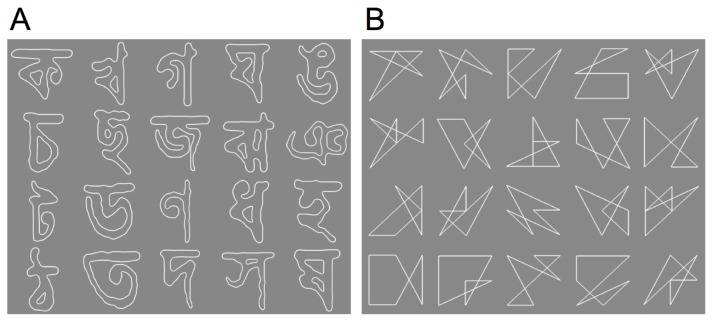
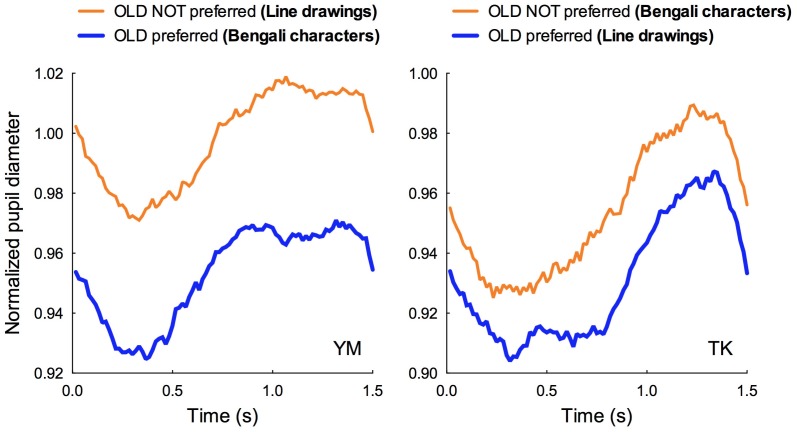
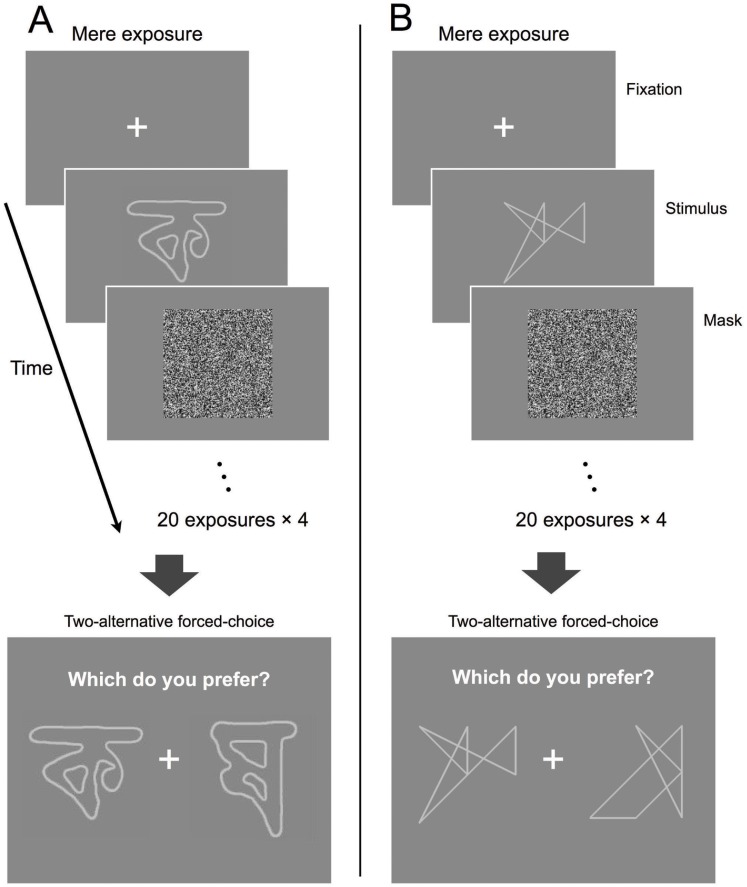
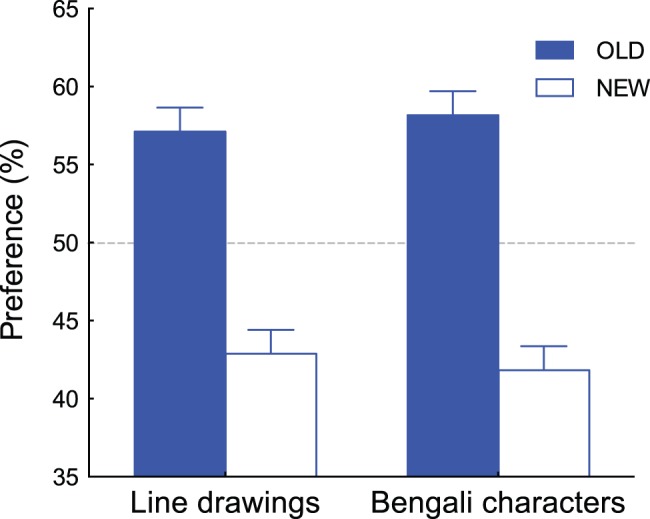
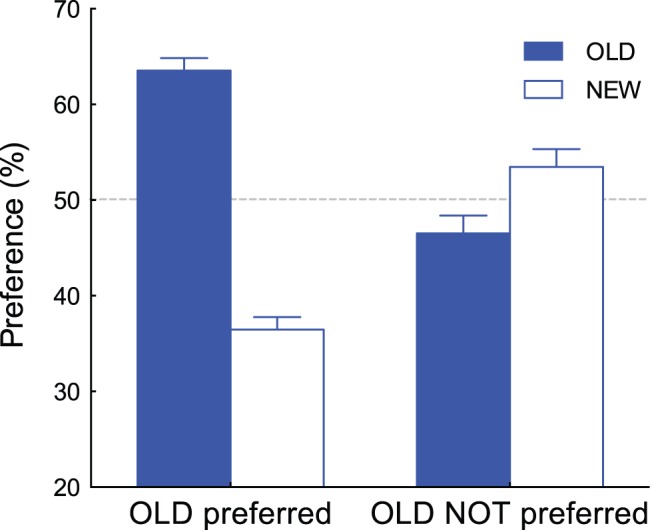
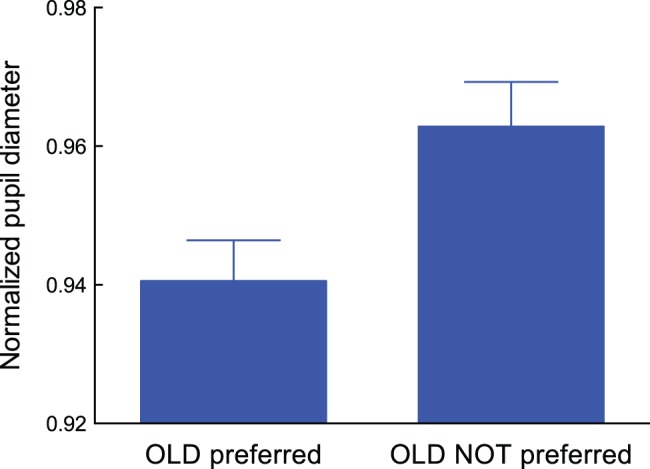
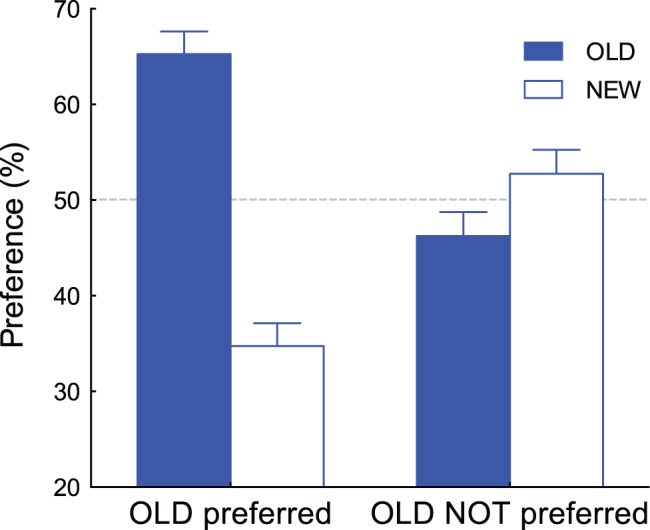
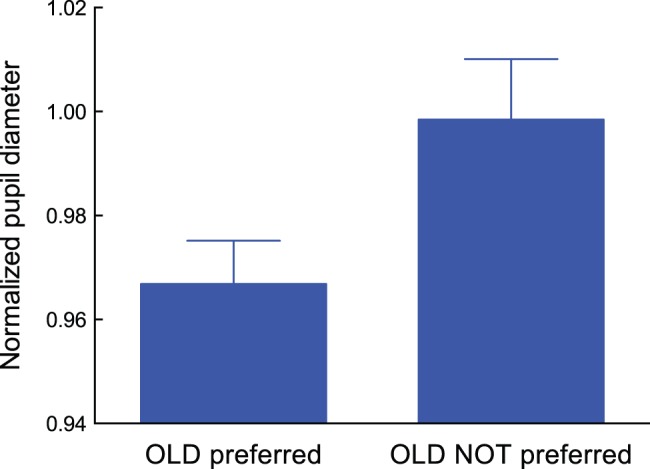
The subliminal mere exposure effect (SMEE) is the phenomenon wherein people tend to prefer patterns they have repeatedly observed without consciously identifying them. One popular explanation for the SMEE is that perceptual fluency within exposed patterns is misattributed to a feeling of preference for those patterns. Assuming that perceptual fluency is negatively correlated with the amount of mental effort needed to analyze perceptual aspects of incoming stimuli, pupil diameter should associate with SMEE strength since the former is known to reflect mental effort. To examine this hypothesis, we measured participants' pupil diameter during exposure to subthreshold stimuli. Following exposure, a preference test was administered. Average pupil diameter throughout exposure was smaller when the SMEE was induced than when the SMEE was not induced. This supports the hypothesis that increasing perceptual fluency during mere exposure modulates autonomic nervous responses, such as pupil diameter, and eventually leads to preference.
阈下单纯曝光效应(SMEE)是一种现象,即人们倾向于更喜欢那些他们反复观察到但未有意识识别的图案。对阈下单纯曝光效应的一种普遍解释是,已曝光图案中的感知流畅性被错误地归因于对这些图案的偏好感受。假设感知流畅性与分析传入刺激的感知方面所需的心理努力量呈负相关,瞳孔直径应该与阈下单纯曝光效应的强度相关,因为前者已知能反映心理努力。为了检验这一假设,我们在参与者接触阈下刺激期间测量了他们的瞳孔直径。接触之后,进行了偏好测试。与未诱发阈下单纯曝光效应时相比,诱发该效应时整个接触过程中的平均瞳孔直径更小。这支持了以下假设:在单纯接触过程中增加感知流畅性会调节自主神经反应,如瞳孔直径,并最终导致偏好。