Basher Zeenatul, Costello Mark J
Institute of Marine Science, Leigh Marine Laboratory, The University of Auckland , Auckland , New Zealand.
PeerJ. 2016 Feb 23;4:e1713. doi: 10.7717/peerj.1713. eCollection 2016.
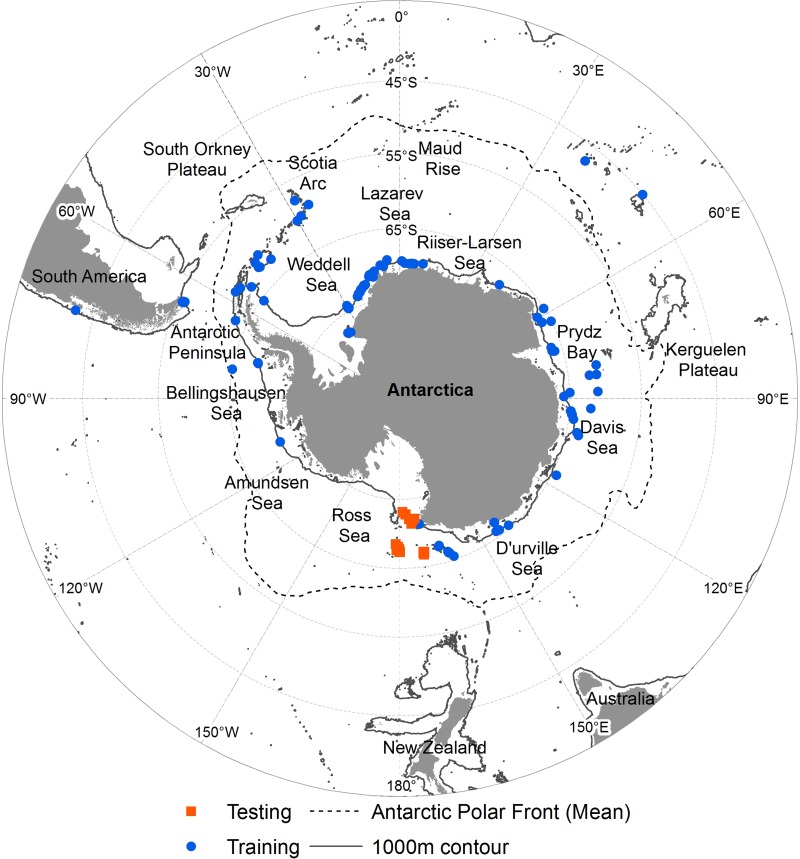
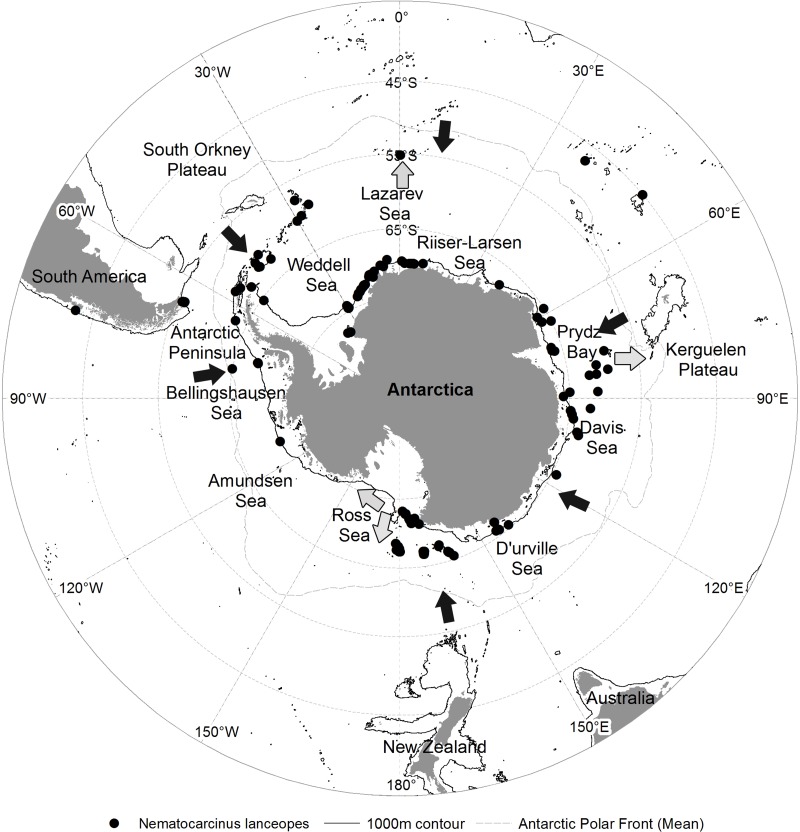
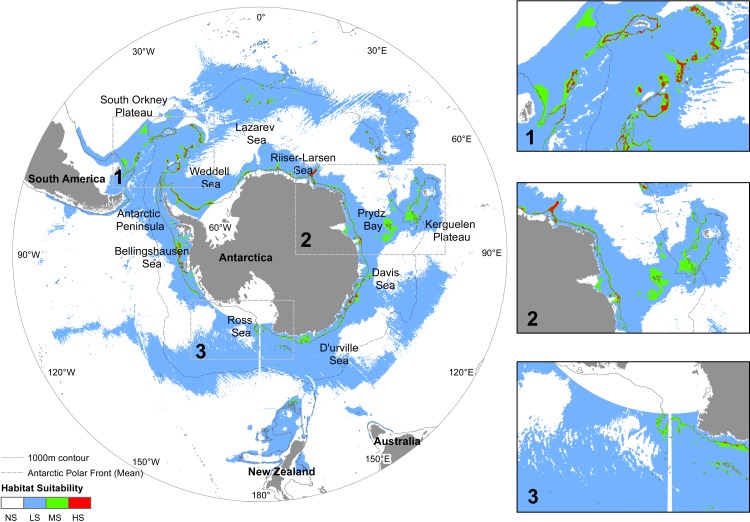
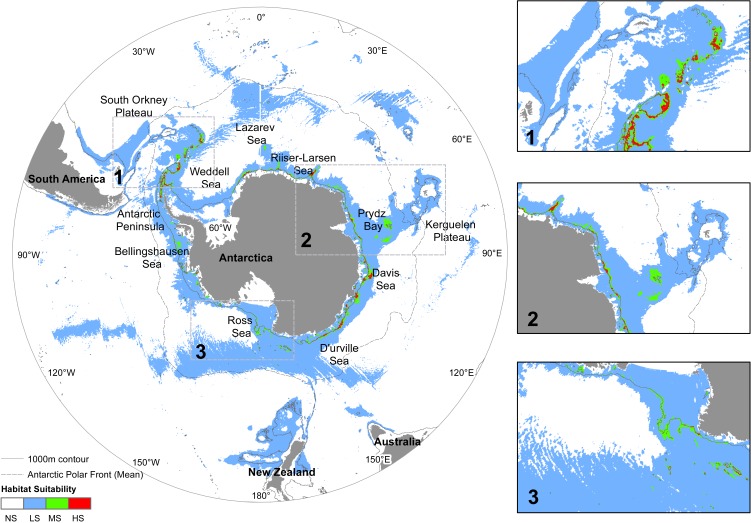
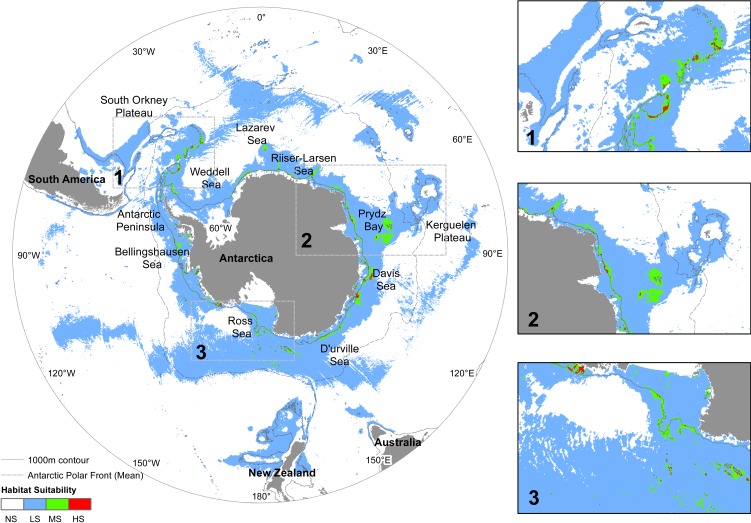
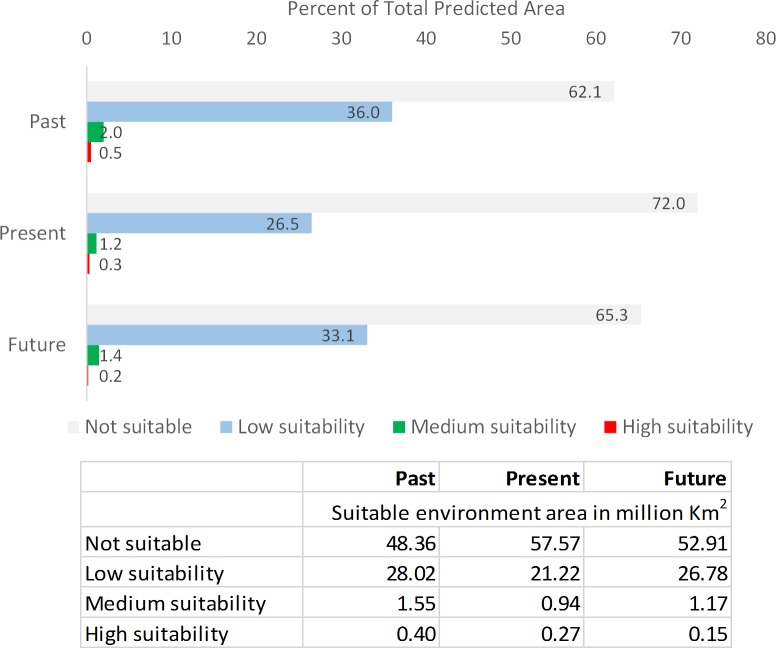
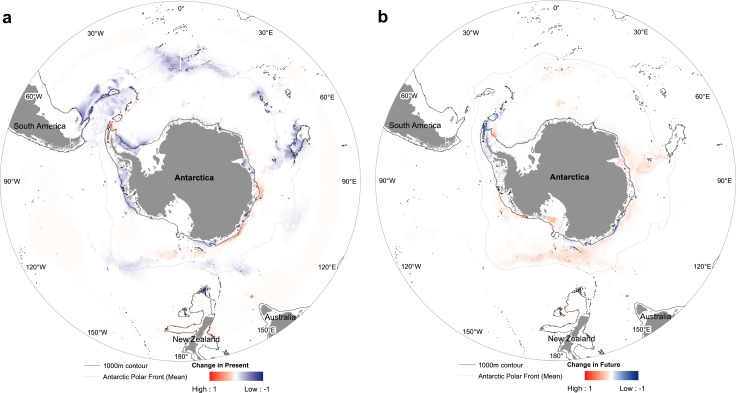
Shrimps have a widespread distribution across the shelf, slope and seamount regions of the Southern Ocean. Studies of Antarctic organisms have shown that individual species and higher taxa display different degrees of sensitivity and adaptability in response to environmental change. We use species distribution models to predict changes in the geographic range of the deep-sea Antarctic shrimp Nematocarcinus lanceopes under changing climatic conditions from the Last Glacial Maximum to the present and to the year 2100. The present distribution range indicates a pole-ward shift of the shrimp population since the last glaciation. This occurred by colonization of slopes from nearby refugia located around the northern part of Scotia Arc, southern tip of South America, South Georgia, Bouvet Island, southern tip of the Campbell plateau and Kerguelen plateau. By 2100, the shrimp are likely to expand their distribution in east Antarctica but have a continued pole-ward contraction in west Antarctica. The range extension and contraction process followed by the deep-sea shrimp provide a geographic context of how other deep-sea Antarctic species may have survived during the last glaciation and may endure with projected changing climatic conditions in the future.
南极虾类广泛分布于南大洋的陆架、陆坡和海山区。对南极生物的研究表明,不同的物种和更高的分类单元对环境变化表现出不同程度的敏感性和适应性。我们使用物种分布模型来预测深海南极虾类长须拟刺铠虾(Nematocarcinus lanceopes)在从末次盛冰期到现在以及到2100年气候变化条件下地理分布范围的变化。目前的分布范围表明自上次冰期以来虾类种群向极地迁移。这是通过从斯科舍弧北部、南美洲南端、南乔治亚岛、布韦岛、坎贝尔高原南端和克尔格伦高原周围附近避难所的陆坡殖民而发生的。到2100年,这种虾类可能会在南极东部扩大其分布范围,但在南极西部会继续向极地收缩。深海虾类随后的分布范围扩展和收缩过程为其他南极深海物种在末次冰期可能如何生存以及未来在预计的气候变化条件下可能如何存续提供了一个地理背景。