Department of Biochemistry and Molecular Medicine, School of Medicine, University of California, Davis, CA, USA.
Shriners Institute for Pediatric Regenerative Medicine, Sacramento, CA, USA.
Sci Rep. 2016 Mar 1;6:22556. doi: 10.1038/srep22556.
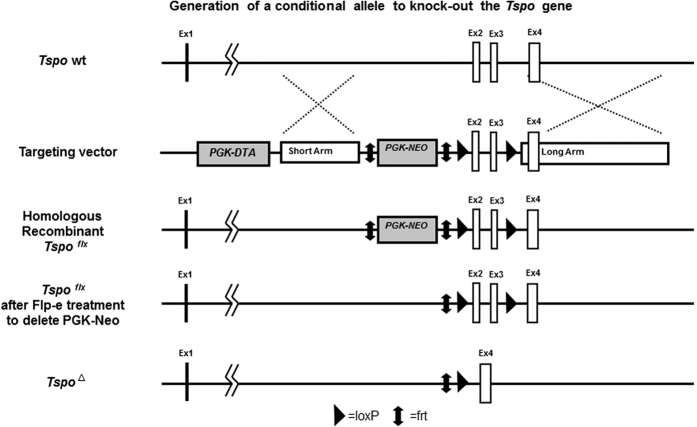
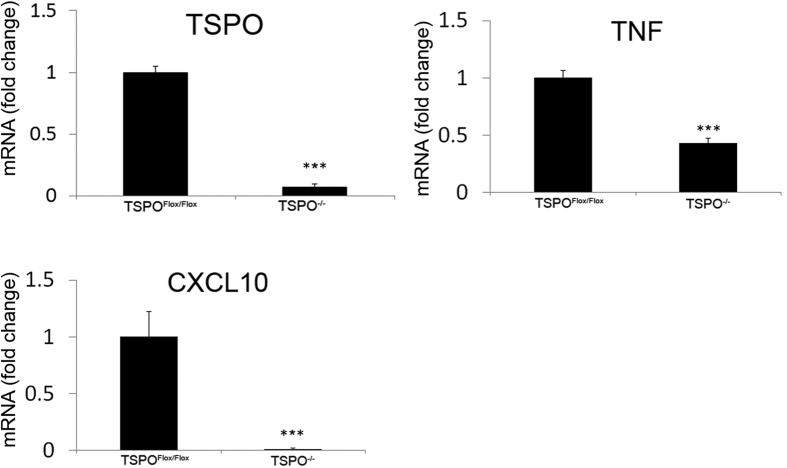
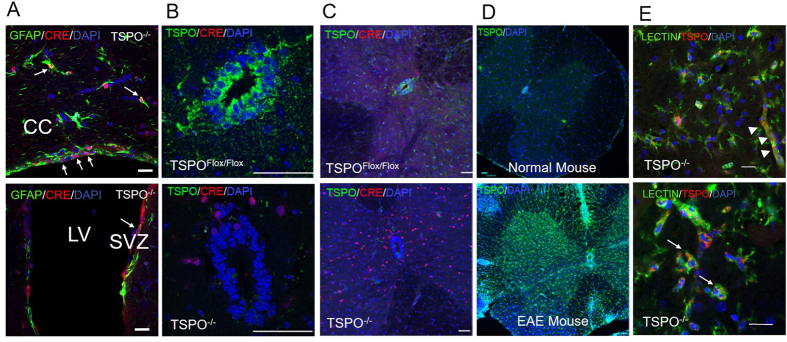
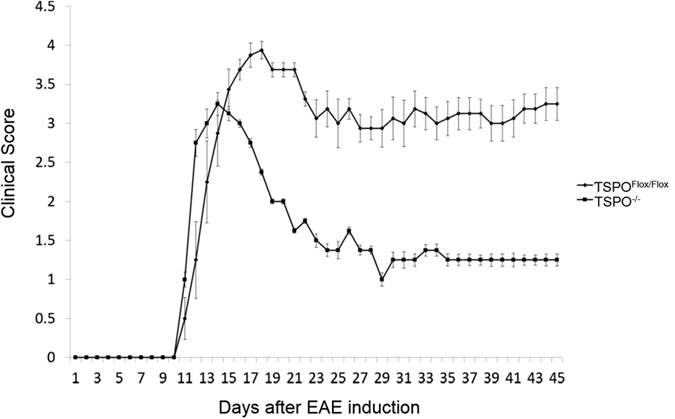
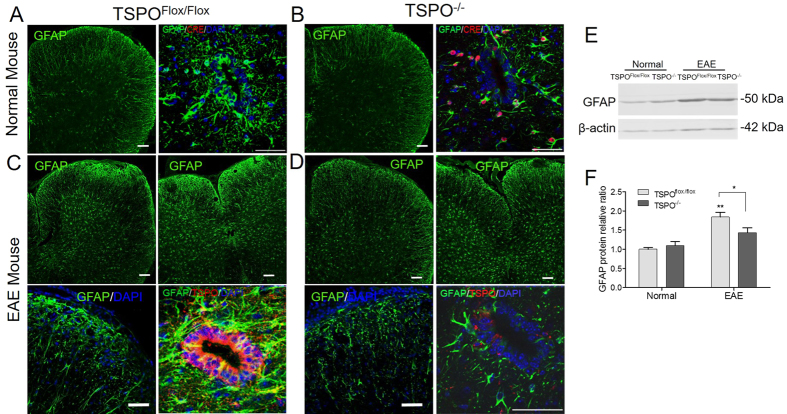
The mitochondrial translocator protein (TSPO) has been implicated in CNS diseases. Here, we sought to determine the specific role of TSPO in experimental autoimmune encephalomyelitis (EAE), the most studied animal model of multiple sclerosis (MS). To fundamentally elucidate the functions of TSPO, we first developed a viable TSPO knockout mouse. A conditional TSPO knockout mouse was generated by utilizing the Cre-Lox system. We generated a TSPO floxed mouse, and then crossed this mouse with a Cre recombinase expressing mouse driven by the human glial fibrillary acidic protein (hGFAP) promoter. The resultant mouse was a neural linage line specific TSPO knockout. The loss of TSPO in the CNS did not result in overt developmental defects or phenotypes. The TSPO-/- mouse showed a decrease in GFAP expression, correlating with a decrease in astrogliosis in response to neural injury during EAE. This decrease in astrogliosis was also witnessed in the lessening of severity of EAE clinical scoring, indicating an in vivo functional role for TSPO in suppressing EAE. The TSPO-/- mouse could be a useful tool in better understanding the role of TSPO in CNS disease, and our results implicate TSPO as a potential therapeutic target in MS.
线粒体转位蛋白(TSPO)已被牵涉到中枢神经系统疾病中。在这里,我们试图确定 TSPO 在实验性自身免疫性脑脊髓炎(EAE)中的具体作用,EAE 是多发性硬化症(MS)最被研究的动物模型。为了从根本上阐明 TSPO 的功能,我们首先开发了一种可行的 TSPO 敲除小鼠。利用 Cre-Lox 系统生成了一种条件性 TSPO 敲除小鼠。我们生成了 TSPO 基因敲入小鼠,然后将此小鼠与一种 Cre 重组酶表达小鼠进行杂交,该小鼠由人胶质纤维酸性蛋白(hGFAP)启动子驱动。由此产生的小鼠是一种神经谱系特异性 TSPO 敲除小鼠。中枢神经系统中 TSPO 的缺失并未导致明显的发育缺陷或表型。TSPO-/-小鼠的 GFAP 表达减少,与 EAE 期间神经损伤时星形胶质细胞增生减少相关。在 EAE 临床评分严重程度降低时也观察到了这种星形胶质细胞增生减少,表明 TSPO 在体内具有抑制 EAE 的功能作用。TSPO-/-小鼠可能是更好地理解 TSPO 在中枢神经系统疾病中作用的有用工具,并且我们的结果表明 TSPO 是 MS 的一个潜在治疗靶点。