Wendel Jonathan F, Jackson Scott A, Meyers Blake C, Wing Rod A
Department of Ecology, Evolution and Organismal Biology, Iowa State University, Ames, IA, 50011, USA.
Center for Applied Genetic Technologies, University of Georgia, Athens, GA, 30602, USA.
Genome Biol. 2016 Mar 1;17:37. doi: 10.1186/s13059-016-0908-1.
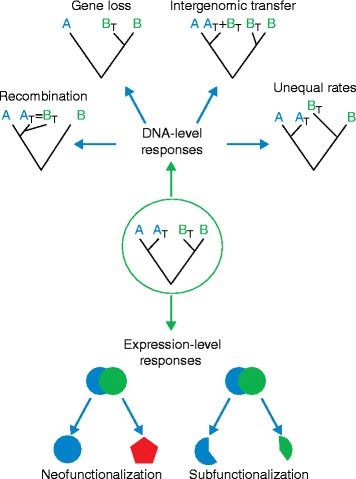
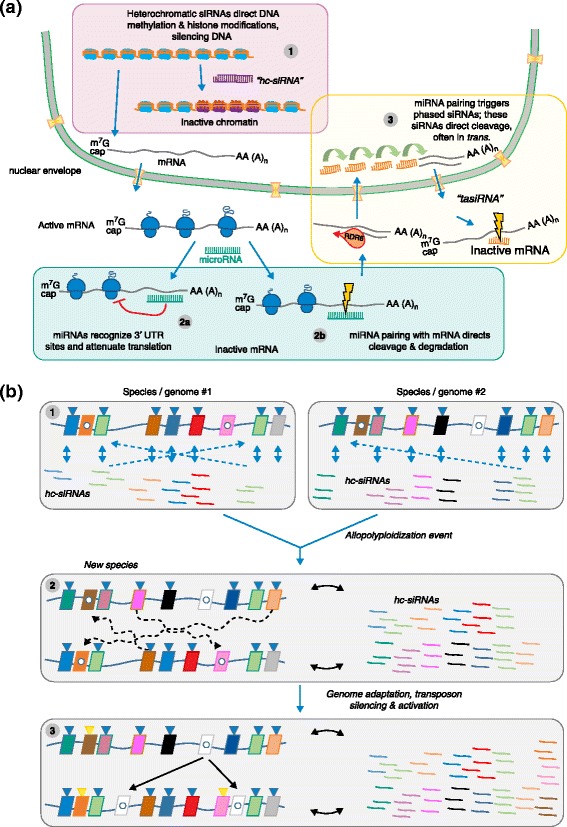
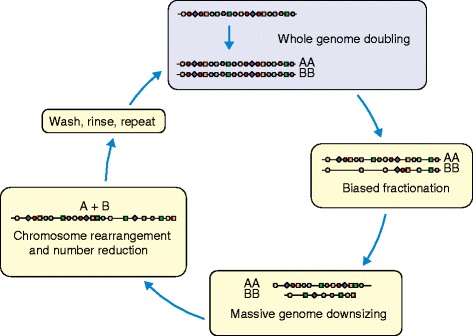
We have witnessed an explosion in our understanding of the evolution and structure of plant genomes in recent years. Here, we highlight three important emergent realizations: (1) that the evolutionary history of all plant genomes contains multiple, cyclical episodes of whole-genome doubling that were followed by myriad fractionation processes; (2) that the vast majority of the variation in genome size reflects the dynamics of proliferation and loss of lineage-specific transposable elements; and (3) that various classes of small RNAs help shape genomic architecture and function. We illustrate ways in which understanding these organism-level and molecular genetic processes can be used for crop plant improvement.
近年来,我们见证了对植物基因组进化与结构的理解取得了突破性进展。在此,我们着重强调三个重要的新认识:(1)所有植物基因组的进化史都包含多个全基因组加倍的周期性事件,随后伴随着无数的基因片段化过程;(2)基因组大小的绝大多数变异反映了谱系特异性转座元件的增殖和丢失动态;(3)各类小RNA有助于塑造基因组结构和功能。我们举例说明了如何利用对这些生物体水平和分子遗传过程的理解来改良农作物。