• 文献检索
  • 文档翻译
  • 深度研究
  • 学术资讯
  • Suppr Zotero 插件Zotero 插件
  • 邀请有礼
  • 套餐&价格
  • 历史记录
应用&插件
Suppr Zotero 插件Zotero 插件浏览器插件Mac 客户端Windows 客户端微信小程序
定价
高级版会员购买积分包购买API积分包
服务
文献检索文档翻译深度研究API 文档MCP 服务
关于我们
关于 Suppr公司介绍联系我们用户协议隐私条款
关注我们

Suppr 超能文献

核心技术专利:CN118964589B侵权必究
粤ICP备2023148730 号-1Suppr @ 2026

文献检索

告别复杂PubMed语法,用中文像聊天一样搜索,搜遍4000万医学文献。AI智能推荐,让科研检索更轻松。

立即免费搜索

文件翻译

保留排版,准确专业,支持PDF/Word/PPT等文件格式,支持 12+语言互译。

免费翻译文档

深度研究

AI帮你快速写综述,25分钟生成高质量综述,智能提取关键信息,辅助科研写作。

立即免费体验

对不同表面光洁度的陶瓷与人类牙釉质相对磨损情况的评估。

An evaluation of wear of human enamel opposed by ceramics of different surface finishes.

作者信息

Mulay Gauri, Dugal Ramandeep, Buhranpurwala Murtuza

机构信息

Department of Prosthodontics, M.A. Rangoonwala College of Dental Sciences and Research Centre, Pune, Maharashtra, India.

出版信息

J Indian Prosthodont Soc. 2015 Apr-Jun;15(2):111-8. doi: 10.4103/0972-4052.155031.

DOI:10.4103/0972-4052.155031
PMID:26929496
原文链接:https://pmc.ncbi.nlm.nih.gov/articles/PMC4762315/
Abstract

STATEMENT OF PROBLEM

Surface of porcelain restoration is a matter of clinical concern because of its abrasive action on the opposing enamel.

PURPOSE

This study comparatively evaluated wear of enamel when opposed by three different surface finishes of ceramic.

MATERIALS AND METHODS

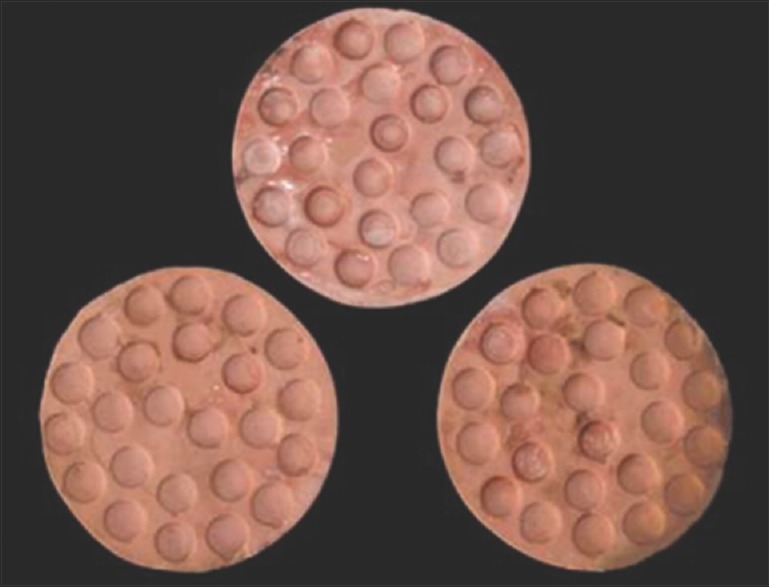
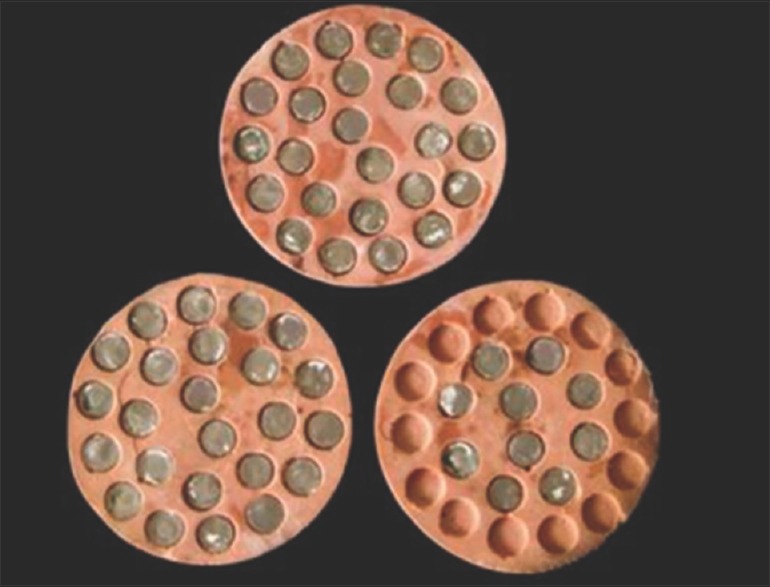
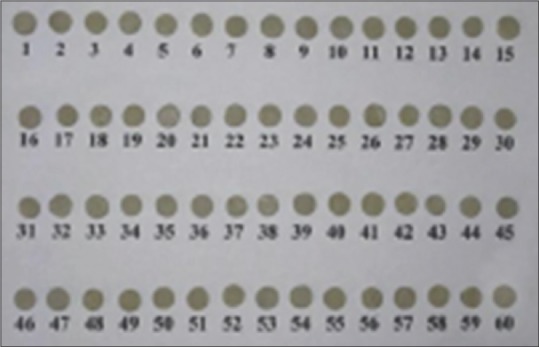
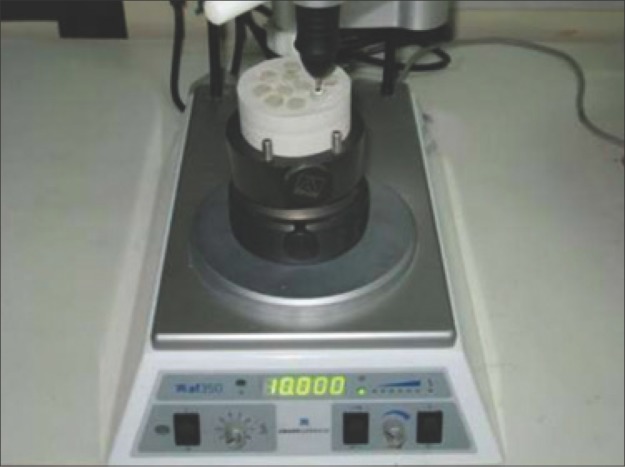
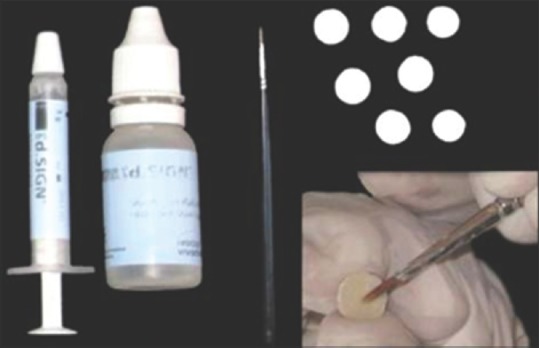
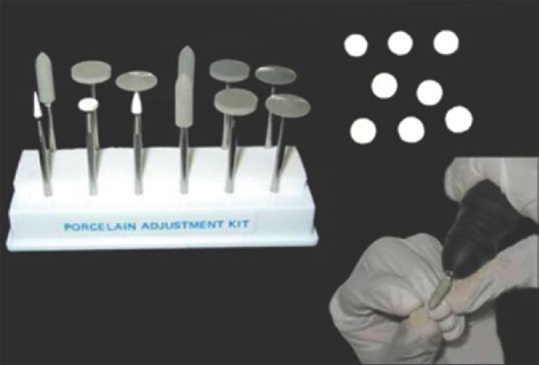
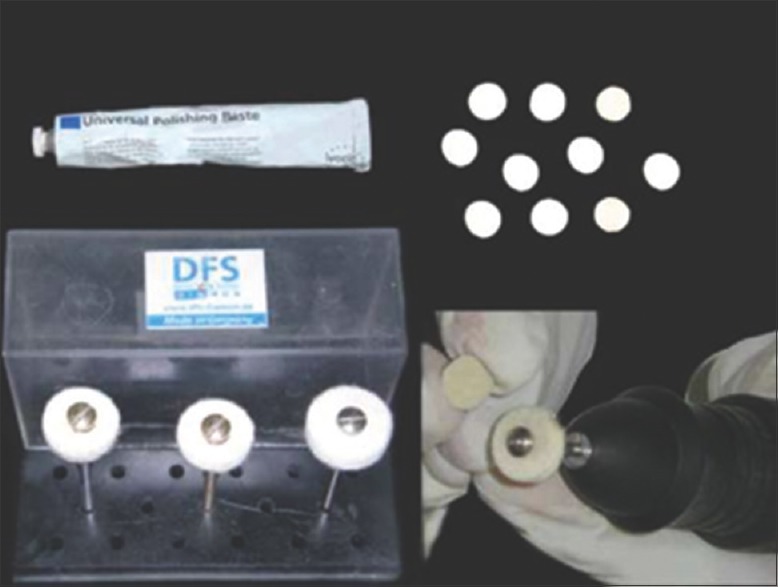
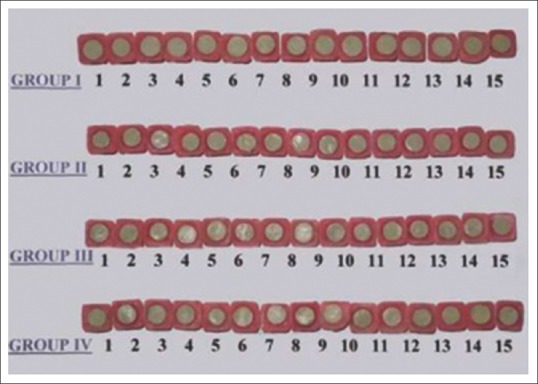
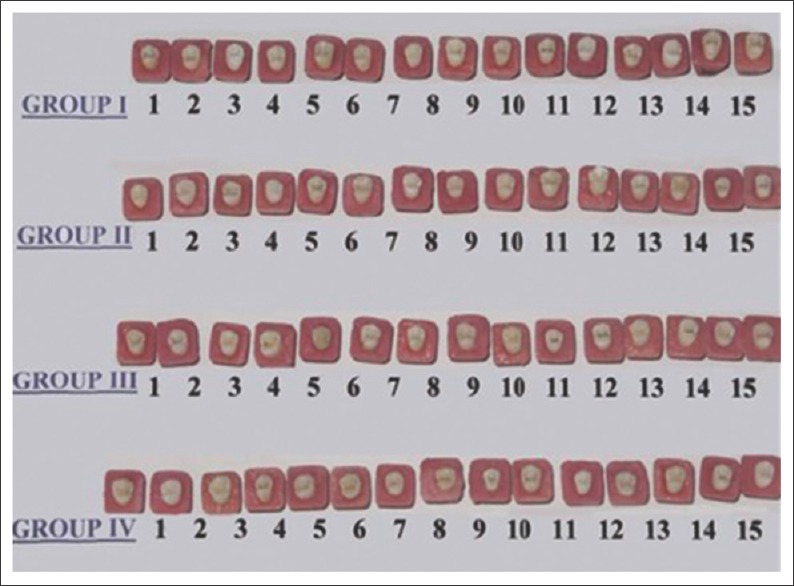
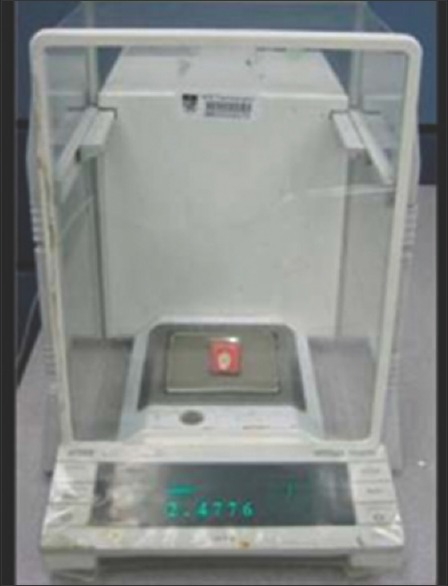
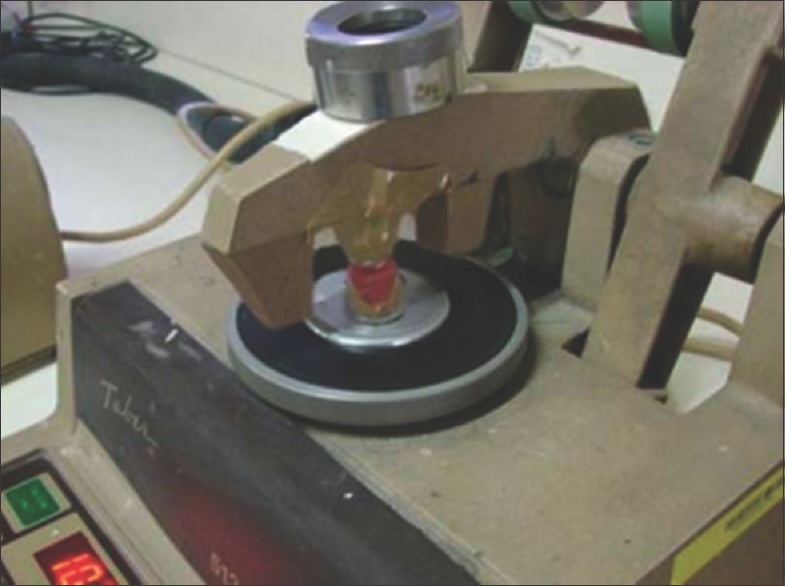
A total of 60 metal-ceramic discs (10 mm × 2 mm) with different surface finishes were fabricated. They were divided into four groups of autoglazed ceramic surface, over glazed ceramic surface, ceramic surface polished with Shofu polishing kit and ceramic surface polished with DFS polishing wheels and paste. Each group comprised of 15 discs. Sixty human teeth samples were prepared from freshly extracted, unrestored, caries free, nonattrited maxillary first premolars. Each tooth sample was weighed before wear testing using AT200 Mettler Toledo electronic analytical balance of 0.0001 g accuracy. Occlusal surfaces of these teeth were then abraded against the substrates in a wear machine for a total of 10,000 cycles. Each tooth sample was weighed after 5000 cycles and after the total of 10,000 cycles, respectively, using the same balance. Differences in weight of tooth samples before and after wear testing were evaluated statistically using one-way analysis of variance and Bonferroni's correction for multiple group comparisons.

RESULTS

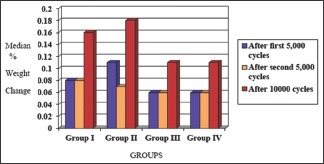
The values obtained for percentage weight loss after 10,000 cycles for over glazed ceramic surface were marginally higher than values obtained for autoglazed surface. It was observed that values obtained for percentage weight loss by polished ceramic after 10,000 cycles were statistically less as compared to the values obtained with autoglazed and over glazed ceramic surface (P < 0.001). There was no statistically significant difference between the values obtained by polished ceramic surfaces of two different groups.

CONCLUSION

Enamel wear produced by polished porcelain is substantially less than autoglazed and over glazed porcelain. No significant difference was found in enamel wear when opposed by ceramic surfaces polished by two different methods. This study indicates the potential damage porcelain can inflict upon enamel and suggests that porcelain should be polished instead of over glazed.

摘要

问题陈述

瓷修复体的表面是临床关注的问题,因为其对相对的牙釉质有磨蚀作用。

目的

本研究比较评估了与三种不同陶瓷表面光洁度相对时牙釉质的磨损情况。

材料与方法

制作了总共60个具有不同表面光洁度的金属烤瓷盘(10毫米×2毫米)。它们被分为四组:自上釉陶瓷表面、再上釉陶瓷表面、用松风抛光套装抛光的陶瓷表面以及用DFS抛光盘和抛光膏抛光的陶瓷表面。每组包含15个盘。从新鲜拔除的、未修复的、无龋、无磨损的上颌第一前磨牙制备60个人牙样本。在磨损测试前,使用精度为0.0001克的梅特勒托利多AT200电子分析天平对每个牙样本称重。然后将这些牙齿的咬合面在磨损试验机中与基底相对磨损,总共进行10000次循环。分别在5000次循环后和总共10000次循环后,使用同一台天平对每个牙样本称重。使用单因素方差分析和用于多组比较的邦费罗尼校正对磨损测试前后牙样本重量的差异进行统计学评估。

结果

再上釉陶瓷表面在10000次循环后获得的重量损失百分比值略高于自上釉表面获得的值。观察到,与自上釉和再上釉陶瓷表面获得的值相比,抛光陶瓷在10000次循环后获得的重量损失百分比值在统计学上更低(P < 0.001)。两个不同组的抛光陶瓷表面获得的值之间没有统计学上的显著差异。

结论

抛光瓷产生的牙釉质磨损明显小于自上釉瓷和再上釉瓷。当与通过两种不同方法抛光的陶瓷表面相对时,牙釉质磨损没有发现显著差异。本研究表明瓷对牙釉质可能造成的损害,并建议对瓷进行抛光而非再上釉。
https://cdn.ncbi.nlm.nih.gov/pmc/blobs/0664/4762315/bbffe426ba77/JIPS-15-111-g017.jpg
https://cdn.ncbi.nlm.nih.gov/pmc/blobs/0664/4762315/2e6e30dbaf8e/JIPS-15-111-g001.jpg
https://cdn.ncbi.nlm.nih.gov/pmc/blobs/0664/4762315/d5a11a32fada/JIPS-15-111-g002.jpg
https://cdn.ncbi.nlm.nih.gov/pmc/blobs/0664/4762315/4506516bf248/JIPS-15-111-g003.jpg
https://cdn.ncbi.nlm.nih.gov/pmc/blobs/0664/4762315/c415c0085561/JIPS-15-111-g004.jpg
https://cdn.ncbi.nlm.nih.gov/pmc/blobs/0664/4762315/4ee3c1c21d9c/JIPS-15-111-g005.jpg
https://cdn.ncbi.nlm.nih.gov/pmc/blobs/0664/4762315/781752af2b2f/JIPS-15-111-g006.jpg
https://cdn.ncbi.nlm.nih.gov/pmc/blobs/0664/4762315/321c48849cad/JIPS-15-111-g007.jpg
https://cdn.ncbi.nlm.nih.gov/pmc/blobs/0664/4762315/608cb6b43a15/JIPS-15-111-g008.jpg
https://cdn.ncbi.nlm.nih.gov/pmc/blobs/0664/4762315/85a68cc333d1/JIPS-15-111-g009.jpg
https://cdn.ncbi.nlm.nih.gov/pmc/blobs/0664/4762315/5814e7649536/JIPS-15-111-g010.jpg
https://cdn.ncbi.nlm.nih.gov/pmc/blobs/0664/4762315/c7e8e5b6fad9/JIPS-15-111-g011.jpg
https://cdn.ncbi.nlm.nih.gov/pmc/blobs/0664/4762315/5188f09a4fcd/JIPS-15-111-g012.jpg
https://cdn.ncbi.nlm.nih.gov/pmc/blobs/0664/4762315/bbffe426ba77/JIPS-15-111-g017.jpg
https://cdn.ncbi.nlm.nih.gov/pmc/blobs/0664/4762315/2e6e30dbaf8e/JIPS-15-111-g001.jpg
https://cdn.ncbi.nlm.nih.gov/pmc/blobs/0664/4762315/d5a11a32fada/JIPS-15-111-g002.jpg
https://cdn.ncbi.nlm.nih.gov/pmc/blobs/0664/4762315/4506516bf248/JIPS-15-111-g003.jpg
https://cdn.ncbi.nlm.nih.gov/pmc/blobs/0664/4762315/c415c0085561/JIPS-15-111-g004.jpg
https://cdn.ncbi.nlm.nih.gov/pmc/blobs/0664/4762315/4ee3c1c21d9c/JIPS-15-111-g005.jpg
https://cdn.ncbi.nlm.nih.gov/pmc/blobs/0664/4762315/781752af2b2f/JIPS-15-111-g006.jpg
https://cdn.ncbi.nlm.nih.gov/pmc/blobs/0664/4762315/321c48849cad/JIPS-15-111-g007.jpg
https://cdn.ncbi.nlm.nih.gov/pmc/blobs/0664/4762315/608cb6b43a15/JIPS-15-111-g008.jpg
https://cdn.ncbi.nlm.nih.gov/pmc/blobs/0664/4762315/85a68cc333d1/JIPS-15-111-g009.jpg
https://cdn.ncbi.nlm.nih.gov/pmc/blobs/0664/4762315/5814e7649536/JIPS-15-111-g010.jpg
https://cdn.ncbi.nlm.nih.gov/pmc/blobs/0664/4762315/c7e8e5b6fad9/JIPS-15-111-g011.jpg
https://cdn.ncbi.nlm.nih.gov/pmc/blobs/0664/4762315/5188f09a4fcd/JIPS-15-111-g012.jpg
https://cdn.ncbi.nlm.nih.gov/pmc/blobs/0664/4762315/bbffe426ba77/JIPS-15-111-g017.jpg

相似文献

1
An evaluation of wear of human enamel opposed by ceramics of different surface finishes.对不同表面光洁度的陶瓷与人类牙釉质相对磨损情况的评估。
J Indian Prosthodont Soc. 2015 Apr-Jun;15(2):111-8. doi: 10.4103/0972-4052.155031.
2
An evaluation of wear when enamel is opposed by various ceramic materials and gold.当牙釉质与各种陶瓷材料和金相对时的磨损评估。
J Prosthet Dent. 2006 Nov;96(5):345-53. doi: 10.1016/j.prosdent.2006.09.002.
3
A Comparative Evaluation of Enamel Wear Against Different Surface Finished Ceramics: An In Vitro Study.不同表面光洁度陶瓷的釉质磨损比较评估:一项体外研究
Cureus. 2023 Sep 4;15(9):e44689. doi: 10.7759/cureus.44689. eCollection 2023 Sep.
4
The wear of polished and glazed zirconia against enamel.抛光和上釉氧化锆对釉质的磨损。
J Prosthet Dent. 2013 Jan;109(1):22-9. doi: 10.1016/S0022-3913(13)60005-0.
5
Effect of glazed and polished surface finishes on the friction coefficient of two low-fusing ceramics.釉面和抛光表面处理对两种低熔陶瓷摩擦系数的影响。
J Prosthet Dent. 2005 Mar;93(3):245-52. doi: 10.1016/j.prosdent.2004.12.010.
6
Wear characteristics of polished and glazed lithium disilicate ceramics opposed to three ceramic materials.与三种陶瓷材料相对的抛光和釉面二硅酸锂陶瓷的磨损特性。
J Oral Sci. 2016;58(1):117-23. doi: 10.2334/josnusd.58.117.
7
Three-body wear potential of dental yttrium-stabilized zirconia ceramic after grinding, polishing, and glazing treatments.牙科钇稳定氧化锆陶瓷在研磨、抛光和上釉处理后的三体磨损潜力。
J Prosthet Dent. 2014 Nov;112(5):1151-5. doi: 10.1016/j.prosdent.2013.12.021. Epub 2014 May 16.
8
A comparison of the abrasiveness of six ceramic surfaces and gold.
J Prosthet Dent. 1991 Sep;66(3):303-9. doi: 10.1016/0022-3913(91)90254-t.
9
Enamel wear opposing different surface conditions of different CAD/CAM ceramics.
Quintessence Int. 2013 Nov-Dec;44(10):743-51. doi: 10.3290/j.qi.a29750.
10
Wear behavior of dental Y-TZP ceramic against natural enamel after different finishing procedures.不同加工处理后牙科氧化钇部分稳定氧化锆陶瓷对天然牙釉质的磨损行为。
Dent Mater. 2012 Aug;28(8):909-18. doi: 10.1016/j.dental.2012.04.010. Epub 2012 May 18.

引用本文的文献

1
A Comparative Evaluation of Enamel Wear Against Different Surface Finished Ceramics: An In Vitro Study.不同表面光洁度陶瓷的釉质磨损比较评估:一项体外研究
Cureus. 2023 Sep 4;15(9):e44689. doi: 10.7759/cureus.44689. eCollection 2023 Sep.
2
Comparative evaluation of enamel wear against monolithic zirconia and layered zirconia after polishing and glazing: An study.经抛光上釉后对整体氧化锆和分层氧化锆的釉质磨损进行比较评估:一项研究。
J Indian Prosthodont Soc. 2022 Oct-Dec;22(4):354-360. doi: 10.4103/jips.jips_503_21.
3
Comparative analysis of flexural strength of abraded and polished porcelain surfaces - an in vitro study.

本文引用的文献

1
An evaluation of wear when enamel is opposed by various ceramic materials and gold.当牙釉质与各种陶瓷材料和金相对时的磨损评估。
J Prosthet Dent. 2006 Nov;96(5):345-53. doi: 10.1016/j.prosdent.2006.09.002.
2
How to qualify and validate wear simulation devices and methods.如何对磨损模拟设备和方法进行鉴定与验证。
Dent Mater. 2006 Aug;22(8):712-34. doi: 10.1016/j.dental.2006.02.002. Epub 2006 Mar 30.
3
An evaluation of the effects of handpiece speed, abrasive characteristics, and polishing load on the flexural strength of polished ceramics.
磨损和抛光瓷表面抗弯强度的比较分析——一项体外研究。
J Med Life. 2021 Jan-Mar;14(1):61-67. doi: 10.25122/jml-2020-0085.
4
Comparative evaluation of natural enamel wear against polished yitrium tetragonal zirconia and polished lithium disilicate - An study.天然牙釉质与抛光钇四方氧化锆和抛光二硅酸锂磨损的比较评估——一项研究。
J Indian Prosthodont Soc. 2020 Jan-Mar;20(1):83-89. doi: 10.4103/jips.jips_218_19. Epub 2020 Jan 27.
5
In Vitro Simulation and In Vivo Assessment of Tooth Wear: A Meta-Analysis of In Vitro and Clinical Research.牙齿磨损的体外模拟与体内评估:一项体外与临床研究的荟萃分析
Materials (Basel). 2019 Oct 31;12(21):3575. doi: 10.3390/ma12213575.
6
Fiber-Reinforced Composites: A Breakthrough in Practical Clinical Applications with Advanced Wear Resistance for Dental Materials.纤维增强复合材料:牙科材料先进耐磨性在实际临床应用中的一项突破。
EC Dent Sci. 2018 May;17(5):430-459. Epub 2018 Apr 10.
7
A study on the wear of enamel caused by monolithic zirconia and the subsequent phase transformation compared to two other ceramic systems.一项关于与其他两种陶瓷系统相比,整体式氧化锆引起的牙釉质磨损及随后的相变的研究。
J Indian Prosthodont Soc. 2017 Jan-Mar;17(1):8-14. doi: 10.4103/0972-4052.194940.
评估机头转速、磨料特性和抛光负荷对抛光陶瓷抗弯强度的影响。
J Prosthet Dent. 2005 Nov;94(5):421-9. doi: 10.1016/j.prosdent.2005.08.014.
4
Three-body wear associated with three ceramics and enamel.与三种陶瓷和珐琅相关的三体磨损。
J Prosthet Dent. 1999 Oct;82(4):476-81. doi: 10.1016/s0022-3913(99)70037-5.
5
Ceramics in dentistry: historical roots and current perspectives.牙科中的陶瓷:历史根源与当前视角。
J Prosthet Dent. 1996 Jan;75(1):18-32. doi: 10.1016/s0022-3913(96)90413-8.
6
Enamel wear caused by three different restorative materials.
J Prosthet Dent. 1995 Dec;74(6):647-54. doi: 10.1016/s0022-3913(05)80319-1.
7
An in vitro investigation into the wear effects of unglazed, glazed, and polished porcelain on human enamel.
J Prosthet Dent. 1994 Sep;72(3):320-3. doi: 10.1016/0022-3913(94)90347-6.
8
Studies on the wear of porcelain, enamel, and gold.
J Prosthet Dent. 1971 Mar;25(3):299-306. doi: 10.1016/0022-3913(71)90191-0.
9
Occusal wear in prosthodontics.
J Am Dent Assoc. 1971 Jan;82(1):154-9. doi: 10.14219/jada.archive.1971.0018.
10
Buonocore memorial lecture. Evaluation of clinical performance for posterior composite resins and dentin adhesives.
Oper Dent. 1987 Spring;12(2):53-78.