Corbi-Verge Carles, Kim Philip M
Terrence Donnelly Centre for Cellular and Biomolecular Research, University of Toronto, Toronto, ON, M5S 3E1, Canada.
Department of Molecular Genetics, University of Toronto, Toronto, ON, M5S 3E1, Canada.
Cell Commun Signal. 2016 Mar 2;14:8. doi: 10.1186/s12964-016-0131-4.
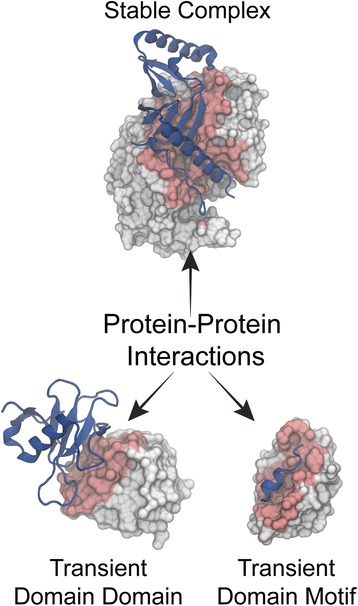
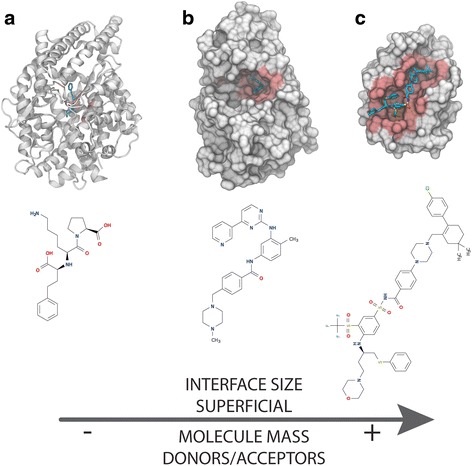
Protein-protein interactions (PPI) are involved in virtually every cellular process and thus represent an attractive target for therapeutic interventions. A significant number of protein interactions are frequently formed between globular domains and short linear peptide motifs (DMI). Targeting these DMIs has proven challenging and classical approaches to inhibiting such interactions with small molecules have had limited success. However, recent new approaches have led to the discovery of potent inhibitors, some of them, such as Obatoclax, ABT-199, AEG-40826 and SAH-p53-8 are likely to become approved drugs. These novel inhibitors belong to a wide range of different molecule classes, ranging from small molecules to peptidomimetics and biologicals. This article reviews the main reasons for limited success in targeting PPIs, discusses how successful approaches overcome these obstacles to discovery promising inhibitors for human protein double minute 2 (HDM2), B-cell lymphoma 2 (Bcl-2), X-linked inhibitor of apoptosis protein (XIAP), and provides a summary of the promising approaches currently in development that indicate the future potential of PPI inhibitors in drug discovery.
蛋白质-蛋白质相互作用(PPI)几乎涉及每个细胞过程,因此是治疗干预的一个有吸引力的靶点。大量的蛋白质相互作用经常发生在球状结构域和短线性肽基序(DMI)之间。事实证明,靶向这些DMI具有挑战性,用小分子抑制此类相互作用的传统方法成效有限。然而,最近的新方法已导致发现了强效抑制剂,其中一些,如奥巴克拉、ABT-199、AEG-40826和SAH-p53-8可能会成为获批药物。这些新型抑制剂属于广泛的不同分子类别,从小分子到拟肽和生物制剂不等。本文综述了靶向PPI成效有限的主要原因,讨论了成功的方法如何克服这些障碍以发现针对人类双微体2(HDM2)、B细胞淋巴瘤2(Bcl-2)、X连锁凋亡抑制蛋白(XIAP)的有前景的抑制剂,并总结了目前正在开发的有前景的方法,这些方法表明了PPI抑制剂在药物发现中的未来潜力。