Beury Daniel W, Carter Kayla A, Nelson Cassandra, Sinha Pratima, Hanson Erica, Nyandjo Maeva, Fitzgerald Phillip J, Majeed Amry, Wali Neha, Ostrand-Rosenberg Suzanne
Department of Biological Sciences, University of Maryland Baltimore County, Baltimore, MD 21250.
Department of Biological Sciences, University of Maryland Baltimore County, Baltimore, MD 21250
J Immunol. 2016 Apr 15;196(8):3470-8. doi: 10.4049/jimmunol.1501785. Epub 2016 Mar 2.
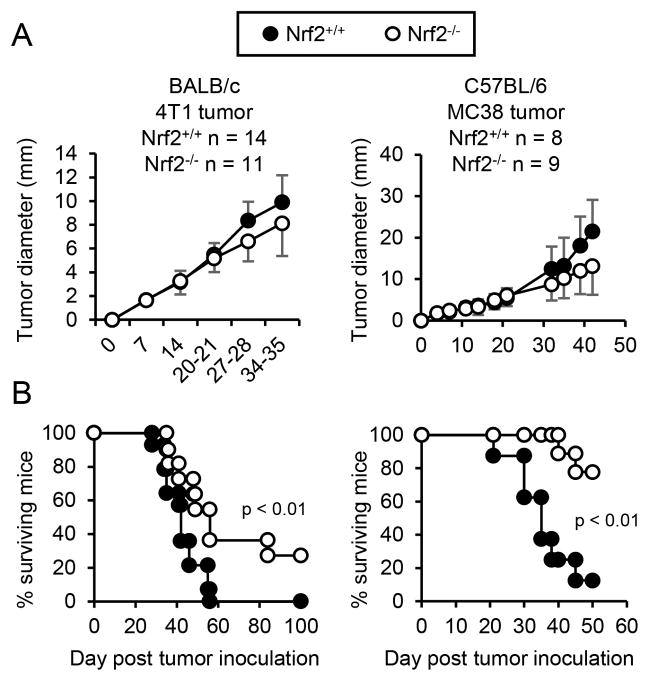
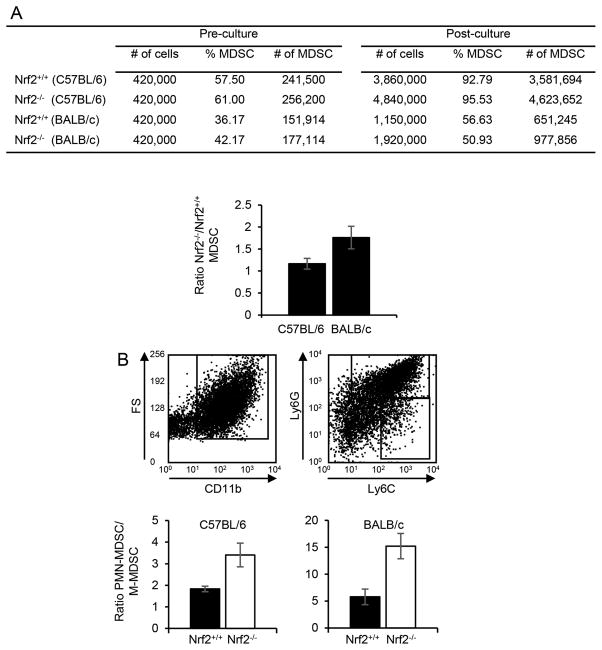
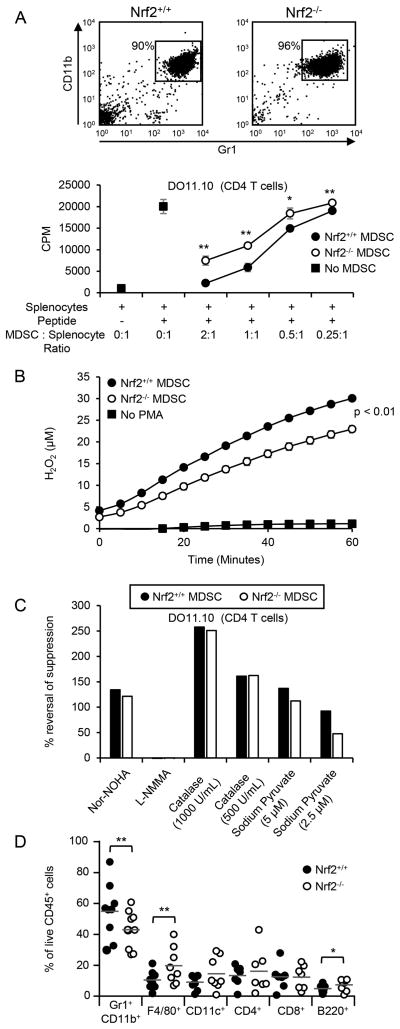
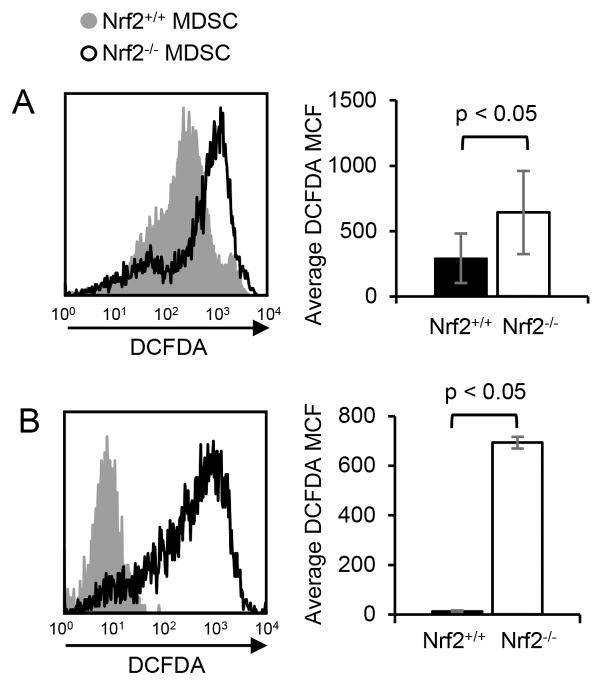
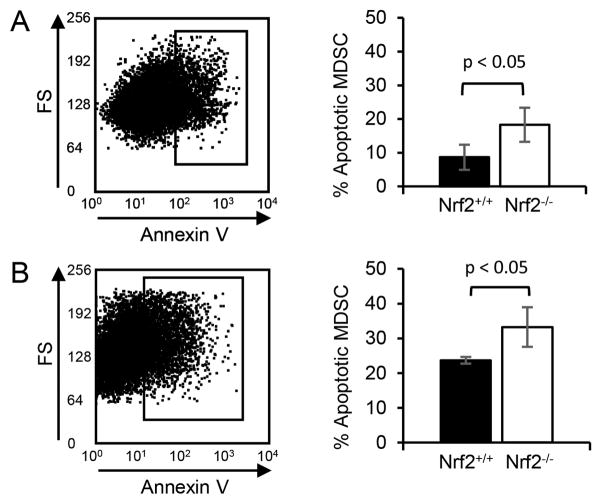
Tumor-induced myeloid-derived suppressor cells (MDSC) contribute to immune suppression in tumor-bearing individuals and are a major obstacle to effective immunotherapy. Reactive oxygen species (ROS) are one of the mechanisms used by MDSC to suppress T cell activation. Although ROS are toxic to most cells, MDSC survive despite their elevated content and release of ROS. NF erythroid 2-related factor 2 (Nrf2) is a transcription factor that regulates a battery of genes that attenuate oxidative stress. Therefore, we hypothesized that MDSC resistance to ROS may be regulated by Nrf2. To test this hypothesis, we used Nrf2(+/+)and Nrf2(-/-)BALB/c and C57BL/6 mice bearing 4T1 mammary carcinoma and MC38 colon carcinoma, respectively. Nrf2 enhanced MDSC suppressive activity by increasing MDSC production of H2O2, and it increased the quantity of tumor-infiltrating MDSC by reducing their oxidative stress and rate of apoptosis. Nrf2 did not affect circulating levels of MDSC in tumor-bearing mice because the decreased apoptotic rate of tumor-infiltrating MDSC was balanced by a decreased rate of differentiation from bone marrow progenitor cells. These results demonstrate that Nrf2 regulates the generation, survival, and suppressive potency of MDSC, and that a feedback homeostatic mechanism maintains a steady-state level of circulating MDSC in tumor-bearing individuals.
肿瘤诱导的髓源性抑制细胞(MDSC)在荷瘤个体中导致免疫抑制,并且是有效免疫治疗的主要障碍。活性氧(ROS)是MDSC用于抑制T细胞活化的机制之一。尽管ROS对大多数细胞有毒,但MDSC尽管其ROS含量和释放增加仍能存活。核因子E2相关因子2(Nrf2)是一种转录因子,可调节一系列减轻氧化应激的基因。因此,我们假设MDSC对ROS的抗性可能受Nrf2调节。为了验证这一假设,我们分别使用了携带4T1乳腺癌和MC38结肠癌的Nrf2(+/+)和Nrf2(-/-) BALB/c及C57BL/6小鼠。Nrf2通过增加MDSC产生H2O2来增强MDSC的抑制活性,并且通过降低其氧化应激和凋亡率来增加肿瘤浸润性MDSC的数量。Nrf2不影响荷瘤小鼠中MDSC的循环水平,因为肿瘤浸润性MDSC凋亡率的降低被骨髓祖细胞分化率的降低所平衡。这些结果表明,Nrf2调节MDSC的产生、存活和抑制能力,并且一种反馈稳态机制维持荷瘤个体中循环MDSC的稳态水平。