Kato Naoko P, Kinugawa Koichiro, Sano Miho, Kogure Asuka, Sakuragi Fumika, Kobukata Kihoko, Ohtsu Hiroshi, Wakita Sanae, Jaarsma Tiny, Kazuma Keiko
Department of Therapeutic Strategy for Heart Failure, The University of Tokyo Graduate School of Medicine, Tokyo, Japan; Department of Social and Welfare Studies, Faculty of Health Sciences, Linköping University, Linköping, Sweden; JSPS Postdoctoral Fellow for Research Abroad, Tokyo, Japan.
Department of Therapeutic Strategy for Heart Failure, The University of Tokyo Graduate School of Medicine, Tokyo, Japan.
Patient Prefer Adherence. 2016 Feb 18;10:171-81. doi: 10.2147/PPA.S100203. eCollection 2016.
Although the effectiveness of heart failure (HF) disease management programs has been established in Western countries, to date there have been no such programs in Japan. These programs may have different effectiveness due to differences in health care organization and possible cultural differences with regard to self-care. Therefore, the purpose of this study was to evaluate the effectiveness of a pilot HF program in a Japanese setting.
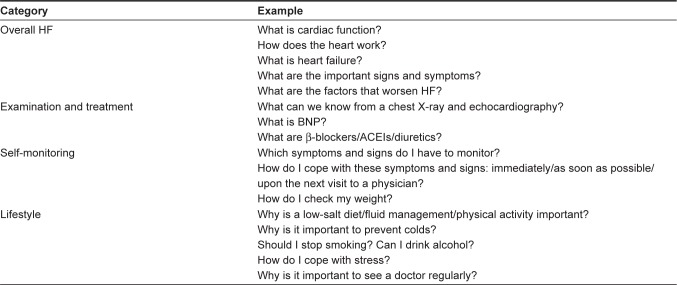
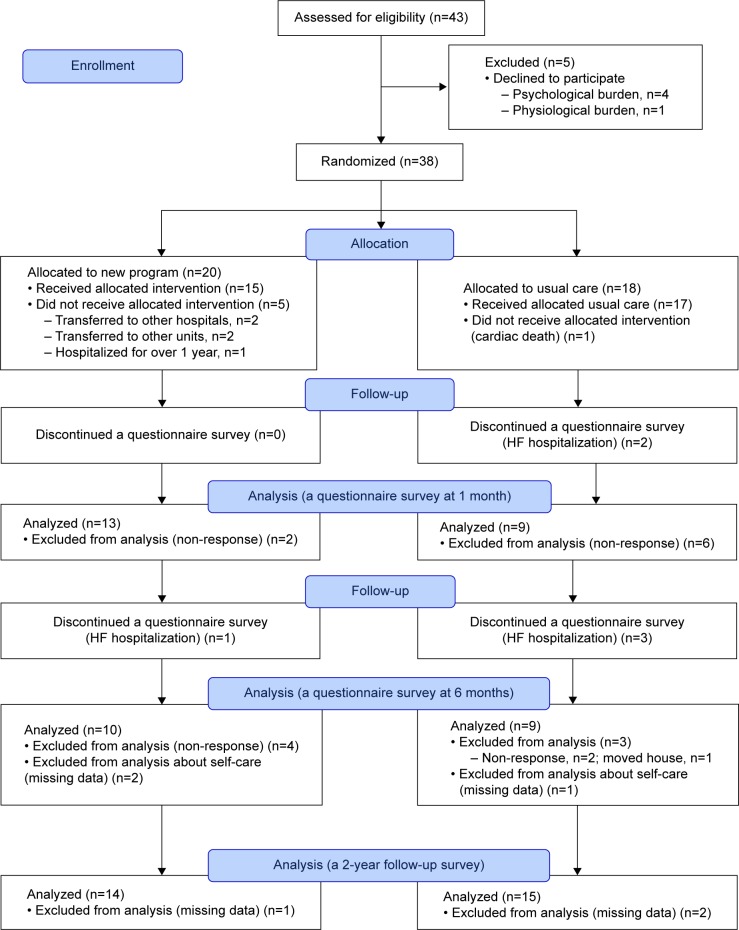
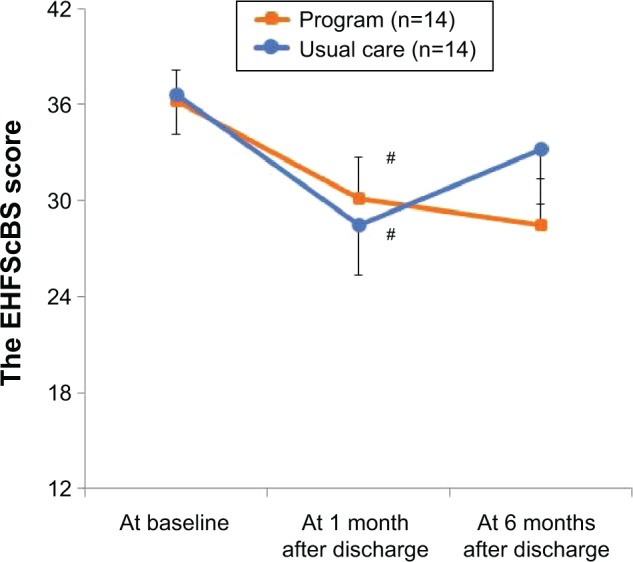
We developed an HF program focused on enhancing patient self-care before hospital discharge. Patients were randomized 1:1 to receive the new HF program or usual care. The primary outcome was self-care behavior as assessed by the European Heart Failure Self-Care Behavior Scale (EHFScBS). Secondary outcomes included HF knowledge and the 2-year rate of HF hospitalization and/or cardiac death.
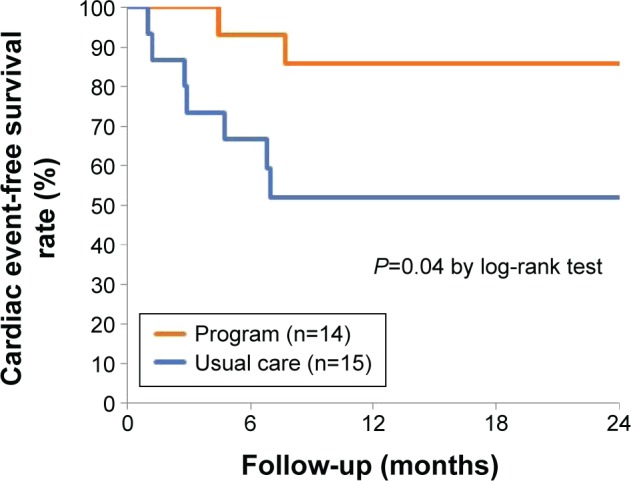
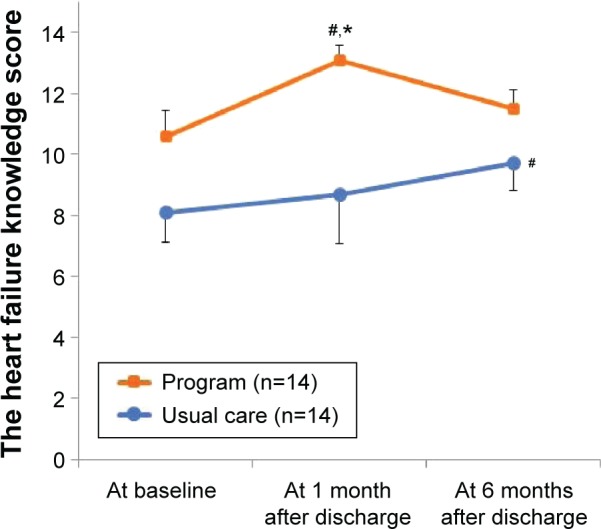
A total of 32 patients were enrolled (mean age, 63 years; 31% female). There was no difference in the total score of the EHFScBS between the two groups. One specific behavior score regarding a low-salt diet significantly improved compared with baseline in the intervention group. HF knowledge in the intervention group tended to improve more over 6 months than in the control group (a group-by-time effect, F=2.47, P=0.098). During a 2-year follow-up, the HF program was related to better outcomes regarding HF hospitalization and/or cardiac death (14% vs 48%, log-rank test P=0.04). In Cox regression analysis after adjustment for age, sex, and logarithmic of B-type natriuretic peptide, the program was associated with a reduction in HF hospitalization and/or cardiac death (hazard ratio, 0.17; 95% confidence interval, 0.03-0.90; P=0.04).
The HF program was likely to increase patients' HF knowledge, change their behavior regarding a low-salt diet, and reduce HF hospitalization and/or cardiac events. Further improvement focused on the transition of knowledge to self-care behavior is necessary.
尽管心力衰竭(HF)疾病管理项目在西方国家的有效性已得到证实,但日本迄今尚未开展此类项目。由于医疗保健组织的差异以及自我护理方面可能存在的文化差异,这些项目的有效性可能有所不同。因此,本研究的目的是评估在日本开展的一项HF试点项目的有效性。
我们制定了一项以加强出院前患者自我护理为重点的HF项目。患者按1:1随机分组,分别接受新的HF项目或常规护理。主要结局是通过欧洲心力衰竭自我护理行为量表(EHFScBS)评估的自我护理行为。次要结局包括HF知识以及HF住院和/或心源性死亡的2年发生率。
共纳入32例患者(平均年龄63岁;31%为女性)。两组EHFScBS总分无差异。干预组中一项关于低盐饮食的特定行为评分与基线相比有显著改善。干预组的HF知识在6个月内比对照组有更明显的改善趋势(组×时间效应,F=2.47,P=0.098)。在2年的随访期间,HF项目与HF住院和/或心源性死亡的更好结局相关(14%对48%,对数秩检验P=0.04)。在对年龄、性别和B型利钠肽对数进行调整后的Cox回归分析中,该项目与HF住院和/或心源性死亡的减少相关(风险比,0.17;95%置信区间,0.03 - 0.90;P=0.04)。
HF项目可能会增加患者的HF知识,改变他们在低盐饮食方面的行为,并减少HF住院和/或心脏事件。有必要进一步改进,重点是将知识转化为自我护理行为。