Pereira Jose Henrique, Heins Richard A, Gall Daniel L, McAndrew Ryan P, Deng Kai, Holland Keefe C, Donohue Timothy J, Noguera Daniel R, Simmons Blake A, Sale Kenneth L, Ralph John, Adams Paul D
From the Joint BioEnergy Institute, Emeryville, California 94608, the Molecular Biophysics and Integrated Bioimaging Division, Lawrence Berkeley National Laboratory, Berkeley, California 94720.
From the Joint BioEnergy Institute, Emeryville, California 94608, the Biological and Engineering Sciences Center, Sandia National Laboratories, Livermore, California 94551.
J Biol Chem. 2016 May 6;291(19):10228-38. doi: 10.1074/jbc.M115.700427. Epub 2016 Mar 3.
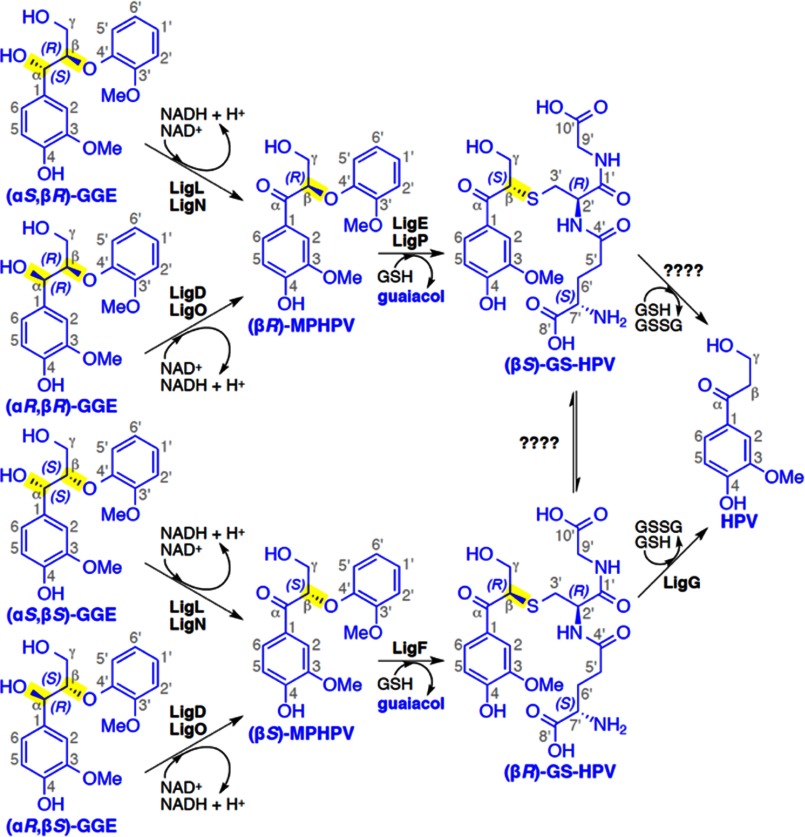
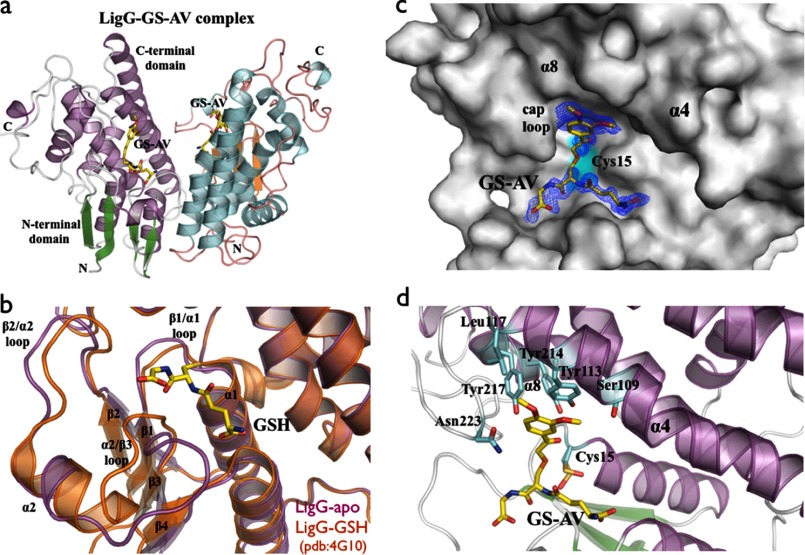
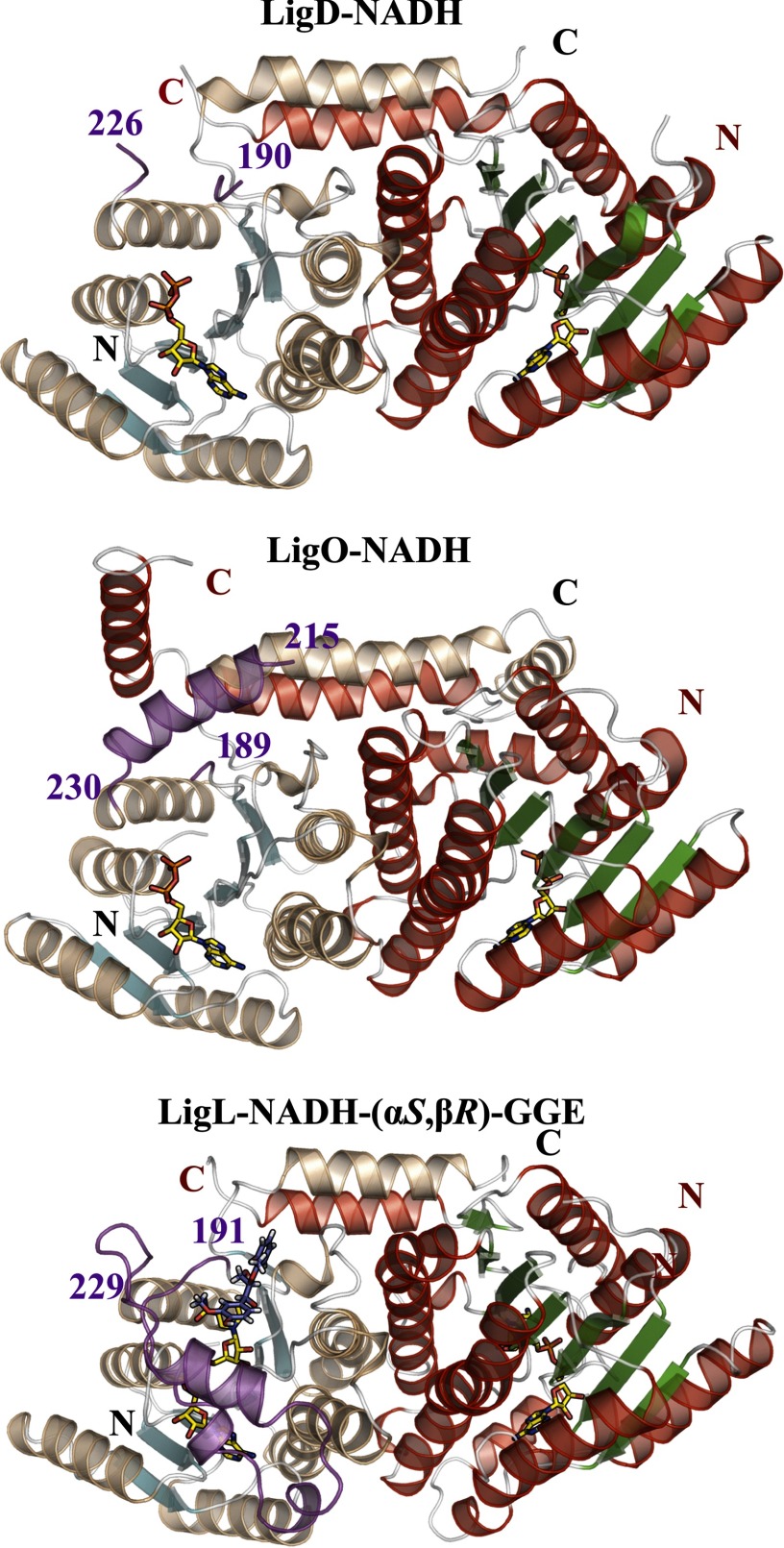
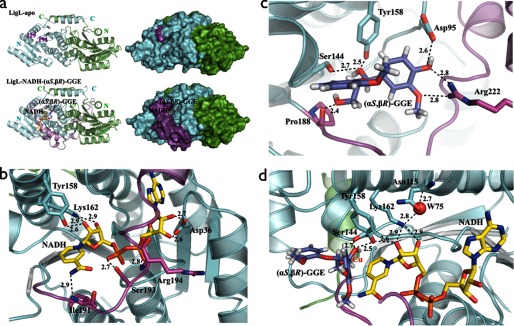
There has been great progress in the development of technology for the conversion of lignocellulosic biomass to sugars and subsequent fermentation to fuels. However, plant lignin remains an untapped source of materials for production of fuels or high value chemicals. Biological cleavage of lignin has been well characterized in fungi, in which enzymes that create free radical intermediates are used to degrade this material. In contrast, a catabolic pathway for the stereospecific cleavage of β-aryl ether units that are found in lignin has been identified in Sphingobium sp. SYK-6 bacteria. β-Aryl ether units are typically abundant in lignin, corresponding to 50-70% of all of the intermonomer linkages. Consequently, a comprehensive understanding of enzymatic β-aryl ether (β-ether) cleavage is important for future efforts to biologically process lignin and its breakdown products. The crystal structures and biochemical characterization of the NAD-dependent dehydrogenases (LigD, LigO, and LigL) and the glutathione-dependent lyase LigG provide new insights into the early and late enzymes in the β-ether degradation pathway. We present detailed information on the cofactor and substrate binding sites and on the catalytic mechanisms of these enzymes, comparing them with other known members of their respective families. Information on the Lig enzymes provides new insight into their catalysis mechanisms and can inform future strategies for using aromatic oligomers derived from plant lignin as a source of valuable aromatic compounds for biofuels and other bioproducts.
在将木质纤维素生物质转化为糖并随后发酵为燃料的技术开发方面已经取得了巨大进展。然而,植物木质素仍然是生产燃料或高价值化学品的未开发材料来源。木质素的生物裂解在真菌中已得到充分表征,其中利用产生自由基中间体的酶来降解这种物质。相比之下,在鞘氨醇单胞菌属SYK-6细菌中已鉴定出一种用于立体特异性裂解木质素中β-芳基醚单元的分解代谢途径。β-芳基醚单元通常在木质素中含量丰富,占所有单体间连接的50-70%。因此,全面了解酶促β-芳基醚(β-醚)裂解对于未来生物处理木质素及其分解产物的努力至关重要。NAD依赖性脱氢酶(LigD、LigO和LigL)以及谷胱甘肽依赖性裂解酶LigG的晶体结构和生化特性为β-醚降解途径中的早期和晚期酶提供了新的见解。我们提供了关于这些酶的辅因子和底物结合位点以及催化机制的详细信息,并将它们与各自家族的其他已知成员进行了比较。关于Lig酶的信息为其催化机制提供了新的见解,并可为未来利用源自植物木质素的芳香族低聚物作为生物燃料和其他生物产品的有价值芳香族化合物来源的策略提供参考。