
放疗期间生酮饮食干预对身体成分的影响:I. 六例前瞻性研究患者的初步临床经验
Impact of a ketogenic diet intervention during radiotherapy on body composition: I. Initial clinical experience with six prospectively studied patients.
作者信息
Klement Rainer J, Sweeney Reinhart A
机构信息
Department of Radiation Oncology, Leopoldina Hospital Schweinfurt, Robert-Koch-Straße 10, 97422, Schweinfurt, Germany.
出版信息
BMC Res Notes. 2016 Mar 5;9:143. doi: 10.1186/s13104-016-1959-9.
BACKGROUND
Based on promising preclinical data, ketogenic diets (KDs) have been proposed as supplementary measures for cancer patients undergoing standard-of-care therapy. However, data is still scarce on the tolerability and effects of KDs on cancer patients undergoing radiotherapy (RT). Here we present six cases of patients who underwent RT and concurrently consumed a self-administered KD in our clinic within a busy community hospital setting.
METHODS
All patients were followed prospectively with measurements of blood parameters, quality of life and body weight and composition using bioelectrical impedance analysis.
RESULTS
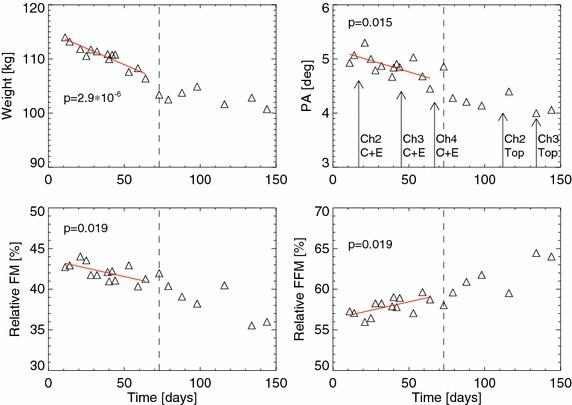
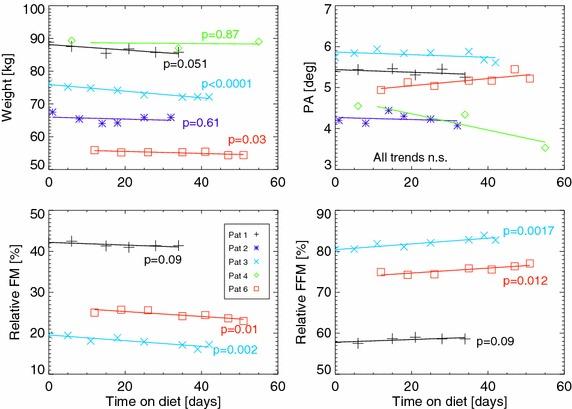
No adverse diet-related side effects occurred. Two patients had no elevated ketone body levels in serum despite self-reporting compliance to the diet. There was consensus that the KD was satiating and weight loss occurred in all patients, although this was only significant in two patients. Our data indicate that weight loss was mainly due to fat mass loss with concurrent preservation of muscle mass. Overall quality of life remained fairly stable, and all subjects reported feeling good on the diet. Tumor regression occurred as expected in five patients with early stage disease; however one subject with metastatic small cell lung cancer experienced slight progression during three cycles of combined chemotherapy + KD and progressed rapidly after ending the KD.
CONCLUSIONS
Our data lend support to the hypothesis that KDs administered as supportive measures during standard therapy are safe and might be helpful in preservation of muscle mass. Further studies with control groups are needed to confirm these findings and address questions regarding any putative anti-tumor effects. Based on the experience with these six cases we implemented further steps to improve issues with KD compliance and initiated a clinical study that is described in a companion paper.
背景
基于有前景的临床前数据,生酮饮食(KDs)已被提议作为接受标准治疗的癌症患者的补充措施。然而,关于KDs对接受放疗(RT)的癌症患者的耐受性和影响的数据仍然很少。在此,我们介绍6例在繁忙的社区医院环境中于我们诊所接受放疗并同时自行食用KDs的患者情况。
方法
对所有患者进行前瞻性随访,通过生物电阻抗分析测量血液参数、生活质量以及体重和身体成分。
结果
未出现与饮食相关的不良副作用。2例患者尽管自述遵守饮食规定,但血清酮体水平未升高。大家一致认为KDs有饱腹感,所有患者均出现体重减轻,不过仅2例患者体重减轻显著。我们的数据表明,体重减轻主要是由于脂肪量减少,同时肌肉量得以保留。总体生活质量保持相当稳定,所有受试者均表示对该饮食感觉良好。5例早期疾病患者出现了预期的肿瘤消退;然而,1例转移性小细胞肺癌患者在三个周期的联合化疗+KDs治疗期间病情略有进展,停止KDs治疗后病情迅速进展。
结论
我们的数据支持这样的假设,即在标准治疗期间作为支持措施使用的KDs是安全的,并且可能有助于保留肌肉量。需要进行有对照组的进一步研究来证实这些发现,并解决有关任何假定的抗肿瘤作用的问题。基于这6例患者的经验,我们采取了进一步措施来改善KDs依从性问题,并启动了一项临床研究,相关内容在一篇配套论文中进行了描述。
 Zotero 插件