Ge Lite, Jiang Miao, Duan Da, Wang Zijun, Qi Linyu, Teng Xiaohua, Zhao Zhenyu, Wang Lei, Zhuo Yi, Chen Ping, He Xijing, Lu Ming
Key Laboratory of Protein Chemistry and Developmental Biology of Ministry of Education, College of Life Sciences, Hunan Normal University, Changsha 410081, China; Department of Neurosurgery, Second Affiliated Hospital of Hunan Normal University (163 Hospital of PLA), Changsha 410003, China.
Key Laboratory of Protein Chemistry and Developmental Biology of Ministry of Education, College of Life Sciences, Hunan Normal University, Changsha 410081, China.
Stem Cells Int. 2016;2016:1243659. doi: 10.1155/2016/1243659. Epub 2016 Feb 1.
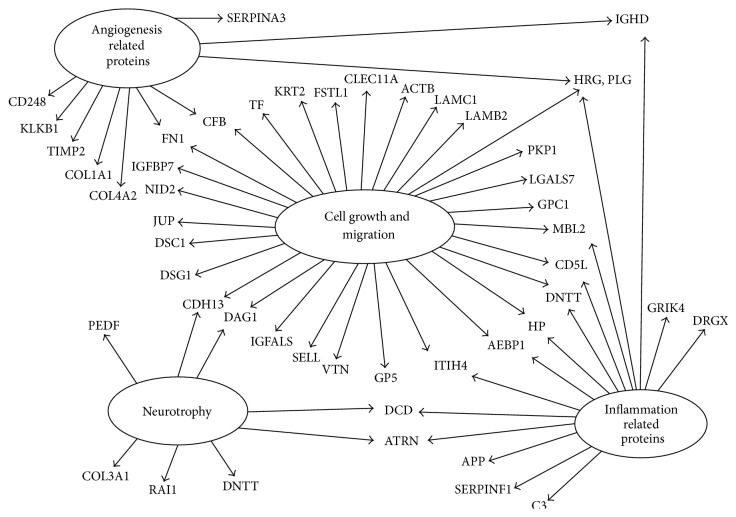
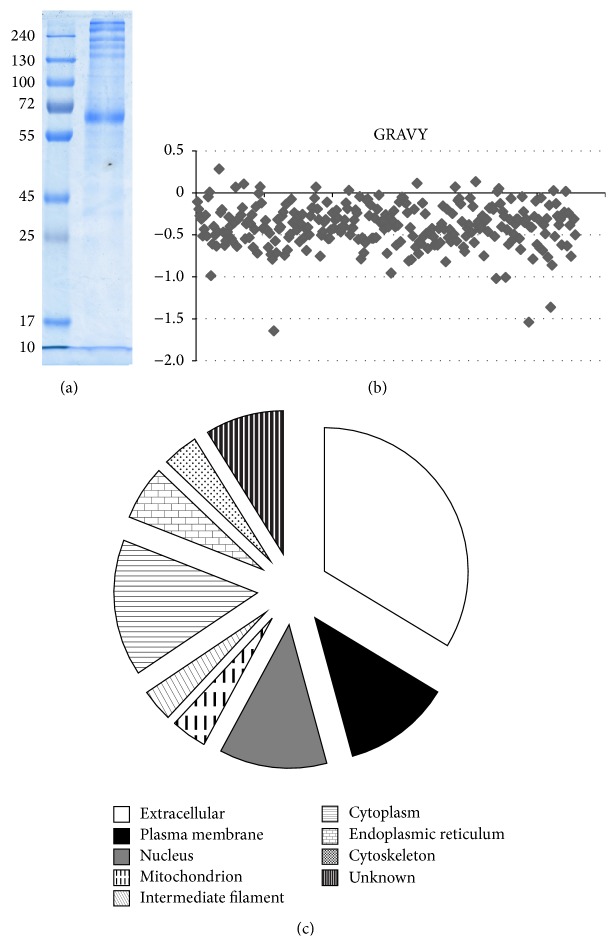
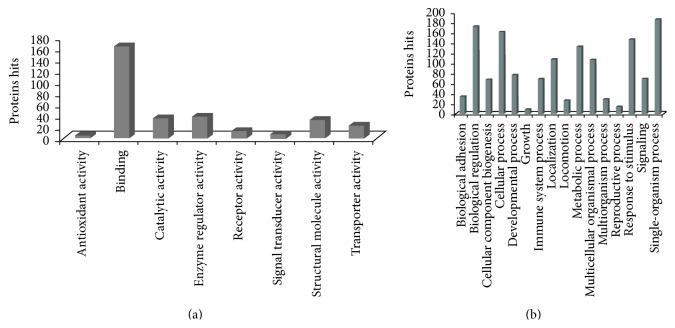
Nasal olfactory mucosa mesenchymal stem cells (OM-MSCs) have the ability to promote regeneration in the nervous system in vivo. Moreover, with view to the potential for clinical application, OM-MSCs have the advantage of being easily accessible from patients and transplantable in an autologous manner, thus eliminating immune rejection and contentious ethical issues. So far, most studies have been focused on the role of OM-MSCs in central nervous system replacement. However, the secreted proteomics of OM-MSCs have not been reported yet. Here, proteins secreted by OM-MSCs cultured in serum-free conditions were separated on SDS-PAGE and identified by LC-MS/MS. As a result, a total of 274 secreted proteins were identified. These molecules are known to be important in neurotrophy, angiogenesis, cell growth, differentiation, and apoptosis, and inflammation which were highly correlated with the repair of central nervous system. The proteomic profiling of the OM-MSCs secretome might provide new insights into their nature in the neural recovery. However, proteomic analysis for clinical biomarkers of OM-MSCs needs to be further studied.
鼻嗅黏膜间充质干细胞(OM-MSCs)在体内具有促进神经系统再生的能力。此外,鉴于其临床应用潜力,OM-MSCs具有易于从患者获取且可自体移植的优势,从而消除了免疫排斥和有争议的伦理问题。到目前为止,大多数研究都集中在OM-MSCs在中枢神经系统替代中的作用。然而,OM-MSCs的分泌蛋白质组学尚未见报道。在此,对无血清条件下培养的OM-MSCs分泌的蛋白质进行SDS-PAGE分离,并通过LC-MS/MS进行鉴定。结果,共鉴定出274种分泌蛋白。已知这些分子在神经营养、血管生成、细胞生长、分化、凋亡以及炎症中起重要作用,而这些与中枢神经系统的修复高度相关。OM-MSCs分泌组的蛋白质组学分析可能为其在神经恢复中的本质提供新的见解。然而,对OM-MSCs临床生物标志物的蛋白质组学分析仍需进一步研究。