Kang Jung-Taek, Moon Joon Ho, Choi Ji-Yei, Park Sol Ji, Kim Su Jin, Saadeldin Islam M, Lee Byeong Chun
Department of Physiology, Faculty of Veterinary Medicine, Zagazig University, 44519, Egypt .
Asian-Australas J Anim Sci. 2016 Mar;29(3):352-8. doi: 10.5713/ajas.15.0341. Epub 2016 Mar 1.
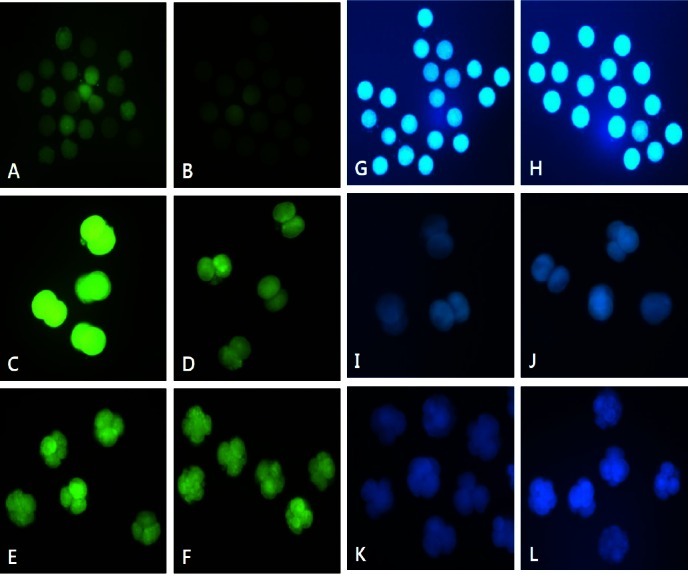
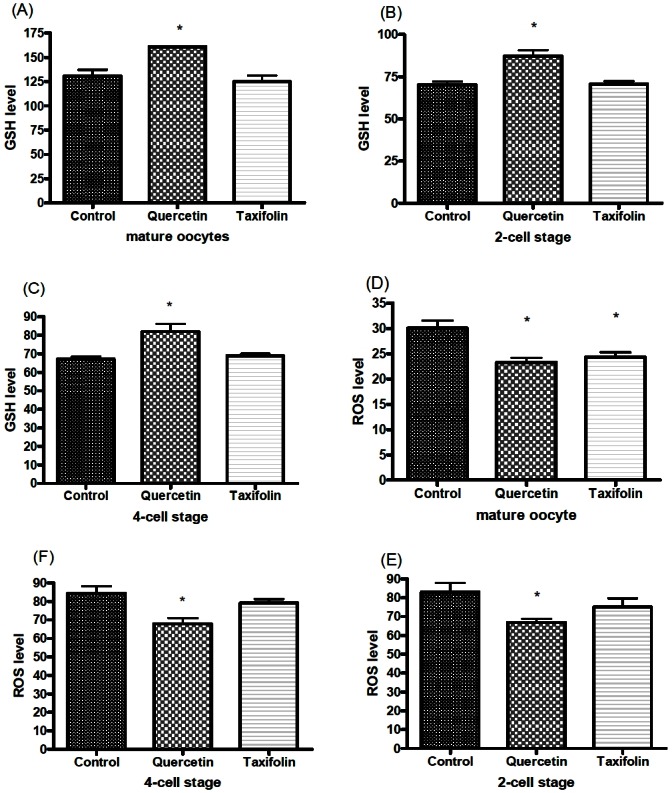
Quercetin (QT) and taxifolin (TF) are structurally similar plant-derived flavonoids that have antioxidant properties and act as free radical scavengers. The objective of this study was to investigate effects of QT and TF on nuclear maturation of porcine oocytes. Effects of TF at 0, 1, 10, and 50 μg/mL on oocyte nuclear maturation (polar body extrusion) were investigated. After incubation for 44 h, there were no significant differences between the treatment and control groups except in the 50 μg/mL group which was significantly lower (59.2%, p<0.05) than the other groups (control: >80%). After parthenogenetic activation, further in vitro development of QT- or TF-treated vs control oocytes was investigated. A significantly higher proportion of QT-treated (1 μg/mL) oocytes developed into blastocysts compared to controls (24.3% vs 16.8%, respectively); however, cleavage rate and blastocyst cell number were not affected. The TF-treated group was not significantly different from controls. Levels of reactive oxygen species (ROS) and intracellular glutathione (GSH) in oocytes and embryos in a culture medium supplemented with QT or TF were measured. Both treatment groups had significantly lower (p<0.05) levels of ROS than controls, however GSH levels were different only in QT-treated oocytes. We conclude that exogenous flavonoids such as QT and TF reduce ROS levels in oocytes. Although at high concentration (50 μg/mL) both QT and TF appear to be toxic to oocytes.
槲皮素(QT)和花旗松素(TF)是结构相似的植物源黄酮类化合物,具有抗氧化特性,可作为自由基清除剂。本研究的目的是探讨QT和TF对猪卵母细胞核成熟的影响。研究了0、1、10和50μg/mL的TF对卵母细胞核成熟(极体排出)的影响。孵育44小时后,处理组和对照组之间无显著差异,但50μg/mL组显著低于其他组(对照组:>80%)(59.2%,p<0.05)。孤雌激活后,研究了经QT或TF处理的卵母细胞与对照卵母细胞的进一步体外发育情况。与对照组相比,经QT处理(1μg/mL)的卵母细胞发育成囊胚的比例显著更高(分别为24.3%和16.8%);然而,卵裂率和囊胚细胞数不受影响。TF处理组与对照组无显著差异。测量了添加QT或TF的培养基中卵母细胞和胚胎中的活性氧(ROS)水平和细胞内谷胱甘肽(GSH)水平。两个处理组的ROS水平均显著低于对照组(p<0.05),然而GSH水平仅在经QT处理的卵母细胞中有差异。我们得出结论,外源性黄酮类化合物如QT和TF可降低卵母细胞中的ROS水平。尽管在高浓度(50μg/mL)下,QT和TF似乎对卵母细胞有毒性。