Martins Fernandes Flavio Augusto, Carvalho Gustavo L, Lima Diego L, Rao Prashanth, Shadduck Phillip P, Montandon Isabelle D, de Souza Barros Juscielle, Rodrigues Ingrid Lais Vieira
Faculty of Medical Sciences, University of Pernambuco, Recife, Brazil.
Global Hospitals and Mamata Hospital, Mumbai, India.
JSLS. 2016 Jan-Mar;20(1). doi: 10.4293/JSLS.2015.00107.
Current treatments for overweight adults include reduced-calorie diet, exercise, behavior modification, and selective use of medications. Many achieve suboptimal results with these measures and progress to obesity. Whether the intragastric balloon (IGB), a reversible device approved for treatment of obesity, is a safe and effective option in overweight adults is less well studied. We conducted a study to prospectively analyze the safety and effectiveness of IGB in overweight adults, to compare the results to a simultaneously studied cohort of obese patients, and to share procedural tips for safe IGB placement and removal.
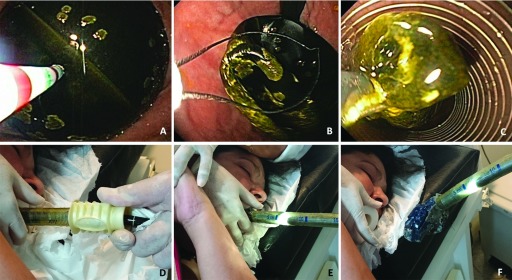
One hundred thirty-nine patients were evaluated in this prospective, nonrandomized study. Twenty-six overweight [body mass index (BMI), 26-30)] and 113 obese (BMI > 30) patients underwent outpatient, endoscopic IGB placement under intravenous sedation. The IGB was filled with a 550-900 mL (average, 640 mL) solution of saline, radiological contrast, and methylene blue, with an approximate final proportion of 65:2:1. The patients were followed up at 1-2 weeks and then monthly for 6 months. At 6 months, they underwent IGB removal via an esophageal overtube to optimize safety, and then they were observed for 6 more months.
IGB time was 190 ± 36 d in the overweight patients and 192 ± 43 d in the obese patients. Symptoms of IGB intolerance included nausea and pain, which were transiently present in 50-95% of patients for several days, and necessitated early IGB removal in 6% of patients. There were no procedure-related complications and no IGB-related esophagitis, erosion, perforation, or obstruction. The percentage of excess weight loss (EWL%) was 96 ± 54% in the overweight group and 41 ± 26% in the obese group (P < 0.001).
In overweight adults failing standard treatments, IGB placement for 6 months had an acceptable safety profile and excellent weight loss.
目前针对超重成年人的治疗方法包括低热量饮食、运动、行为矫正以及选择性使用药物。许多人采用这些措施后效果欠佳并发展为肥胖。胃内球囊(IGB)作为一种被批准用于治疗肥胖的可逆装置,在超重成年人中是否为安全有效的选择,相关研究较少。我们开展了一项研究,前瞻性分析IGB在超重成年人中的安全性和有效性,将结果与同期研究的肥胖患者队列进行比较,并分享安全放置和取出IGB的操作技巧。
在这项前瞻性、非随机研究中对139例患者进行了评估。26例超重[体重指数(BMI),26 - 30]和113例肥胖(BMI > 30)患者在静脉镇静下接受门诊内镜下IGB放置。IGB填充550 - 900 mL(平均640 mL)的生理盐水、放射造影剂和亚甲蓝溶液,最终比例约为65:2:1。患者在1 - 2周时进行随访,随后每月随访1次,共6个月。6个月时,通过食管外套管取出IGB以优化安全性,然后再观察6个月。
超重患者的IGB留置时间为190 ± 36天,肥胖患者为192 ± 43天。IGB不耐受症状包括恶心和疼痛,50 - 95%的患者会持续数天出现这些症状,6%的患者需要提前取出IGB。未发生与操作相关的并发症,也没有与IGB相关的食管炎、糜烂、穿孔或梗阻。超重组的超重体重减轻百分比(EWL%)为96 ± 54%,肥胖组为41 ± 26%(P < 0.001)。
在标准治疗失败的超重成年人中,放置IGB 6个月具有可接受的安全性和出色的减重效果。